
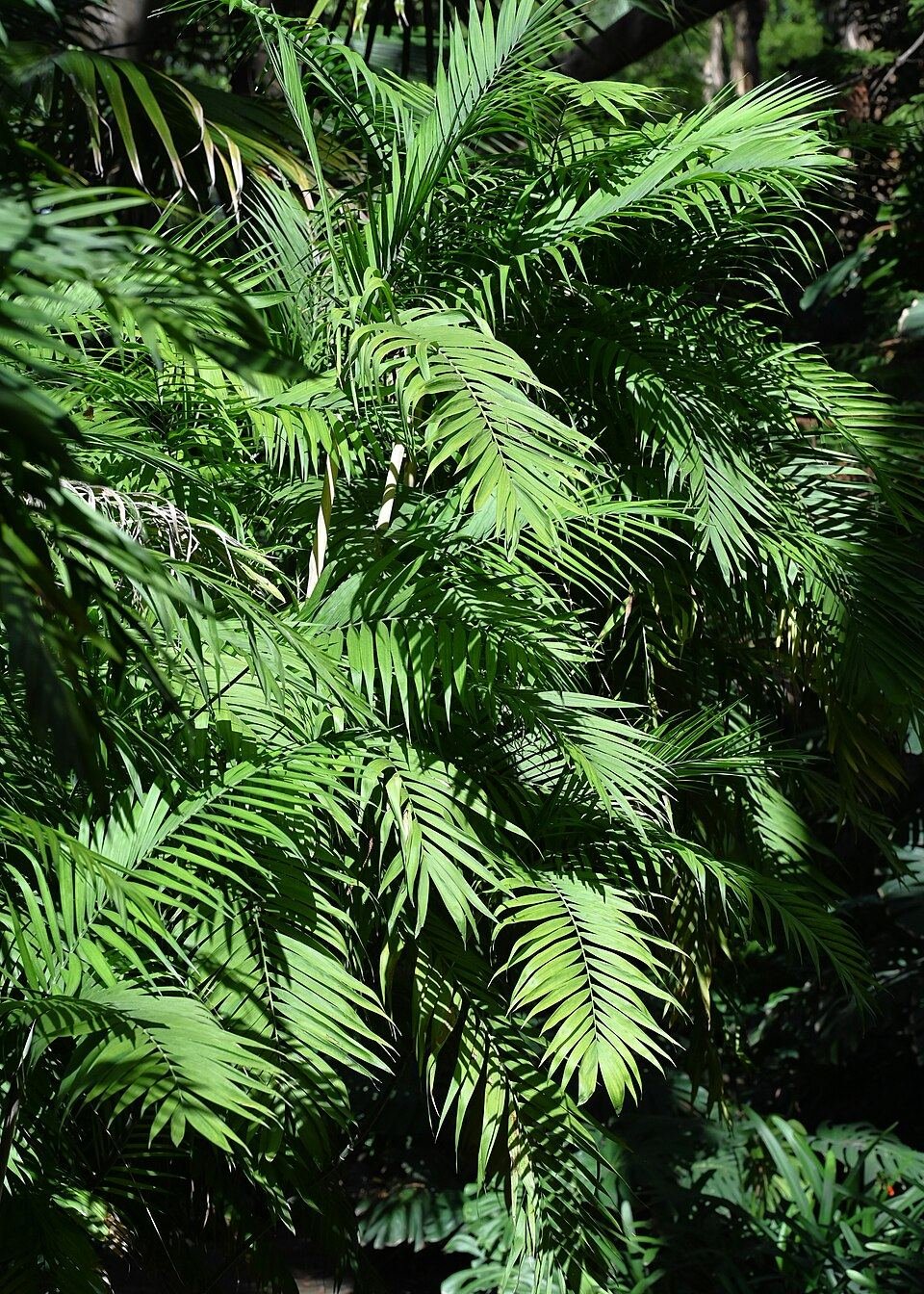
Bamboo palm overview
The clustering cane indoor palm. Native from Mexico to Honduras, USDA 10b to 11 outdoors, a bright-room houseplant everywhere else.
Region of origin
Southeastern Mexico to Honduras
Native countries
Historical discovery
Max Burret published Chamaedorea seifrizii in 1938, honoring botanist William Seifriz.
Names
Common names
Bamboo palm, Reed palm, Clustered parlor palm
Synonyms
- Chamaedorea erumpens H.E.Moore
Cold hardiness
Survives about 32°F / 0°C. Outdoor range USDA 10b–11b. Hover or click a zone, state, or country. Switch the U.S. map between states and hardiness zones.
Highlighted USDA zones 10b–11b. Green countries can be grown outdoors.
United States
In range Too cold
World
Native Can be grown
Alaska and Hawaii are state outlines with their overall zone range. A country is painted if its mildest inhabited winter is at least one USDA step milder than this palm’s hardiness.
Scientific facts
- Thin green canes look like bamboo. It is still a palm.
- Often confused with parlor palm. Seifrizii gets taller and more cane-like.
- Dry indoor air brings mites. Humidity helps.
Get this palm
Other helpful resources
Full care guide
The bamboo palm is a clustering Chamaedorea with thin green canes, sold as an indoor screen. Native from southeastern Mexico to Honduras. USDA 10b to 11 outdoors. Frost is a houseplant sentence, not a garden trial.
Common Names:
Bamboo palm, reed palm, clustered parlor palm.
Scientific Name:
Chamaedorea seifrizii Burret. Sometimes lumped in shops with C. erumpens.
Origin:
Southeastern Mexico to Honduras, as an understory palm.
Appearance:
Many slender, ringed canes and pinnate fronds. It reads as a bamboo clump until you look at the leaves. Taller and canier than parlor palm.
Growth Rate:
Moderate indoors in bright light.
Max Growth Height:
Often 4 to 8 feet in the house. Taller in tropical shade outdoors.
Foliage Spread:
A clump 3 to 6 feet wide in a large pot.
Cold Hardiness and Hardiness Zone:
USDA 10b to 11. Damage near freezing. Keep it indoors anywhere with frost.
Soil Type:
Rich, moist, well-drained potting mix.
Fruit and Flowering:
Small fruit on mature clumps. Indoor plants may flower in bright rooms.
Can it Grow Indoors:
Yes.
Light Requirements:
Bright indirect. It takes less light than areca, more height than parlor palm. A dark corner still fails.
Water Requirements:
Even moisture. Do not let the canes dry to a crisp, and do not stand the pot in water.
Maintenance Level:
Low. Cut a dead cane at the base. Feed in the growing season with palm-specific fertilizer lightly. Rinse dust. Group plants if your air is desert-dry.
Common Diseases/Pests:
Spider mites first, then scale and mealybugs. Bronze, dusty leaflets are mites until proven otherwise.
Plant Care:
Bright room, even water, humidity if you can. Outdoors only in tropical shade. Do not confuse it with parlor palm when you need a 2-foot desk plant. This one wants to be a 6-foot clump.
Bamboo palm Frequently Asked Questions:
1. Bamboo palm or parlor palm?
Parlor palm stays smaller and denser. Bamboo palm is the taller cane clump.
2. Is it actually bamboo?
No. The canes just look that way. It is a palm in Chamaedorea.
3. Why the mites?
Dry heated air. Raise humidity, rinse the clump, and treat mites early.
4. Can it go outside in summer?
Yes, in shade. Bring it in before cool nights. Full sun will bleach it.
Use bamboo palm when you want a tall indoor clump with a tropical cane look. Use parlor palm when you want something that stays on a table.