
Bangalow palm cold hardiness
Archontophoenix cunninghamiana (H.Wendl.) H.Wendl. & Drude
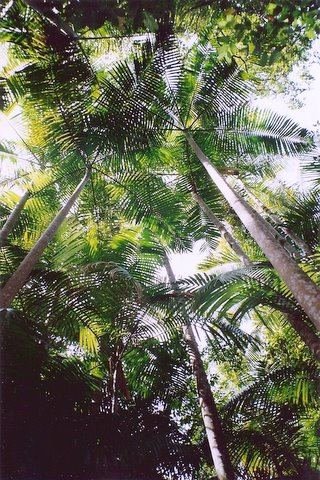
Bangalow palm overview
The eastern Australian bangalow or piccabeen. USDA 9b to 11, a green crownshaft, and the Archontophoenix California actually keeps.
Region of origin
Eastern Australia
Native countries
Historical discovery
Hermann Wendland named it for Allan Cunningham. Wendland and Drude placed it in Archontophoenix in 1875. In California it is the usual king-palm lookalike that takes a little more cold than Alexandrae.
Names
Common names
Bangalow palm, Piccabeen palm, King palm (misapplied)
Synonyms
- Ptychosperma cunninghamiana H.Wendl.
Cold hardiness
Survives about 25°F / -4°C. Outdoor range USDA 9b–11b. Hover or click a zone, state, or country. Switch the U.S. map between states and hardiness zones.
Highlighted USDA zones 9b–11b. Green countries can be grown outdoors.
United States
In range Too cold
World
Native Can be grown
Alaska and Hawaii are state outlines with their overall zone range. A country is painted if its mildest inhabited winter is at least one USDA step milder than this palm’s hardiness.
Scientific facts
- Often sold as king palm. True king in the tropics is usually A. alexandrae.
- Leaflet undersides are green, not silver like alexandrae.
- A bit more cold room than Alexandra king palm, still not a zone 8 tree.
Get this palm
Other helpful resources
Full care guide
The bangalow palm is the eastern Australian Archontophoenix that California and mild coasts actually keep. USDA 9b to 11. Nurseries say king palm. The more tropical Alexandra king (A. alexandrae) wants warmer nights.
Common Names:
Bangalow palm, piccabeen palm. King palm on a California tag is often this one.
Scientific Name:
Archontophoenix cunninghamiana (H.Wendl.) H.Wendl. & Drude. Alexandrae is the tropical king.
Origin:
Eastern Australia.
Appearance:
A solitary feather palm with a smooth, ringed trunk, a green crownshaft, and green leaflet undersides. Alexandrae is often silvery beneath and more swollen at the base.
Growth Rate:
Fast in heat with water.
Max Growth Height:
40 to 70 feet in good conditions.
Foliage Spread:
About 10 to 15 feet.
Cold Hardiness and Hardiness Zone:
USDA 9b to 11. Damage in the mid-20s F on established trees, with variation. Alexandrae is less forgiving. Queen palm still has more 9a street use.
Soil Type:
Rich, moist, well-drained. Sand needs irrigation and fertilizer.
Fruit and Flowering:
Red fruit in hanging clusters. Messy on walks.
Can it Grow Indoors:
Only when young.
Light Requirements:
Full sun to light shade. Young plants like a little protection from blasting inland sun.
Water Requirements:
Even moisture. This is not a desert fan.
Maintenance Level:
Medium. Feed in the growing season with palm-specific fertilizer. Keep it watered in heat. Dropped fruit and old fronds are the mess.
Common Diseases/Pests:
Scale, mites in dry wind, and nutrient yellowing in sand.
Plant Care:
Sun, water, fertilizer, mild winters. If a tag says king palm in California, check whether you have cunninghamiana or alexandrae before you bet on a cold snap.
Bangalow palm Frequently Asked Questions:
1. Bangalow or king palm?
Bangalow is A. cunninghamiana. Tropical king is usually A. alexandrae. California plantings are often bangalow.
2. Can I grow it in zone 9a?
Sheltered 9b is more honest. Queen, pindo, and cabbage palmetto are safer on the cold edge.
3. How do I tell it from Alexandrae?
Cunninghamiana leaflets are green beneath. Alexandrae is often silver beneath, with a more swollen base.
4. Is it messy?
Red fruit and old fronds, yes. Not a poolside neat-freak tree.
Plant bangalow where California and mild coasts want a king-palm silhouette. If your nights are truly tropical, Alexandrae is the other Archontophoenix. If they freeze, pick something else.