
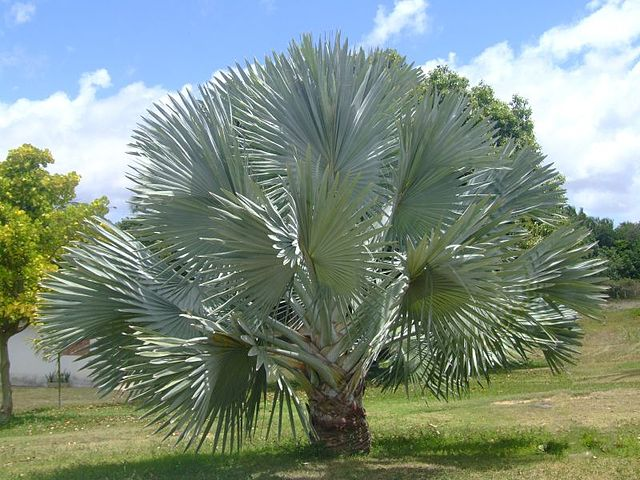
Bismarck palm overview
A huge silver-blue fan palm of Madagascar dry forest. One of the most architectural tropical palms, needing space and nearly frost-free winters.
Region of origin
Northern and western Madagascar
Native countries
Historical discovery
Johann Maria Hildebrandt and Hermann Wendland published Bismarckia nobilis in 1881, named for Otto von Bismarck. It is the only species in the genus.
Names
Common names
Bismarck palm, Bismarckia
Synonyms
- Medemia nobilis (hort.)
Cold hardiness
Survives about 25°F / -4°C. Outdoor range USDA 9b–11b. Hover or click a zone, state, or country. Switch the U.S. map between states and hardiness zones.
Highlighted USDA zones 9b–11b. Green countries can be grown outdoors.
United States
In range Too cold
World
Native Can be grown
Alaska and Hawaii are state outlines with their overall zone range. A country is painted if its mildest inhabited winter is at least one USDA step milder than this palm’s hardiness.
Scientific facts
- The only Bismarckia. Costapalmate silver leaves can exceed 8 ft across.
- Dioecious: male and female plants are separate.
- Young plants rot in cold wet soil; heat and drainage matter as much as zone number.
Get this palm
Other helpful resources
Full care guide
The Bismarck palm is characterized by massive silvery-blue fronds. This palm is an imposing statement plant perfect for frost-free tropical landscapes. This iconic palm thrives in USDA hardiness zones 10 and higher.
Get a Bismarck Palm Delivered to You:
- Common Names: Bismarck Palm, Bismarckia Palm, Noble Palm, Madagascar Blue Palm, Silver Bismarch Palm
- Scientific Name: Bismarckia nobilis
- Family: Arecaceae
- Native Habitat: Endemic to the arid western and northern regions of Madagascar.
- Natural Conditions: Grows in semi-arid habitats with seasonal rainfall and mineral-rich sandy soils.
Unique Physical Characteristics
- Trunk: Thick gray trunk that expands at the base as it ages. Can reach 4 feet in diameter.
- Fronds: Massive, stiff, silvery blue-green circular fronds 3-5 feet across made up of deeply divided segments.
- Flowers & Fruit: Fragrant white flowers. Orange date-like fruits on female plants but yield is low and are inedible.
Growth Rate and Mature Size
- Growth Rate: Moderately fast growth when young, up to 3 feet of new trunk per year. Slows significantly with age.
- Max Height: Typically 50-60 feet at full maturity. Can reach 100 feet tall in ideal tropical conditions.
- Canopy Spread: Up to 15-20 feet wide or larger. Massive rounded dome of foliage.
Climate Range and Temperature Tolerance
- Hardiness Zone: Bismarck Palms perform best when grown outdoors year-round in USDA hardiness zone 10 and higher.
- Temperature Range: Thrives with warm tropical temperatures. Sustains damage below 30°F when mature.
Sun Exposure Requirements
- Grows best with full, direct sun for maximum health and performance.
- Can tolerate partial shade when mature but fronds may thin out over time.
Soil Needs and Water Requirements
- Soil Requirements: Well-draining soil is essential. Amend with sand or perlite.
- Potting Mix Recommendation: Cactus and palm soil mix for maximum growth of new Bismarck palm seedlings.
- Water Needs: Allow soil to partially dry between thorough soakings.
- Drainage Importance: Soggy soil leads to root rot. Ensure drainage holes if planting in containers.
Fertilizer Application
- Fertilizer: Balanced palm specific fertilizer applied 2-3 times during the growing season for optimal growth.
Disease Problems and Solutions
Ganoderma Butt Rot: a fungal disease known to affect the lower trunk of Bismarck palms.
Palmetto Weevil: causes fronds to turn brown and die.
- For other pests consider applying a spray on pesticidal horticulture oil.
Propagating Bismarck Palms
From a seed
- Propagate from freshly harvested ripe seeds though germination rates are quite low. Use bottom heat and sterile medium.
- Bismarck Palm seeds are known to be difficult to sprout. May take weeks to begin germination.
- Consider soaking seeds for a few days before planting.
From a pup
- Transplant young pup offsets carefully in early spring using a sharp sterilized tool. Plant the offshoot in filtered light and good soil.
Conclusion
With their massive fronds, Bismarck palms make unforgettable focal points for tropical landscapes. Though difficult to sprout, this big blue palm is beautiful in any warm climate.