
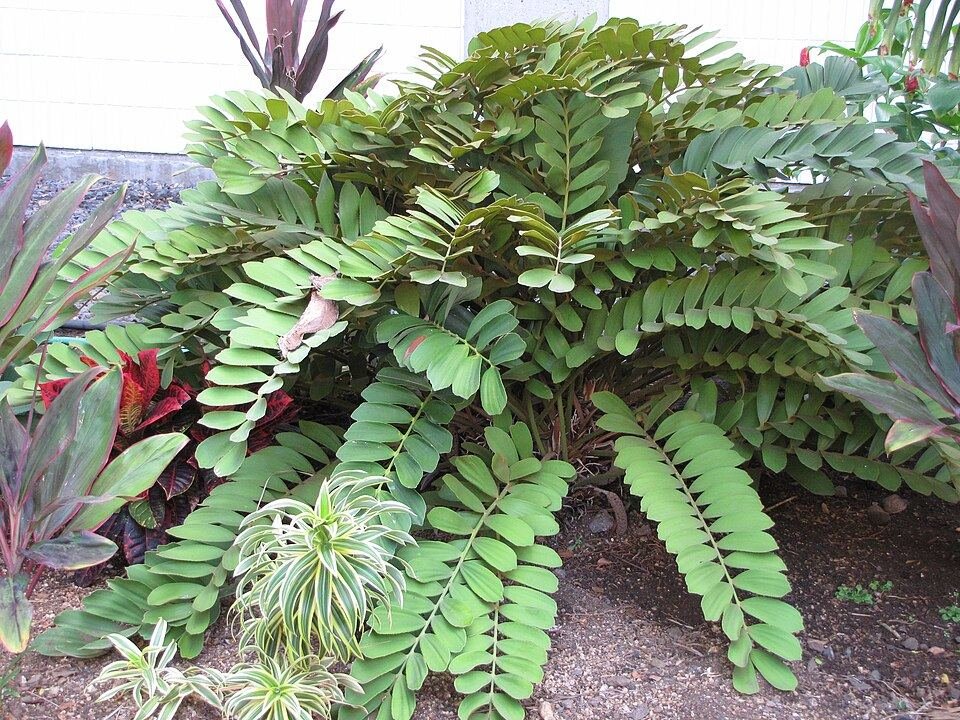
Cardboard palm overview
A stiff-leaf indoor cycad sold as a palm. It is not in the palm family. USDA 9b to 11 outdoors, toxic seeds, and a decent bright-room plant.
Region of origin
Veracruz, Mexico
Native countries
Historical discovery
Carl Linnaeus the Younger published Zamia furfuracea in 1789. It is a cycad, like sago, not a palm.
Names
Common names
Cardboard palm, Cardboard cycad, Jamaican sago (misapplied)
Synonyms
- None widely used
Cold hardiness
Survives about 25°F / -4°C. Outdoor range USDA 9b–11b. Hover or click a zone, state, or country. Switch the U.S. map between states and hardiness zones.
Highlighted USDA zones 9b–11b. Green countries can be grown outdoors.
United States
In range Too cold
World
Native Can be grown
Alaska and Hawaii are state outlines with their overall zone range. A country is painted if its mildest inhabited winter is at least one USDA step milder than this palm’s hardiness.
Scientific facts
- True palms are Arecaceae. This is Zamiaceae, with sago (Cycas revoluta).
- Seeds and stems are toxic if chewed, like other cycads.
- Leaves feel stiff and cardboard-like, which is the name.
Get this palm
Other helpful resources
Full care guide
The cardboard palm is a Mexican cycad with stiff, felty leaflets, sold as a palm and as a small sago cousin. It is Zamia furfuracea, not Arecaceae. USDA 9b to 11 outdoors. Indoors it wants bright light and a mix that drains. The seeds are toxic.
Common Names:
Cardboard palm, cardboard cycad. It is not Jamaican sago in the Cycas sense.
Scientific Name:
Zamia furfuracea L.f.
Origin:
Coastal Veracruz, Mexico.
Appearance:
A short, stocky cycad with stiff, olive-green leaflets that feel almost like cardboard. Cones, not palm fruit. Males and females are separate plants.
Growth Rate:
Slow.
Max Growth Height:
Usually 2 to 4 feet in a pot or small garden bed. Width is the planning number.
Foliage Spread:
A mature clump 3 to 6 feet wide.
Cold Hardiness and Hardiness Zone:
USDA 9b to 11. Damage in the mid-20s F. Not a zone 8 landscape plant.
Soil Type:
Gritty, well-drained mix. Wet peat is a rot recipe.
Fruit and Flowering:
No fruit in the palm sense. Female cones make toxic orange-coated seeds. Keep them away from pets and kids.
Can it Grow Indoors:
Yes, in bright light. A dim room makes sparse, stretched leaves.
Light Requirements:
Bright indirect to morning sun. Harsh inland afternoon sun can bleach indoor-grown leaves.
Water Requirements:
Even moisture in heat, then drier in winter. Do not stand it in a saucer.
Maintenance Level:
Low. Cut a ruined leaf at the base. Light feed in the growing season. Do not treat it like a thirsty majesty palm.
Common Diseases/Pests:
Scale and mealybugs, especially indoors. Rot from overwatering.
Plant Care:
Bright light, drainage, toxic-seed awareness. Outdoors in frost-mild gardens. Indoors as a stiff, slow specimen, not a parlor palm substitute.
Cardboard palm Frequently Asked Questions:
1. Is cardboard palm a real palm?
No. It is a cycad, Zamia furfuracea, related to sago. Palms are Arecaceae.
2. Is it toxic?
Yes. Cycad seeds and stems are poisonous if chewed. Same family warning as sago.
3. Cardboard palm or sago?
Sago is Cycas revoluta, usually a stiffer, more classic cycad trunk. Cardboard is lower, with broader, feltier leaflets.
4. Can it stay indoors?
Yes, in a bright room. It will not thrive in a dark hallway.
If you want a stiff indoor cycad sold as a palm, cardboard palm is that plant. If you want a true palm, pick Arecaceae. If you have pets that chew, skip the cycads.