
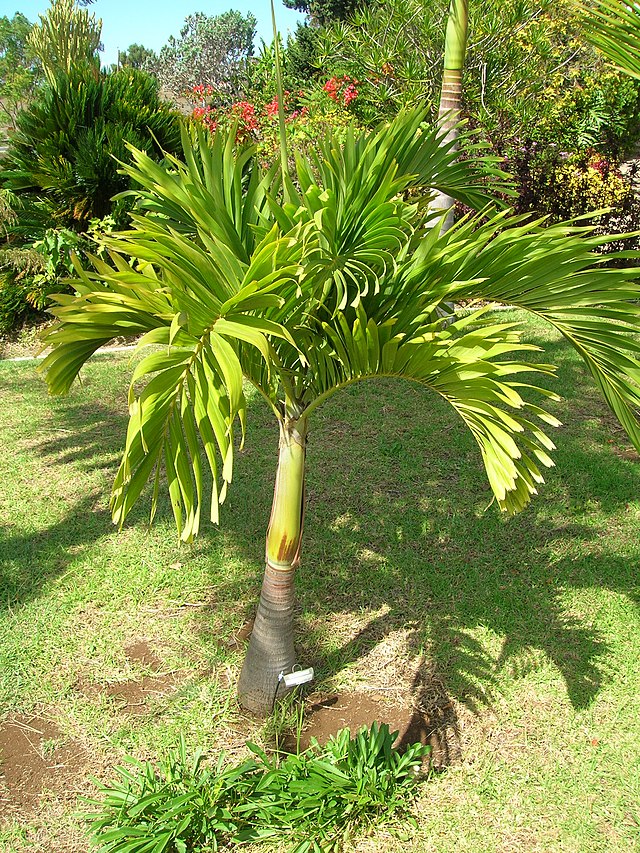
Christmas palm overview
A slim, modest-height palm that loads red fruit around the holidays in the tropics, hence “Christmas palm.” It is a true Adonidia, not a Veitchia, despite older nursery tags.
Region of origin
Borneo to the Philippines
Native countries
Historical discovery
Odoardo Beccari described it (as Normanbya, then Adonidia) in 1919, naming it for botanist Elmer Merrill, who worked extensively in the Philippines.
Names
Common names
Christmas palm, Manila palm, Kerpic palm
Synonyms
- Veitchia merrillii (Becc.) H.E.Moore
- Normanbya merrillii Becc.
Cold hardiness
Survives about 30°F / -1°C. Outdoor range USDA 10a–11b. Hover or click a zone, state, or country. Switch the U.S. map between states and hardiness zones.
Highlighted USDA zones 10a–11b. Green countries can be grown outdoors.
United States
In range Too cold
World
Native Can be grown
Alaska and Hawaii are state outlines with their overall zone range. A country is painted if its mildest inhabited winter is at least one USDA step milder than this palm’s hardiness.
Scientific facts
- Still widely sold as Veitchia merrillii.
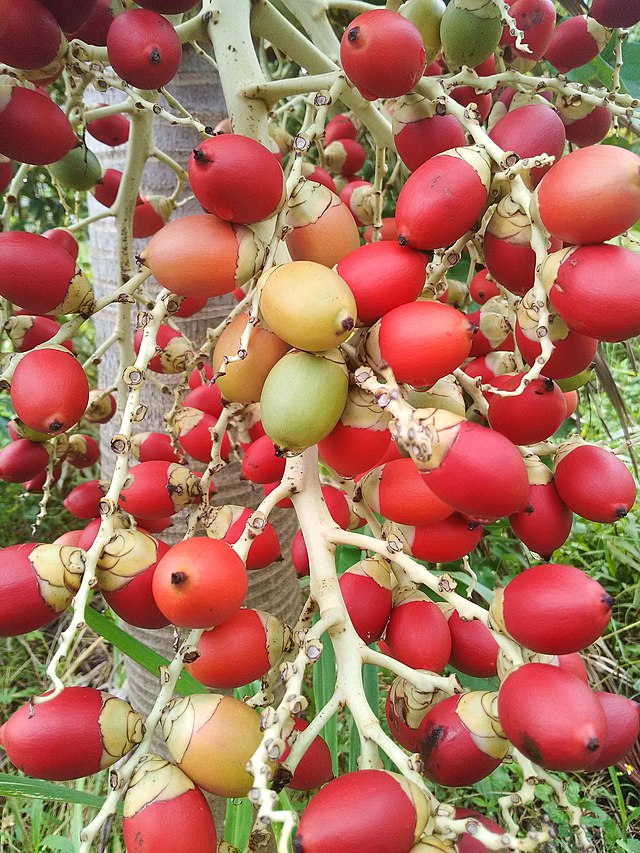
- Clusters of scarlet fruit sit below the crown, not hidden in the leaves.
- No real frost tolerance; a light freeze burns foliage.
Get this palm
Other helpful resources
Full care guide
The Christmas palm, scientifically known as Veitchia merrillii, is celebrated for its red fruits and festive appearance. This palm originates from the Philippines and produces fruit in the summer that slowly turns red into the fall and winter. This palm is not very cold hardy thriving in USDA hardiness zones 10 to 11.
Common Names:
Christmas palm, Manila palm, Merrill palm, Kerpis palm, Dwarf Royal palm, Adonidia palm, & Veitchia palm.
Scientific Name:
Veitchia merrillii (formerly classified as Adonidia merrilli)
Get a Christmas palm plant delivered directly to your door
Origin:
The Christmas palm tree originates from the Philippines.
Appearance:
The Christmas palm has a lush green canopy with arching palm fronds. This palm blooms with clusters of vibrant red fruits, resembling Christmas ornaments every year.
Growth Rate:
Moderate-fast growth rate. The Manila palm adds about 1 to 2 feet to its height annually.
Max Growth Height:
Can reach heights up to 25 feet in optimal conditions. Most home grown Christmas palms typically stay within 15-20 feet.
Foliage Spread:
The foliage of the Christmas palm extends up to 5 to 10 feet.
Cold Hardiness and Hardiness Zone:
Best suited for warmer climates, the Merrill palm thrives in USDA hardiness zones 10 to 11 and is sensitive to colder temperatures below 30°F (-1°C).
Soil Type:
Adaptable to different soil types, the Christmas palm flourishes in well-draining soil that retains some moisture but doesn’t become waterlogged.
Fruit and Flowering:
As it matures, the Christmas palm produces clusters of small, bright red fruits that add a festive appearance. Its flowers are small but contribute to its overall beauty. Fruit starts out dark green in the summer and develops into a bright red over a couple of months.
Can it Grow Indoors:
While it can be grown indoors in large containers, bright indirect sunlight is crucial for its growth.
Light Requirements:
The Christmas palm thrives in partial shade to full sun.
Water Requirements:
Maintain moderate watering. Ensuring the soil remains moist but not waterlogged to prevent root rot.
Maintenance Level:
Minimal pruning requirements. Occasional removal of dead fronds helps maintain aesthetic. Regular watering and seasonal fertilization aid in its growth. Easy maintenance.
Common Diseases/Pests:
Generally resilient, the Christmas palm might encounter occasional pests like spider mites or scale insects. This palm may also be affected by Lethal Yellowing Disease, which is a disease that affects many tropical plants. Lethal yellowing is a disease believed to be caused by a plant virus.
Plant Care:
Consistent watering and providing high quality palm-specific fertilizer are key to Christmas palm growth.
Christmas Palm Frequently Asked Questions:
- Can I grow a Christmas palm in a colder climate?
The Christmas palm thrives in warmer climates and is not suitable for colder regions that get below 30°F (-1°C). - How often should I fertilize my Christmas palm?
Apply palm-specific fertilizer 2-3 times a year for optimal growth. - Are Christmas palm fruits edible?
While attractive, the red fruits are not edible for humans.
The Christmas palm’s charming appearance makes it a great choice for both indoor and outdoor landscapes, adding a festive touch. With proper care, it’s sure to become a captivating centerpiece in any tropical-themed setting.