
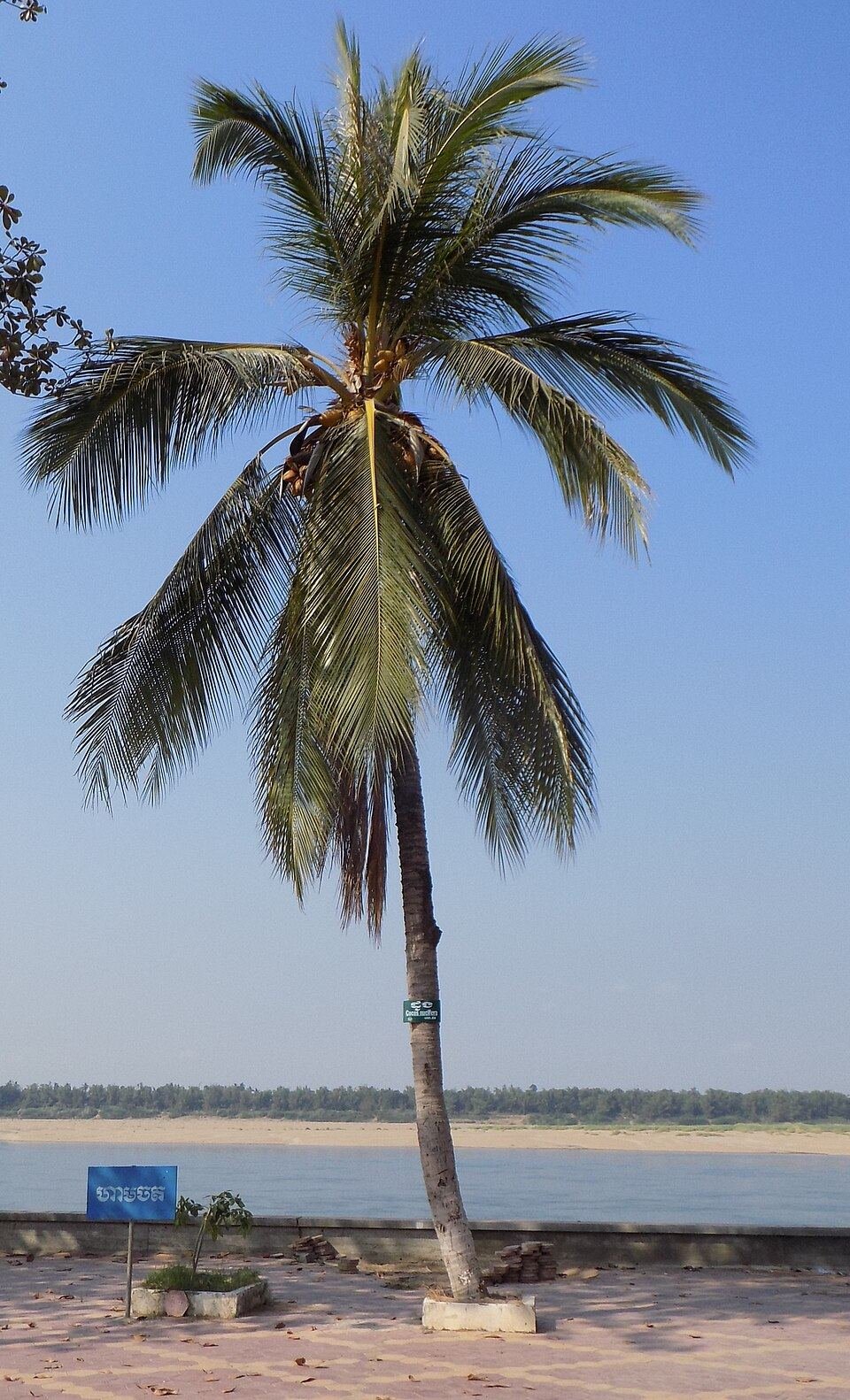
Coconut palm overview
The beach palm of the true tropics. USDA 10b to 12, leaf burn near 35°F, and no patience for a real freeze.
Region of origin
Central Malesia to the southwest Pacific
Native countries
Historical discovery
Linnaeus published Cocos nucifera in 1753. The tree was already in cultivation across the tropical coasts long before that name.
Names
Common names
Coconut palm, Coco palm, Nariyal
Synonyms
- None widely used
Cold hardiness
Survives about 35°F / 2°C. Outdoor range USDA 10b–12a. Hover or click a zone, state, or country. Switch the U.S. map between states and hardiness zones.
Highlighted USDA zones 10b–12a. Green countries can be grown outdoors.
United States
In range Too cold
World
Native Can be grown
Alaska and Hawaii are state outlines with their overall zone range. A country is painted if its mildest inhabited winter is at least one USDA step milder than this palm’s hardiness.
Scientific facts
- Every coconut in a grocery store is this one species.
- Salt air is fine. Cold air is not. Zone 10a is a gamble, not a climate.
- Tall types can top 80 ft. Dwarf orchard types stay much shorter and fruit sooner.
Get this palm
Other helpful resources
Full care guide
The coconut palm is the tropical beach tree people mean when they say palm. It wants real heat, handles salt, and dies in a freeze. Think USDA 10b to 12. Leaves burn near 35°F (2°C). Colder than that and you are replacing the tree.
Common Names:
Coconut palm, coco palm, nariyal.
Scientific Name:
Cocos nucifera L. There is only one species in Cocos.
Origin:
Wild origin is the central Malesian and southwest Pacific coasts. People moved it around the tropical world centuries ago.
Appearance:
A solitary feather palm with a slender, often leaning trunk and a crown of long pinnate fronds. Fruit is the coconut. Dwarf forms stay stout; tall types keep going up.
Growth Rate:
Moderate to fast in heat with water. Slow and sad in a cool subtropical winter.
Max Growth Height:
Tall types 60 to 80 feet in the tropics. Garden trees in Florida and Hawaii are often 20 to 40 feet. Dwarf orchard types stay much shorter.
Foliage Spread:
The crown commonly spans 15 to 25 feet. Keep it off roofs, pools, and power lines.
Cold Hardiness and Hardiness Zone:
Best in USDA 10b to 12. Zone 10a (warmer pockets of south Florida and far south Texas) is possible with mature plants and rare cold snaps. Damage starts around 35°F (2°C). It is not a queen, date, or Mexican fan substitute in zone 9.
Soil Type:
Sandy, fast-draining soil. It handles beach sand and coral fill. Heavy, wet clay is a poor match.
Fruit and Flowering:
Male and female flowers on the same inflorescence. Fruit takes about a year. Green, yellow, or orange nuts, depending on the variety.
Can it Grow Indoors:
No. A seedling in a bright greenhouse is a novelty. It will not be a houseplant.
Light Requirements:
Full sun. Thin, stretched fronds mean it wants more light and heat.
Water Requirements:
Keep evenly moist while it establishes, especially in sand. Mature trees take short dry spells but look better with regular water in heat.
Maintenance Level:
Medium. Dropped fronds and nuts are heavy. Feed in the growing season with palm-specific fertilizer that includes potassium and magnesium. In sand, yellow leaflets with brown tips are usually potassium hunger.
Common Diseases/Pests:
Lethal yellowing and related phytoplasmas have killed coconut plantings in Florida and the Caribbean. Pick resistant varieties where that is a problem. Also watch scale, mites, and rhinoceros beetle in some regions.
Plant Care:
Plant in full sun with drainage, above the frost line. Water the first year. Do not plant a coconut to look tropical in a zone 9 yard. Use queen, pygmy date, or pindo there.
Coconut palm Frequently Asked Questions:
1. Can I grow a coconut palm in zone 9?
No. Zone 9 winters go well below 35°F. Use queen palm, pygmy date, or pindo instead.
2. How long until it makes coconuts?
Dwarf types can fruit in 3 to 5 years in the tropics. Tall types take longer. A cool subtropical winter delays everything.
3. Is the coconut palm salt tolerant?
Yes. It is one of the better true palms for oceanfront yards in frost-free climates.
4. Why are the leaflets yellow?
In sand, start with potassium. Lethal yellowing is a different, deadly problem and needs a diagnosis, not more lawn fertilizer.
If you have genuine tropical heat, the coconut palm is the real beach tree. If you do not, pick a palm that matches your winter, not a postcard.