
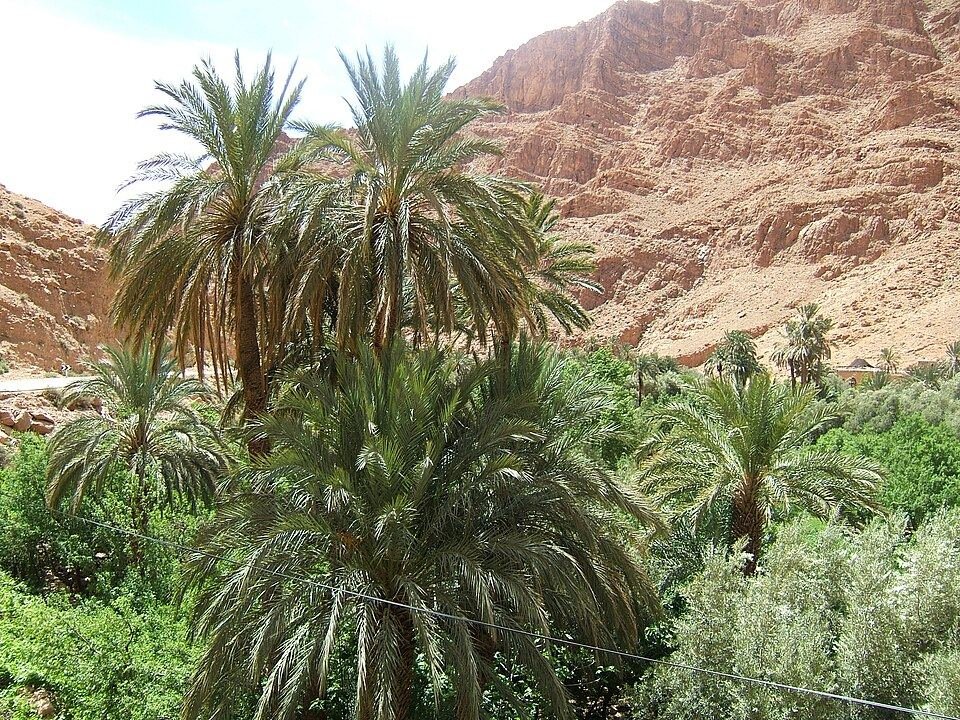
Medjool date palm overview
The desert fruit palm. USDA 9a to 11, damage around 20°F, full sun, and a deep need for heat if you want actual dates.
Region of origin
Arabian Peninsula to southern Pakistan
Native countries
Historical discovery
Linnaeus published Phoenix dactylifera in 1753. People had already farmed it for millennia in desert oases.
Names
Common names
Medjool date palm, Date palm, Date
Synonyms
- None widely used
Cold hardiness
Survives about 20°F / -7°C. Outdoor range USDA 9a–11b. Hover or click a zone, state, or country. Switch the U.S. map between states and hardiness zones.
Highlighted USDA zones 9a–11b. Green countries can be grown outdoors.
United States
In range Too cold
World
Native Can be grown
Alaska and Hawaii are state outlines with their overall zone range. A country is painted if its mildest inhabited winter is at least one USDA step milder than this palm’s hardiness.
Scientific facts
- Commercial dates need long, hot, dry summers. A humid Gulf Coast tree may live and still fruit poorly.
- Plants are male or female. You need both, or a named female plus hand pollen, for a crop.
- Offshoots at the base are how orchards clone a variety. Seedlings are a lottery.
Get this palm
Other helpful resources
Full care guide
The date palm is the oasis tree of hot, dry summers and the source of the fruit in the bag. It is tougher in cold than a coconut, and much hungrier for heat if you want a crop. USDA 9a to 11. Foliage burns around 20°F (-7°C).
Common Names:
Date palm, date.
Scientific Name:
Phoenix dactylifera L.
Origin:
Arabian Peninsula to southern Pakistan. Oasis agriculture spread it across North Africa and into California and Arizona.
Appearance:
A tall feather palm with a stout, fiber-covered trunk and a dense crown of long gray-green fronds. Old leaf bases stay on the trunk unless you skin them. Offshoots cluster at the base on young trees.
Growth Rate:
Moderate. Heat and water speed it up. Cool coastal summers slow both growth and fruit.
Max Growth Height:
Often 40 to 60 feet in gardens, taller in old oasis plantings. Give it room.
Foliage Spread:
The crown can span 20 to 30 feet. Spines on the lower leaflets are sharp. Keep walkways back.
Cold Hardiness and Hardiness Zone:
USDA 9a to 11. Mature trees take brief dips near 20°F (-7°C) with foliage burn. Zone 8 is not a date climate. For fruit, think Coachella, not a humid zone 9b backyard that never gets desert heat.
Soil Type:
Any well-drained soil. It handles sand, silt, and alkaline desert ground. Standing water at the roots is the usual killer.
Fruit and Flowering:
Trees are male or female. Females make the date bunches. Commercial groves hand-pollinate. Fruit wants a long, hot, dry ripening season.
Can it Grow Indoors:
Only as a young plant in a very bright space. It outgrows rooms and wants desert sun.
Light Requirements:
Full sun. Shade makes a thin, unhappy tree.
Water Requirements:
Deep, infrequent water once established. Keep it moist the first year. Do not confuse drought-tough with never-water.
Maintenance Level:
Medium to high if you want fruit (pollination, bunch support, pruning). As a landscape tree, medium: old fronds, spines, and mess. Feed in the growing season with palm-specific fertilizer with potassium and magnesium.
Common Diseases/Pests:
Bayoud disease in some North African groves, scale, and in some regions red palm weevil. In U.S. deserts, watch irrigation salt and boron. Overwatering in clay is a root problem, not a leaf bug.
Plant Care:
Plant in full sun with drainage. Water deeply while it establishes. If you want dates, start with a named offshoot, not a random seedling, and be honest about your summer heat.
Date palm Frequently Asked Questions:
1. Will a date palm fruit in Florida?
It may live. It rarely makes a commercial crop. Florida humidity and summer rain fight dry ripening. California and Arizona deserts are the U.S. date climates.
2. Do I need two trees?
For fruit, yes, a female and a pollen source. One landscape male or female is still a fine tree if you do not care about dates.
3. Is it the same as a Canary Island date?
No. Phoenix canariensis is a bulkier landscape palm with poorer fruit. Phoenix dactylifera is the crop species.
4. How cold can it go?
Mature trees in zone 9a can take brief readings near 20°F with burn. A coconut would already be dead. A windmill still has more cold room.
Grow a date palm for the silhouette and the heat. Grow named offshoots in a desert summer if you actually want dates.