
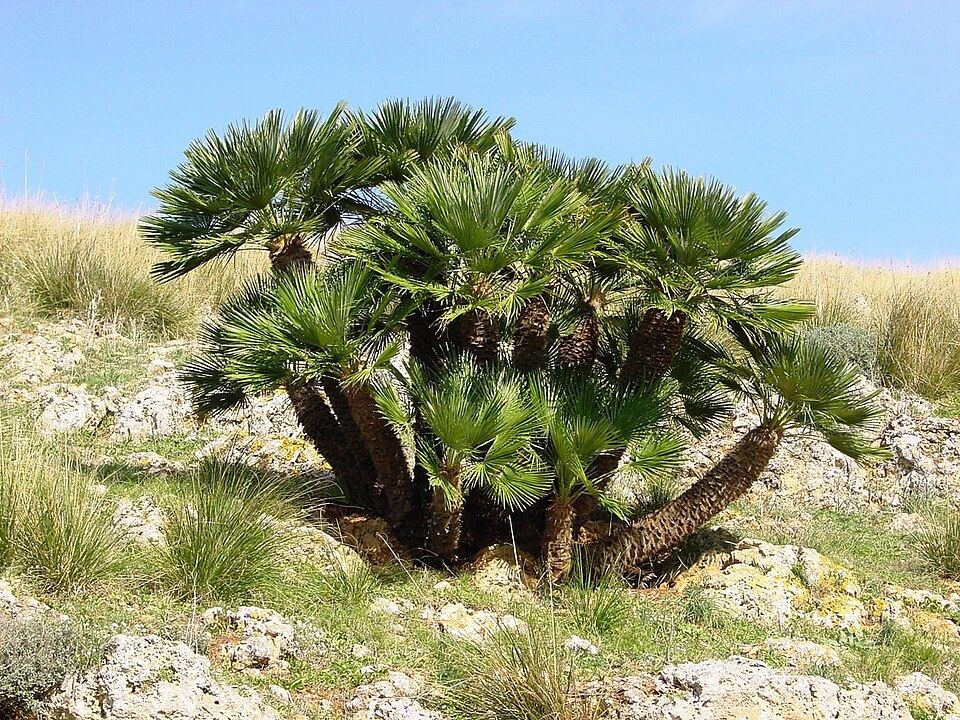
European fan palm overview
The clumping Mediterranean fan. USDA 8a to 11, the only palm native to mainland Europe, and a serious option where coconut is a fantasy.
Region of origin
Western and central Mediterranean
Native countries
Historical discovery
Linnaeus published Chamaerops humilis in 1753. It is the only palm native to mainland Europe.
Names
Common names
European fan palm, Mediterranean fan palm, Dwarf fan palm
Synonyms
- None widely used
Cold hardiness
Survives about 12°F / -11°C. Outdoor range USDA 8a–11a. Hover or click a zone, state, or country. Switch the U.S. map between states and hardiness zones.
Highlighted USDA zones 8a–11a. Green countries can be grown outdoors.
United States
In range Too cold
World
Native Can be grown
Alaska and Hawaii are state outlines with their overall zone range. A country is painted if its mildest inhabited winter is at least one USDA step milder than this palm’s hardiness.
Scientific facts
- The only palm native to continental Europe.
- Usually clustering. Single-trunk specimens exist but clumps are the look.
- Blue-silver forms (often sold as var. argentea or cerifera) come from North Africa.
Get this palm
Other helpful resources
Full care guide
The European fan palm is the clumping Mediterranean fan, and the only palm native to mainland Europe. USDA 8a to 11. If your winter kills a queen palm, this is one of the plants that still makes a yard look like it has palms.
Common Names:
European fan palm, Mediterranean fan palm, dwarf fan palm.
Scientific Name:
Chamaerops humilis L.
Origin:
Western and central Mediterranean, including North Africa.
Appearance:
A clustering fan palm with spiny petioles and stiff palmate leaves, green or silver depending on the form. Trunks stay short compared with Washingtonia. The clump gets wide.
Growth Rate:
Slow to moderate. Faster in heat with water, still not a queen palm.
Max Growth Height:
Often 6 to 12 feet in gardens, sometimes to 15 feet. Width is the planning number.
Foliage Spread:
A mature clump can span 8 to 20 feet. Plant it as a shrub, not a telephone pole.
Cold Hardiness and Hardiness Zone:
USDA 8a to 11. Established plants take readings in the low teens F with damage, sometimes lower in a perfect microclimate. It is in the conversation with windmill and needle palm, not coconut.
Soil Type:
Any well-drained soil. It handles limestone, sand, and dry banks. Wet clay in winter is the enemy.
Fruit and Flowering:
Dates of a sort: small, yellowish to brown. Not a food crop.
Can it Grow Indoors:
Only when young, in a very bright space. Spines and eventual size make it a poor houseplant.
Light Requirements:
Full sun. It takes some shade but gets thin.
Water Requirements:
Drought-tough once established. Water to establish. Extra water in extreme heat keeps it prettier.
Maintenance Level:
Low to medium. Spines are real. Wear gloves. Feed in the growing season with palm-specific fertilizer if you irrigate in sand. You can thin trunks to shape the clump.
Common Diseases/Pests:
Scale, palmetto weevil on stressed plants in the Southeast, and leaf spot in still, humid shade. Sun and drainage prevent most of it.
Plant Care:
Plant in full sun with drainage. Water the first season. Use it on the cold side of palm country, not as a coconut substitute that you still expect to look tropical-beach.
European fan palm Frequently Asked Questions:
1. Is this the hardiest palm?
It is one of the hardier landscape fans. Needle palm and some windmills still win in a colder yard.
2. Does it stay small?
Short, not small. The clump gets wide. Read spread, not height.
3. Green or silver?
Silver forms are usually North African. Same species group, same care, more drought-look.
4. Can I grow it in a pot?
Yes, in a large, drained container, with winter protection where nights go below the teens.
If you want a real palm in zone 8 or a dry Mediterranean yard, European fan is a clump that belongs there. Leave the coconut for the tropics.