
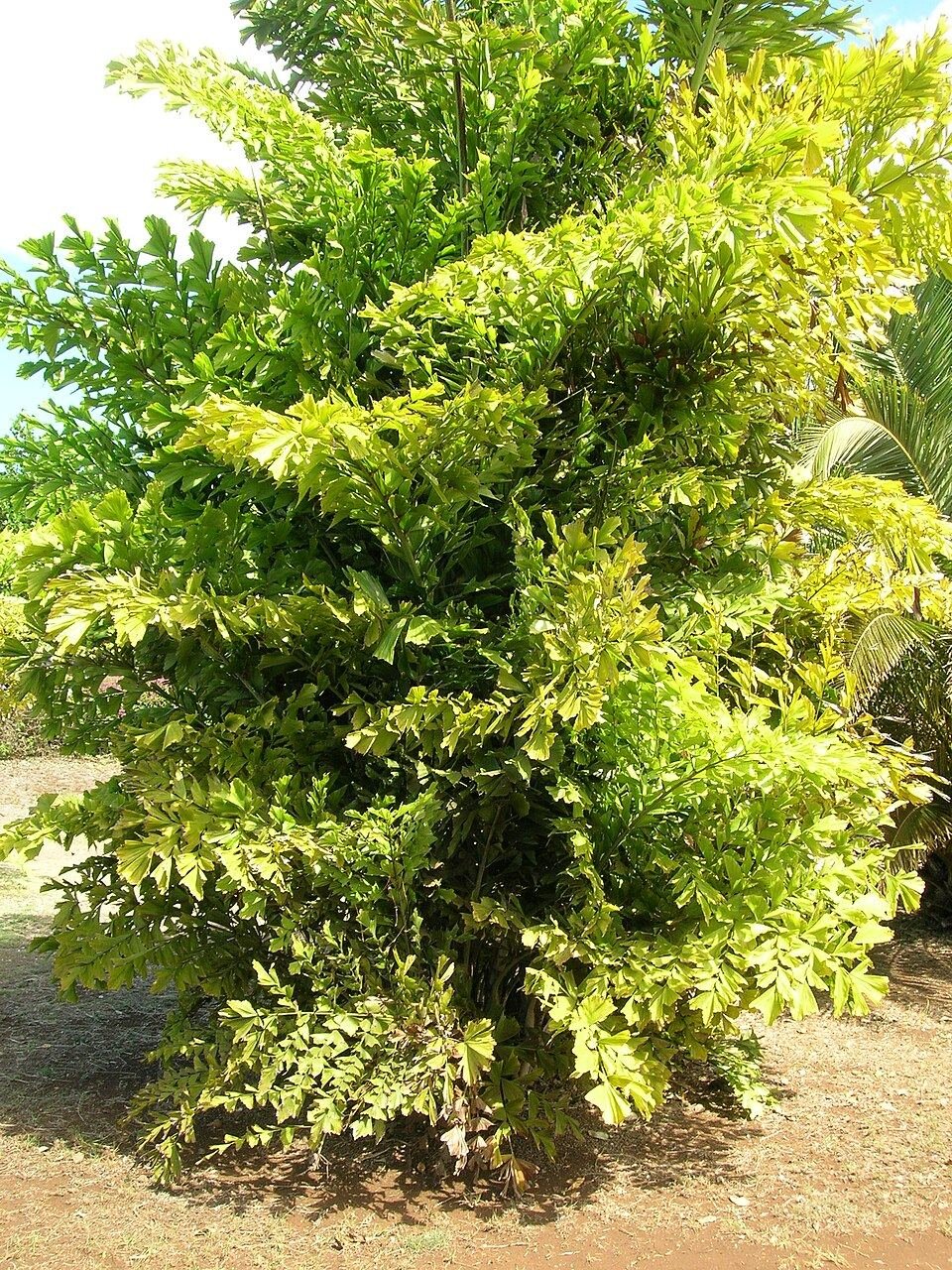
Fishtail palm overview
The clustering fishtail palm of bright rooms and frost-free yards. USDA 10a to 12, jagged leaflets, and a plant that dies after flowering on each stem.
Region of origin
Southeast China to Indochina and Malesia
Native countries
Historical discovery
Joao de Loureiro published Caryota mitis in 1790. It is the clustering fishtail sold for interiors and tropical yards. Caryota urens is the giant solitary toddy palm.
Names
Common names
Fishtail palm, Burmese fishtail palm, Clustering fishtail
Synonyms
- None widely used
Cold hardiness
Survives about 28°F / -2°C. Outdoor range USDA 10a–12a. Hover or click a zone, state, or country. Switch the U.S. map between states and hardiness zones.
Highlighted USDA zones 10a–12a. Green countries can be grown outdoors.
United States
In range Too cold
World
Native Can be grown
Alaska and Hawaii are state outlines with their overall zone range. A country is painted if its mildest inhabited winter is at least one USDA step milder than this palm’s hardiness.
Scientific facts
- Leaflets are triangular and jagged, like a fish tail. Bipinnate, unusual among common palms.
- Each stem is monocarpic: flower, fruit, then that cane dies. The clump continues.
- Irritating fruit pulp. Gloves for cleanup. Not a salad palm.
Get this palm
Other helpful resources
Full care guide
The fishtail palm in shops is usually Caryota mitis, a clustering palm with jagged, fish-tail leaflets. USDA 10a to 12 outdoors. Indoors it wants a bright room and even water. Each stem flowers once, then dies. The clump keeps going.
Common Names:
Fishtail palm, Burmese fishtail, clustering fishtail. The giant toddy fishtail is Caryota urens, a different, solitary tree.
Scientific Name:
Caryota mitis Lour.
Origin:
Southeast China to Indochina and Malesia.
Appearance:
Many stems, bipinnate leaves, and leaflets chopped like a fish tail. Fruit is dull red to black and messy. The sap and fruit can irritate skin.
Growth Rate:
Moderate to fast in heat.
Max Growth Height:
Often 15 to 25 feet outdoors. Indoor clumps 6 to 12 feet if you let them.
Foliage Spread:
A clump 8 to 15 feet wide in the ground.
Cold Hardiness and Hardiness Zone:
USDA 10a to 12. Damage around 28°F (-2°C). Zone 9 is a gamble.
Soil Type:
Rich, moist, well-drained. Sand needs water and fertilizer.
Fruit and Flowering:
Irritating pulp. Birds may eat it. Wear gloves. Not edible for you.
Can it Grow Indoors:
Yes, as a large bright-room plant. It wants more light than parlor palm.
Light Requirements:
Bright indirect indoors. Filtered sun to bright shade outdoors. Harsh inland sun burns.
Water Requirements:
Even moisture. Dry air plus dry mix brings mites and brown tips.
Maintenance Level:
Medium. Cut a finished cane at the base after it fruits. Feed in the growing season with palm-specific fertilizer. Rinse indoor dust. Gloves for fruit.
Common Diseases/Pests:
Spider mites indoors, scale, and nutrient yellowing in sand.
Plant Care:
Bright light, even water, frost-free. Do not buy urens expecting a houseplant. That one wants to be a 70-foot tree that then dies.
Fishtail palm Frequently Asked Questions:
1. Fishtail palm or toddy palm?
Mitis is the clustering plant in pots and tropical gardens. Urens is the giant solitary toddy or wine palm. Same jagged leaflets, different life.
2. Why did a stem die after flowering?
Each cane is monocarpic. Flower, fruit, then that stem is done. Leave the rest of the clump.
3. Can I grow it indoors?
Yes, in a bright room. It will be a large plant. A north nook is parlor-palm territory.
4. Are the fruits poisonous?
The pulp is irritating. Do not eat them. Gloves for cleanup.
Buy Caryota mitis when you want the jagged indoor or tropical-yard fishtail. If you wanted a 70-foot specimen that dies after one huge bloom, that is urens, and you need land.