
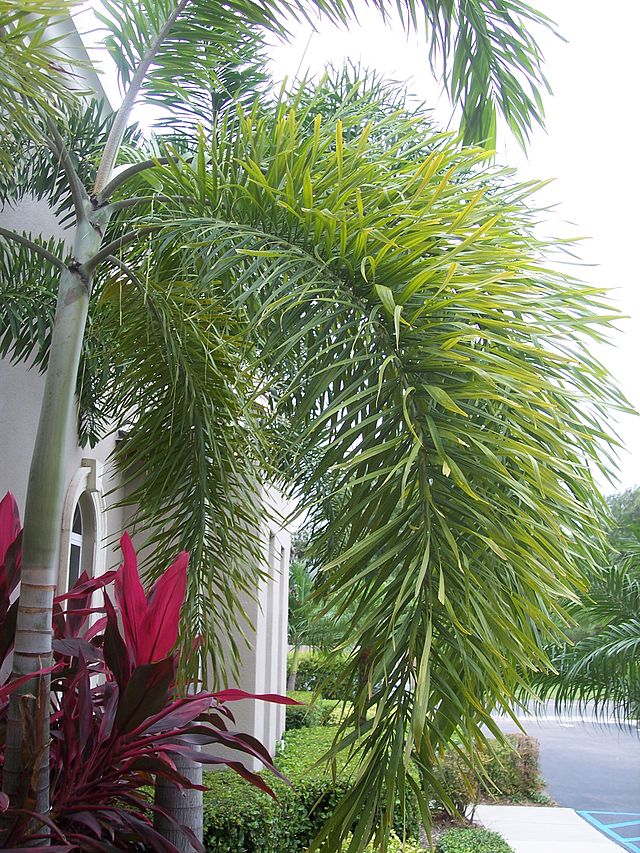
Foxtail palm overview
A self-cleaning feather palm with a bushy, fox-tail crown. Wild plants are confined to a tiny part of Queensland; cultivated plants need true subtropical heat.
Region of origin
North Queensland, Australia
Native countries
Historical discovery
Known to the Kuuku Ya'u people; the genus honors Wodyeti, the last male speaker of that group. Tony Irvine described the species in 1983, a late formal debut for such a popular landscape palm.
Names
Common names
Foxtail palm
Synonyms
- None widely used
Cold hardiness
Survives about 27°F / -3°C. Outdoor range USDA 10a–11b. Hover or click a zone, state, or country. Switch the U.S. map between states and hardiness zones.
Highlighted USDA zones 10a–11b. Green countries can be grown outdoors.
United States
In range Too cold
World
Native Can be grown
Alaska and Hawaii are state outlines with their overall zone range. A country is painted if its mildest inhabited winter is at least one USDA step milder than this palm’s hardiness.
Scientific facts
- The only species in Wodyetia.
- Fronds are plumose: leaflets radiate around the rachis, unlike a flat coconut frond.
- Sustained cold below about 27°F kills the bud. Zone 9b is a gamble, not a climate.
Get this palm
Other helpful resources
Full care guide
The foxtail palm, also known as Wodyetia bifurcata, is one of the most sought after palm trees for its beautiful and exotic leaves. The foxtail palm is natively from the area of Queensland, Australia. This palm can tolerate temperatures down 27 degrees Fahrenheit thriving in hardiness zones 10a and above. It’s also one of the fastest growing palm trees available.
Common names:
Foxtail palm, Wodyetia palm
Scientific name:
Wodyetia bifucata
Origin:
The foxtail palm is native to northern Australia, particularly the area known as Queensland. The foxtail palm thrives in warm, tropical climates.
Appearance:
This palm is set with fluffy, vibrant green fronds, giving it a distinct and eye-catching appearance. Each palm frond takes the shape of a fox’s tail, hence the name Foxtail palm.
Growth Rate:
This is an extremely fast growing palm. Under optimal conditions, the fox tail palm can grow by 2-3 feet per year!
Max Growth Height:
The foxtail palm can achieve heights up to 30 feet.
Foliage Spread:
The foliage of the foxtail palm can spread up to 10 to 15 feet, providing ample shade and beauty.
Cold Hardiness and Hardiness Zone:
While it can withstand short dips in temperature down to around 27°F (-1°C), prolonged exposure to colder weather will cause some damage. It’s best suited for USDA hardiness zones 10 to 11, favoring warmer, tropical regions. It’s been known to survive for several years in well protected areas of zone 9b as well.
Soil Type:
The foxtail palm likes well-draining soil. Whether it’s sandy, loamy, or clay soil, as long as it drains well, the foxtail palm will likely thrive.
Fruit and Flowering:
As it matures, the foxtail palm blooms with clusters of vivid red or orange fruits. Its cream colored flowers eventually produce a small fruit that is not edible. The fruits are toxic for consumption for most animals and humans.
Can it Grow Indoors:
Yes, it’s possible! When provided with ample sunlight and the right conditions, the foxtail palm can thrive indoors, adding a tropical vibe to your living space.
Light Requirements:
If planted outside the foxtail palm requires partial shade to full sun.
Water Requirements:
Moderate watering. Keep it consistently moist but not waterlogged to avoid root rot.
Maintenance Level:
Medium maintenance overall, the foxtail palm appreciates regular watering and high quality palm-specific fertilizer 2-3 times a year. Pruning dead fronds helps maintain its aesthetic appeal, but is not necessary.
Foxtail Palm Common Issues
Common Diseases/Pests
Thankfully, this palm isn’t prone to many diseases or pests. Watch out for spider mites or mealybugs on occasion.
Leaves Browning and Dying
If your Foxtail palm’s leaves are brown and brittle check the moisture of the soil. If the soil is dry, your palm is likely underwatered.
Solution: Water your foxtail palm and fully saturate the soil.
Plant Care
Maintain a regular watering schedule and consider occasional palm-specific fertilizer for optimal growth.
Foxtail Palm Frequently Asked Questions
1. Can I grow multiple Foxtail palms close together?
Yes, Foxtails can be planted relatively close together. Ensure they have enough space for proper growth without overcrowding.
2. Are Foxtail palms suitable for seaside locations?
Yes, they tolerate salt spray and windy conditions making them a good choice for coastal landscapes.
3. How do I protect my Foxtail palm from cold snaps?
During freezing weather your Foxtail can take damage or even die. You can minimize this risk by planting your Foxtail palm close to your house using an outside wall as a windbreak. You may also consider covering the palm with frost cloth.
Whether you choose to grow this palm in a garden or indoor space, the foxtail palm adds a touch of tropical elegance wherever it grows. With a little care the foxtail palm can become the centerpiece of your tropical landscape.