
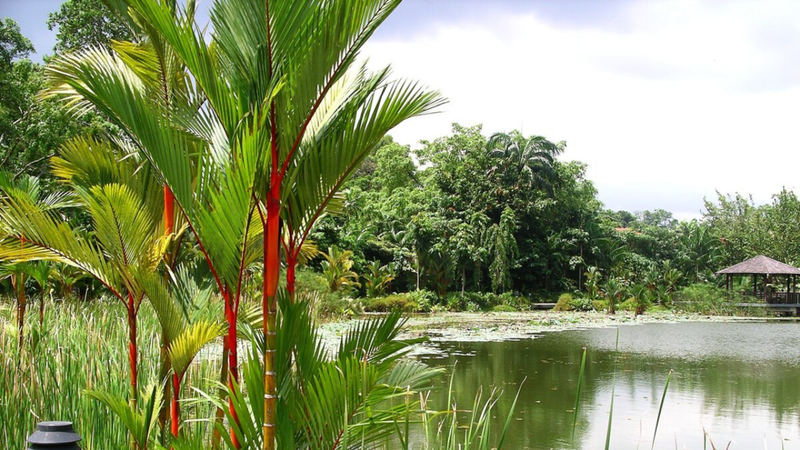
Lipstick palm overview
A clustering peat-swamp palm with a glossy red crownshaft. Beautiful and famously intolerant of cold or drought.
Region of origin
Thailand to western Malesia
Native countries
Historical discovery
Carl Ludwig Blume named Cyrtostachys renda in 1838 from Malesian material. The sealing-wax scarlet crownshaft is unique among commonly grown palms.
Names
Common names
Lipstick palm, Sealing-wax palm, Maharajah palm
Synonyms
- Cyrtostachys lakka Becc.
Cold hardiness
Survives about 35°F / 2°C. Outdoor range USDA 10b–12a. Hover or click a zone, state, or country. Switch the U.S. map between states and hardiness zones.
Highlighted USDA zones 10b–12a. Green countries can be grown outdoors.
United States
In range Too cold
World
Native Can be grown
Alaska and Hawaii are state outlines with their overall zone range. A country is painted if its mildest inhabited winter is at least one USDA step milder than this palm’s hardiness.
Scientific facts
- The red is in the crownshaft and petioles, not the leaflets.
- Wild plants grow in freshwater swamps. They want wet feet and heat.
- Below the mid-30s °F it declines quickly; not a zone 10a landscape palm.
Get this palm
Other helpful resources
Full care guide
Dive into the world of the Lipstick Palm Tree, a tropical standout known for its vivid red stems and lush green foliage. Thriving in USDA hardiness zones 10 to 11, the Lipstick Palm (Cyrtostachys renda) is a perfect addition to any tropical garden.
Get a Cyrtostachys renda palm plant delivered directly to your door:
Common Names and Scientific Classification
- Common Names: Lipstick Palm, Red Sealing Wax Palm, Rajah Palm
- Scientific Name: Cyrtostachys renda
Origin and Distinctive Features
- Native Habitat: Originating from the swamps and rainforests of Southeast Asia.
- Unique Traits: Stunning red and green colors
Growth and Physical Characteristics
- Growth Rate: Moderate growth. The Lipstick Palm can grow 1-2 feet per year
- Maximum Height: Can reach up to 20 feet in ideal conditions.
- Foliage Spread: Offers a moderate spread, making it suitable for varied garden sizes.
- Fruit: Lipstick palm fruit begins green and slowly turns blue-black. It is not edible.
- Flowers: Produces small pale green flowers. The Lipstick palm is not known for its flowers.
Climate Preferences and Hardiness Zone
- Temperature Range: Prefers warm, tropical climates. This palm is not frost-tolerant. Doesn’t tolerate temperatures below 35 degrees F.
- USDA Hardiness Zones: Best suited for zones 10b to 11.
Soil Type
- Soil Requirements: Moist, well-draining soil.
- Potting soil recommendation: Succulent specific potting soil for cactus and palms
- Fertilizer: Use high quality palm-specific fertilizer 2-3 times per year during the growing season for optimal growth.
Comprehensive Care Guide for Lipstick Palm Trees
Ideal Lighting Conditions
- Light Requirements: Prefers partial shade to full sun. Avoid harsh direct sun to prevent leaf burn.
- Placement Tips: Ideal for sheltered areas receiving indirect sunlight.
Watering Schedule and Techniques
- Water Needs: Requires consistent moisture without waterlogging.
- Drainage Importance: Ensure good drainage to prevent root rot.
Nutrient Management and Soil Composition
- Fertilization Regimen: Benefit from regular, balanced fertilization 2-3 times per year during the growing seasons.
- Soil Composition: Prefers a peat-based, well draining, nutrient-rich soil mix.
Temperature and Humidity Preferences
- Ideal Temperature: Cyrtostachys renda thrives in warm conditions and is vulnerable to cold. keep it above 50°F (10°C).
- Humidity Requirements: The Lipstick palm loves high humidity, mimicking its native tropical environment.
Common Challenges
Pest and Disease Prevention
- Common Pests: Watch out for spider mites and mealybugs.
- Solution: If your palm is suffering from pests consider applying a spray on pesticidal horticulture oil.
- Yellowing Leaves: Often a sign of overwatering or poor drainage.
- Browning Tips: Could indicate under-watering or nutrient deficiency.
Lipstick Palm FAQs: Your Questions Answered
1. Is trimming the red trunk of a Lipstick Palm advisable?
Avoid trimming the vibrant red trunks. This could expose the palm to infections and damage.
2. Can Lipstick Palms thrive solely indoors?
Yes, Lipstick Palms can thrive indoors if provided with adequate sunlight. Consider placing them near east or west-facing windows to ensure they receive sufficient sunlight.
Conclusion
The Lipstick Palm Tree (Cyrtostachys renda) is not just a plant, it’s a tropical statement. With the right care, this stunning palm can be the centerpiece of your garden or indoor space. Enjoy the lush, vibrant beauty of the Lipstick Palm.