
Mexican fan palm
Washingtonia robusta H.Wendl.
Kew currently treats this as Washingtonia filifera var. robusta. The landscape trade still uses Washingtonia robusta.
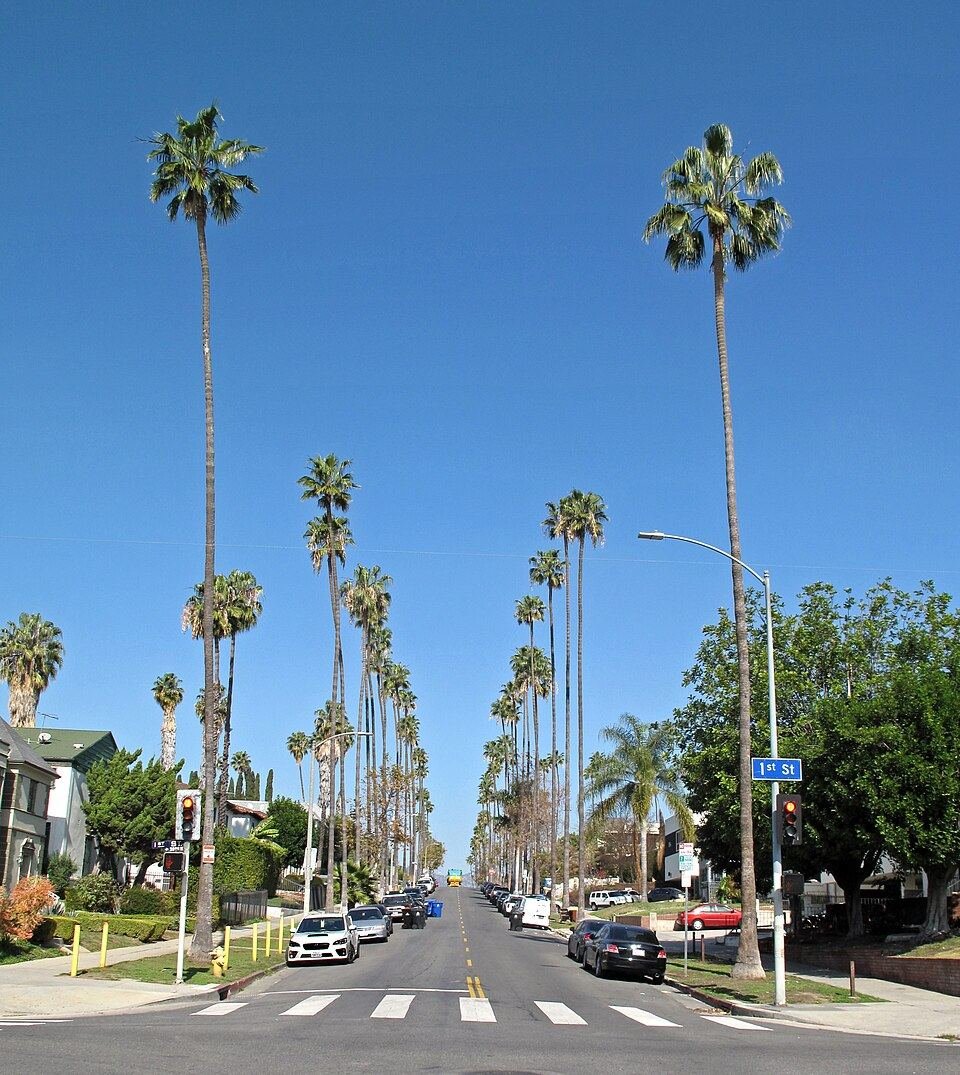
Mexican fan palm overview
The tall, skinny skyduster of southern streets. Native to Baja, USDA 9a to 11, a skirt of old fans, and a much thinner trunk than the California fan palm.
Region of origin
Baja California, Mexico
Native countries
Historical discovery
Hermann Wendland published Washingtonia robusta in 1883. Kew currently treats it as a variety of the California fan palm. Nurseries, cities, and search still use Washingtonia robusta.
Names
Common names
Mexican fan palm, Skyduster, Washingtonia
Synonyms
- Washingtonia filifera var. robusta (H.Wendl.) Parish
Cold hardiness
Survives about 23°F / -5°C. Outdoor range USDA 9a–11b. Hover or click a zone, state, or country. Switch the U.S. map between states and hardiness zones.
Highlighted USDA zones 9a–11b. Green countries can be grown outdoors.
United States
In range Too cold
World
Native Can be grown
Alaska and Hawaii are state outlines with their overall zone range. A country is painted if its mildest inhabited winter is at least one USDA step milder than this palm’s hardiness.
Scientific facts
- Kew's checklist lumps it under Washingtonia filifera var. robusta. Landscape plants are still sold and planted as W. robusta.
- The petiole has orange spines. The trunk is slender compared with California fan palm.
- Old leaves hang in a thatch skirt unless you trim them. Cities usually skin the trunk.
Get this palm
Other helpful resources
Full care guide
The Mexican fan palm is the tall, skinny skyduster along so many southern streets. Native to Baja California. USDA 9a to 11. It takes more drought and a bit less cold than a coconut, and it gets much taller than people expect when they plant a 15-gallon tree by the driveway.
Common Names:
Mexican fan palm, skyduster, Washingtonia.
Scientific Name:
Washingtonia robusta H.Wendl. Kew currently files it as Washingtonia filifera var. robusta. Nurseries still tag robusta.
Origin:
Baja California, Mexico. Planted for a century in California, Arizona, Texas, Florida, and Australia.
Appearance:
A very tall fan palm with a slender trunk and a compact crown of palmate leaves. Petioles are armed. Dead leaves hang in a skirt unless you cut them. Compare the thick, stout California fan palm, which stays shorter and fatter.
Growth Rate:
Fast in heat with water. One of the quicker ways to get a tall trunk in zone 9b and 10.
Max Growth Height:
Often 70 to 100 feet in old street plantings. Plan for that, not the nursery can.
Foliage Spread:
The crown is relatively narrow, about 8 to 12 feet. The height is the problem, not the spread.
Cold Hardiness and Hardiness Zone:
USDA 9a to 11. Damage around 23°F (-5°C). Established trees in protected 9a sites can look rough after a hard freeze and still push. Zone 8 is a different palm.
Soil Type:
Any well-drained soil. It handles sand, clay (if drained), and alkaline desert ground.
Fruit and Flowering:
Small black fruit in hanging clusters. Birds eat them. Seedlings come up in gutters, alleys, and neglected lots.
Can it Grow Indoors:
No. A seedling is a novelty. It wants to be a street tree.
Light Requirements:
Full sun.
Water Requirements:
Moderate. Keep it moist the first year. Established trees take drought better than a queen palm, but they look better with occasional deep water in heat.
Maintenance Level:
Medium. The skirt is a fire and rat issue in some towns. Cities boot-cut or skin the trunk. Feed in the growing season with palm-specific fertilizer. Watch potassium in sand.
Common Diseases/Pests:
Palm weevils on stressed trunks, scale, and in some California plantings Fusarium wilt of Washingtonia, which has no good cure. Do not move contaminated tools between trees.
Plant Care:
Plant in full sun, away from power lines and two-story roofs. Water to establish. Decide early whether you will keep a skirt or run a regular pruning cycle.
Mexican fan palm Frequently Asked Questions:
1. Mexican fan or California fan?
Mexican (robusta) is taller and thinner. California (filifera) is stouter, a bit hardier, and native to the southwest U.S. Both are fan palms with skirts.
2. How fast does it grow?
Fast in heat. A young tree can add several feet of trunk a year with water and fertilizer.
3. Can I grow it in zone 8?
No. Use windmill, pindo, needle palm, or cabbage palmetto.
4. Why does Kew call it a variety of filifera?
Checklist taxonomy lumped the two. Landscape plants still behave like two street trees. This page follows the name on the nursery tag and the search box.
Plant a Mexican fan palm when you want height and you have the heat. Do not plant it under wires, and do not confuse the skinny skyduster with the stout California fan.