Outdoor verdict
Peach palm is not an outdoor plant where frost happens. USDA 10b+ means nights that stay near 32F. If your winter drops below that, skip it. Do not wrap a tropical and hope.
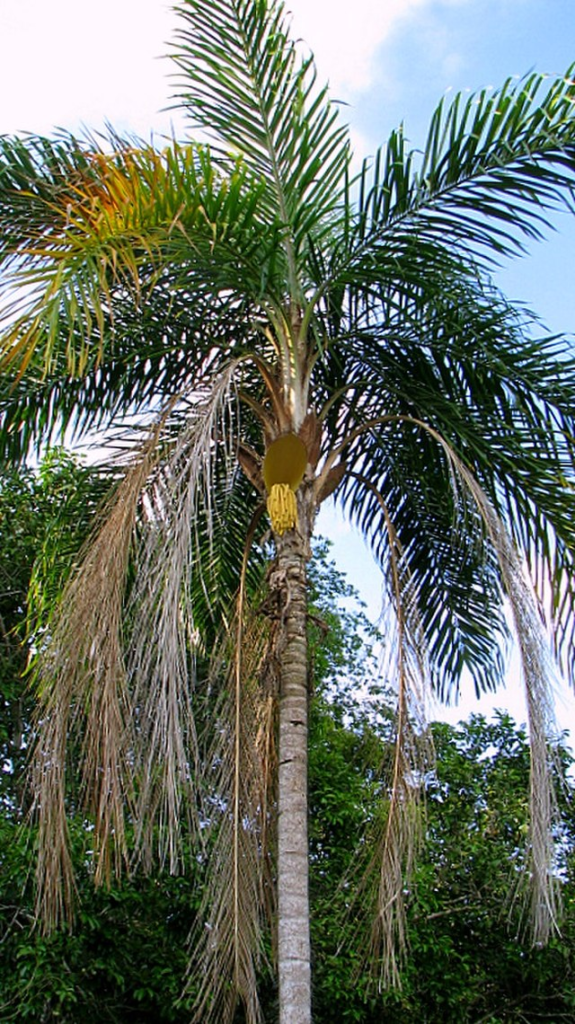
A spiny, clustering food palm of the American tropics. Fruit and heart-of-palm (palmito) are the crop; it is not a cold-climate landscape plant.
Cold hardiness
Survives about 32°F / 0°C. Outdoor range USDA 10b–12a. Hover or click a zone, state, or country. Click a state to open palms that grow there.
Highlighted USDA zones 10b–12a. Green countries can be grown outdoors.
United States
In range Too cold
World
Native Can be grown
Alaska and Hawaii are state outlines with their overall zone range. A country is painted if its mildest inhabited winter is at least one USDA step milder than this palm’s hardiness.
Winter care
Drainage matters more than a blanket. Soil: Rich, moist, well-drained. Water: Keep soil constantly moist (hydric). Wrapping does not buy an extra zone. If the winter is colder than the kill number, keep it in a pot.
Scientific facts
- Two varieties are accepted: var. gasipaes and var. chichagui.
- Many landraces are spineless from long selection.
- Needs real tropical heat; freeze damage is severe.
Region of origin
Central and southern tropical America (long cultivated)
Native countries
Historical discovery
Karl Kunth published Bactris gasipaes in 1816 from Humboldt and Bonpland’s tropical American collections. It is an ancient crop, not a newly found ornamental.
Names
Common names
Peach palm, Pejibaye, Pupunha, Chontaduro
Synonyms
- Guilielma gasipaes (Kunth) L.H.Bailey
Full care guide
The Peach Palm (Bactris gasipaes) is known for its edible fruits and multipurpose landscaping use. It’s a versatile tropical palm native to Central and South America. Thriving in USDA zones 10-11, it’s a popular choice for both ornamental and agricultural purposes.
Get Peach Palm seeds delivered to your door:
Growth and Physical Characteristics
Growth Rate: Moderate, with significant growth during the rainy season.
Maximum Height: Typically grows up to 65 feet.
Foliage Spread: Spiny fronds can extend several feet, requiring ample space.
Climate Preferences and Hardiness Zone
Temperature Range: Prefers tropical climates, sensitive to frost. Temperatures below 30 degrees F may kill this palm.
USDA Hardiness Zones: Best suited for zones 10-12.
Soil Type
Soil Requirements: This palm thrives in most well-draining soil types. Prefers rich, well-draining soil.
Potting Mix Recommendation: Fast-draining palm/citrus potting mix.
Fertilizer: Use a complete palm fertilizer every 2-3 months during growing seasons.
Other Requirements
Light Requirements: Full sun to partial shade.
Placement Tips: Ideal for open spaces or as part of a forest.
Watering Schedule: Regular watering, more frequent during dry periods.
Temperature and Humidity: Prefers high humidity and warm temperatures.
Pest and Disease Prevention
Common Pests: Susceptible to pests like spider mites and mealybugs in dry conditions.
Treatment: If your palm is suffering from pests consider applying a spray on pesticidal horticulture oil.
Diseases: Peach Palm trunks can be infected with water molds while foliage can be attacked by different varieties of fungi.
Propagating Peach Palms
From Seeds
Plant fresh seeds in a fertile, moist potting mix and maintain warmth and humidity for germination.
Offshoots
Mature trees produce offshoots or “pups” that can be separated and replanted.
Peach Palm FAQs
1. Are Peach Palms fast-growing?
Peach Palms have a moderate growth rate, with more growth during rainy seasons.
2. Can Peach Palms be grown in pots?
Due to their size and growth Peach Palms are better suited to outdoor ground planting.
3. Are Peach Palm fruits edible?
Yes, the fruits are a popular food source in many regions of Central and South America. Fruit must be cooked before eating.
4. Do Peach Palm trunks have spines?
Some varieties of Peach Palms will grow large spines on its trunk to protect itself from wildlife. Be cautious around these thorn-like features.
Conclusion
The Peach Palm is an attractive addition to any tropical or subtropical landscape that also offers some agricultural value. This palm offers both tropical aesthetics and edible fruits. Proper care of your Peach Palm will result in a healthy, productive palm for your garden.
Peach palm questions
Will Peach palm live outside?
Not where frost happens. Peach palm wants nights near 32F (USDA 10b+). Grow it in a pot and bring it in.
What do nurseries mislabel Peach palm as?
Common names wander. The accepted name is Bactris gasipaes. Read the Latin on the tag before you buy.
Pot or ground for Peach palm in a cold state?
Ground where winter stays above about 32F. A pot does not make a cold-tender palm hardy. Skip it if the number fails.
Related palms
The mix-up, the substitute, then nearby hardiness.