
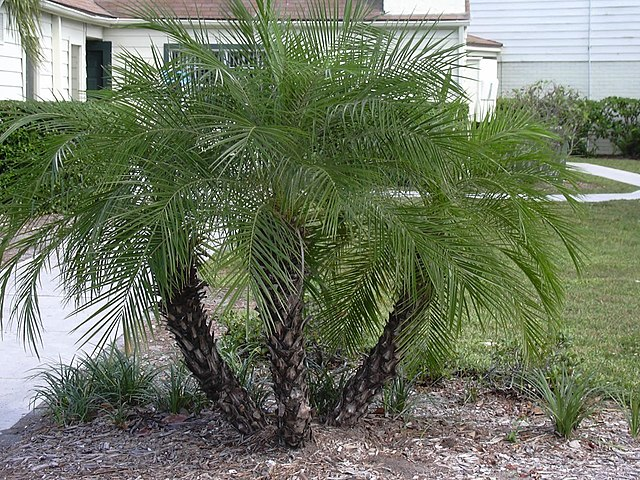
Pygmy date palm overview
The fine-leaved patio date. A true Phoenix, but dwarf next to a Canary Island date, and only modestly cold-hardy.
Region of origin
Southern China to northern Indochina
Native countries
Historical discovery
James O’Brien described it in 1889, commemorating orchid collector Carl Roebelen, who found plants along the Mekong.
Names
Common names
Pygmy date palm, Miniature date palm, Roebelenii palm
Synonyms
- None widely used
Cold hardiness
Survives about 28°F / -2°C. Outdoor range USDA 10a–11b. Hover or click a zone, state, or country. Switch the U.S. map between states and hardiness zones.
Highlighted USDA zones 10a–11b. Green countries can be grown outdoors.
United States
In range Too cold
World
Native Can be grown
Alaska and Hawaii are state outlines with their overall zone range. A country is painted if its mildest inhabited winter is at least one USDA step milder than this palm’s hardiness.
Scientific facts
- Kew lists the lifeform as a shrub. Trunks stay slender and often multiple.
- Spines on the lower leaf (typical of Phoenix) still catch ankles.
- Not a substitute for windmill or pindo in zone 8–9 winters.
Get this palm
Other helpful resources
Full care guide
Phoenix roebelenii is a popular and charming miniature palm known for its elegant appearance and versatility in landscaping. Thriving in USDA hardiness zones 9 to 11, this palm is an excellent choice for adding a tropical touch to smaller spaces.
Get a Phoenix Roebelenii palm plant delivered directly to your door:
Common Names and Scientific Classification
- Common Names: Pygmy Date Palm, Miniature Date Palm, Dwarf Date Palm
- Scientific Name: Phoenix roebelenii
Origin and Distinctive Features
- Native Habitat: Native to the forest undergrowth of Southeast Asia.
- Unique Traits: Features a slender trunk and short arching fronds. Known for its miniature appearance and ability to be planted in groups.
- Fruit: The fruits/ dates on this palm can be eaten. Fruits turn purple when ripe.
Growth and Physical Characteristics
- Growth Rate: Slow to moderate growth rate. Phoenix Roebelenii can grow 6 inches to 1 foot per year.
- Maximum Height: Typically reaches 6 to 10 feet in height after several years of growth.
- Foliage Spread: The Pygmy date palm as a smaller spread of about 6 to 8 feet making it a great option to plant in groups or triplets.
Climate Preferences and Hardiness Zone
- Temperature Range: Prefers warm climates but is more cold-tolerant than many tropical palms. This palm will sustain damage and potentially die below temperatures of 28 degrees F.
- USDA Hardiness Zones: The Pygmy date palm is best suited for zones 9 to 11.
Soil Type
- Soil Requirements: Prefers well-draining, fertile soil.
- Potting soil recommendation: Succulent specific potting soil for cacti and palms
- Fertilizer: high quality palm-specific fertilizer applied 2-3 times during the growing season.
Comprehensive Care Guide for Pygmy Date Palms
Ideal Lighting Conditions
- Light Requirements: Thrives in full sun to partial shade.
- Placement Tips: Perfect for understory planting or shaded areas in gardens.
Watering Schedule and Techniques
- Water Needs: Check the soil before watering. If the top soil is dry you should consider giving your pygmy date palm a watering. Consistent moisture is key, but avoid waterlogging.
- Drainage Importance: Drainage is essential to prevent root rot.
Nutrient Management and Soil Composition
- Fertilization Regimen: Regular fertilization during the growing season enhances growth.
- Soil Composition: Best in a loamy, slightly acidic to neutral soil mix.
Temperature and Humidity Preferences
- Ideal Temperature: Prefers temperatures above 50°F (10°C).
- Humidity Requirements: Tolerates average humidity levels.
Pest and Disease Prevention
- Common Pests: Susceptible to spider mites, scale insects, and occasionally mealybugs.
- Solution: If your palm is suffering from pests consider applying a spray on pesticidal horticulture oil.
- Yellowing Leaves: May indicate overwatering or nutrient deficiency.
- Browning Tips: Often a sign of underwatering or low humidity.
Propagating New Pygmy Date Palms
- Pygmy date palms can be grown from seeds or propagated from offshoots called pups.
From a Seed
To start from seed, plant ripe date seeds in a loose, fast-draining potting mix. Keep warm and evenly moist, not soggy. Germination is slow and uneven but seedlings transplant well once several leaves emerge.
Replanting Offshoots/Pups
The easiest way to get new pygmy date palms is by removing and replanting pups. Use a clean, sharp knife to remove young offshoots with roots attached from the base of mature plants. Replant palm pups in small containers using well-draining potting soil.
Keep new transplants warm, moderately moist and out of direct sun until established. Feed with balanced fertilizer once new fronds emerge. Remove pygmy date palm pups this way every few years to control mature palm size.
Pygmy Date Palm FAQs:
1. Can Pygmy Date Palms be grown indoors?
Yes, they are excellent as indoor plants with sufficient light and care.
2. Are Pygmy Date Palm dates edible?
Yes, the fruits produced by Phoenix roebelenii are edible and commonly harvested.
3. Can I grow multiple Pygmy Date Palms together?
Yes, these palms are perfect for growing in pairs and trios. Their small height and limited foliage spread make it ideal for clustering together.
Conclusion
The Pygmy Date Palm (Phoenix roebelenii) is a versatile and attractive palm suitable for both indoor and outdoor environments. This palm is a common decoration for areas with limited space. With proper care, this palm can bring a sense of the tropics to any setting.