
Sago palm
Cycas revoluta Thunb.
Not a true palm. Included because nurseries still sell it as one, and because it is a cold-climate “palm look” plant.
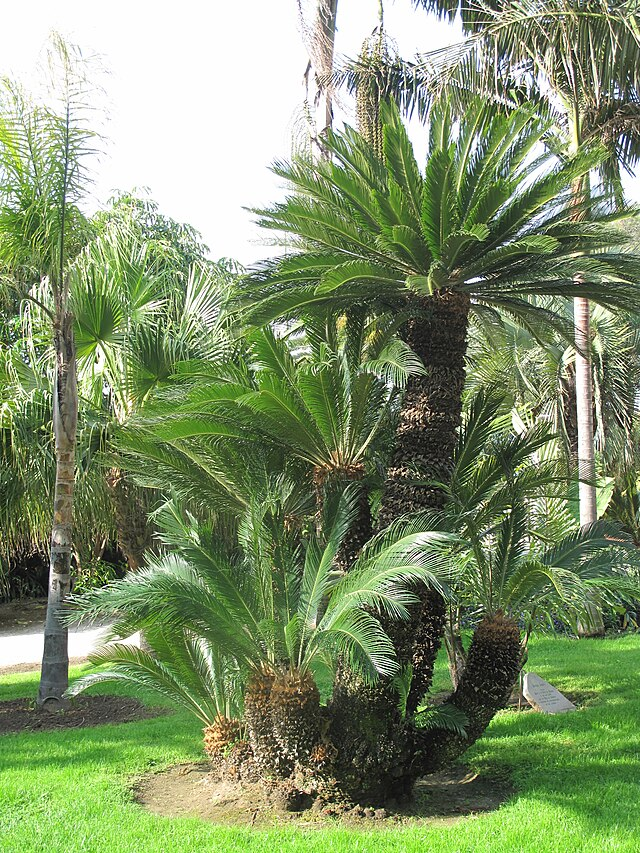
Sago palm overview
A stiff, fern-like cycad sold as a “palm.” It is not in the palm family. Seeds and all parts are toxic to pets; the starch “sago” must be processed to be edible.
Region of origin
Southern Japan (widely cultivated)
Native countries
Historical discovery
Carl Peter Thunberg described Cycas revoluta in 1782 from Japanese material. It is a cycad that evolved before true palms.
Names
Common names
Sago palm, King sago, Japanese sago
Synonyms
- None widely used
Cold hardiness
Survives about 15°F / -9°C. Outdoor range USDA 8b–11a. Hover or click a zone, state, or country. Switch the U.S. map between states and hardiness zones.
Highlighted USDA zones 8b–11a. Green countries can be grown outdoors.
United States
In range Too cold
World
Native Can be grown
Alaska and Hawaii are state outlines with their overall zone range. A country is painted if its mildest inhabited winter is at least one USDA step milder than this palm’s hardiness.
Scientific facts
- True palms are Arecaceae; this is Cycadaceae, closer to ancient seed plants than to coconuts.
- Extremely slow. A thick trunk takes decades.
- Cold-hardier than most tropical palms, into the mid-teens °F when established.
Get this palm
Other helpful resources
Full care guide
The cold hardy palm that’s not a real palm, Sago Palms make eye-catching accent plants indoors and out. Learn everything you need to know to keep your Cycas revoluta healthy and looking its best.
Get a Sago Palm Plant Delivered Directly to Your Door:
- Common Names: Sago Palm, King Sago Palm, Sago Cycad, Japanese Sago Palm
- Scientific Name: Cycas revoluta
- Native Habitat: Native to southern Japan.
- Unique Traits: Features arching, dark green fronds that emerge directly from the soil. Known for ease of care and versatility in shady gardens. Grows close to the ground for most of it’s life.
- Fruit: Sago palms do not produce edible fruits. The female plants bear large seed cones.
Growth and Physical Characteristics
- Growth Rate: Slow growing, often less than 1 foot per year.
- Maximum Height: 10-15 feet tall with proper care and conditions.
- Foliage Spread: Fronds can reach 3 feet long by 3 feet wide. Space plants at least 3 feet apart.
Climate Preferences and Hardiness Zone
- Temperature Range: Though relatively cold hardy, this palm prefers temperatures above 60°F. Sago palms can’t handle temperatures below 15-20 degrees F.
- USDA Hardiness Zones: Best performance in zones 8-11. Grow as a container plant in colder zones.
Soil Type
- Soil Requirements: Well-draining soil is essential. Amend with sand or perlite.
- Potting Mix Recommendation: Cactus and palm soil mix enhanced with orchid bark or perlite.
- Fertilizer: Balanced palm specific fertilizer applied 2-3 times during the growing season.
Comprehensive Care Guide for Sago Palms
Ideal Lighting Conditions
- Light Requirements: Sago palms like partial sun to medium shade. Avoid hot afternoon sun.
- Placement Tips: Excellent poolside accent or under trees with dappled light.
Watering Schedule and Techniques
- Water Needs: Allow soil to partially dry between thorough soakings.
- Drainage Importance: Soggy soil leads to root rot. Ensure drainage holes if planting in containers.
Nutrient Management and Soil Composition
- Fertilization Regimen: Regular feeding during growing season for best health.
- Soil Composition: Loose, fast-draining potting mix amended with sand or perlite.
Temperature and Humidity Preferences
- Ideal Temperature: Above 60°F, can tolerate brief light frosts.
- Humidity Requirements: Average humidity
Pest and Disease Prevention
- Common Pests: Scale, mealybugs, mites if humidity is too low.
- Solution: If your palm is suffering from pests consider applying a spray on pesticidal horticulture oil.
- Yellowing Fronds: Often due to overwatering and poor drainage.
- Leaf Tip Brown: Indicates dehydration. Water more frequently if browning occurs.
Propagating New Sago Palms
- Sago palms can be propagated by seeds or by removing offsets called pups.
From a seed
To grow from seed, plant ripe seeds from female plants in a loose potting mix, keeping evenly moist and warm. Germination can be very slow and uneven.
By Dividing Offshoots
The easiest propagation method is to divide mature sago palms. Carefully remove young offsets or pups growing around the base using a sharp, sterile knife. Replant pups in small pots using well-draining potting mix.
Keep new plants warm and moderately moist while establishing roots. Apply balanced liquid fertilizer once new growth emerges. Divide Sagos this way every 3-5 years to control size
Sago Palm FAQs
1. Are sago palms true palms?
No, sago palms are actually cycads which are more primitive than true palms.
2. Can you eat any part of a sago palm?
No, sago palms are toxic plants and ingesting parts of them can cause illness. Keep away from pets and children.
3. How often should I fertilize my sago palm?
Fertilize 2-3 times during the active growing season using a balanced, extended-release palm fertilizer according to package instructions.
Conclusion
Though the Sago palm isn’t a real palm, it looks and behaves like any other palm you see. It’s easy to see the ongoing popularity of sago palms as it’s relatively cold hardy and a beautiful addition to any warm landscape.