
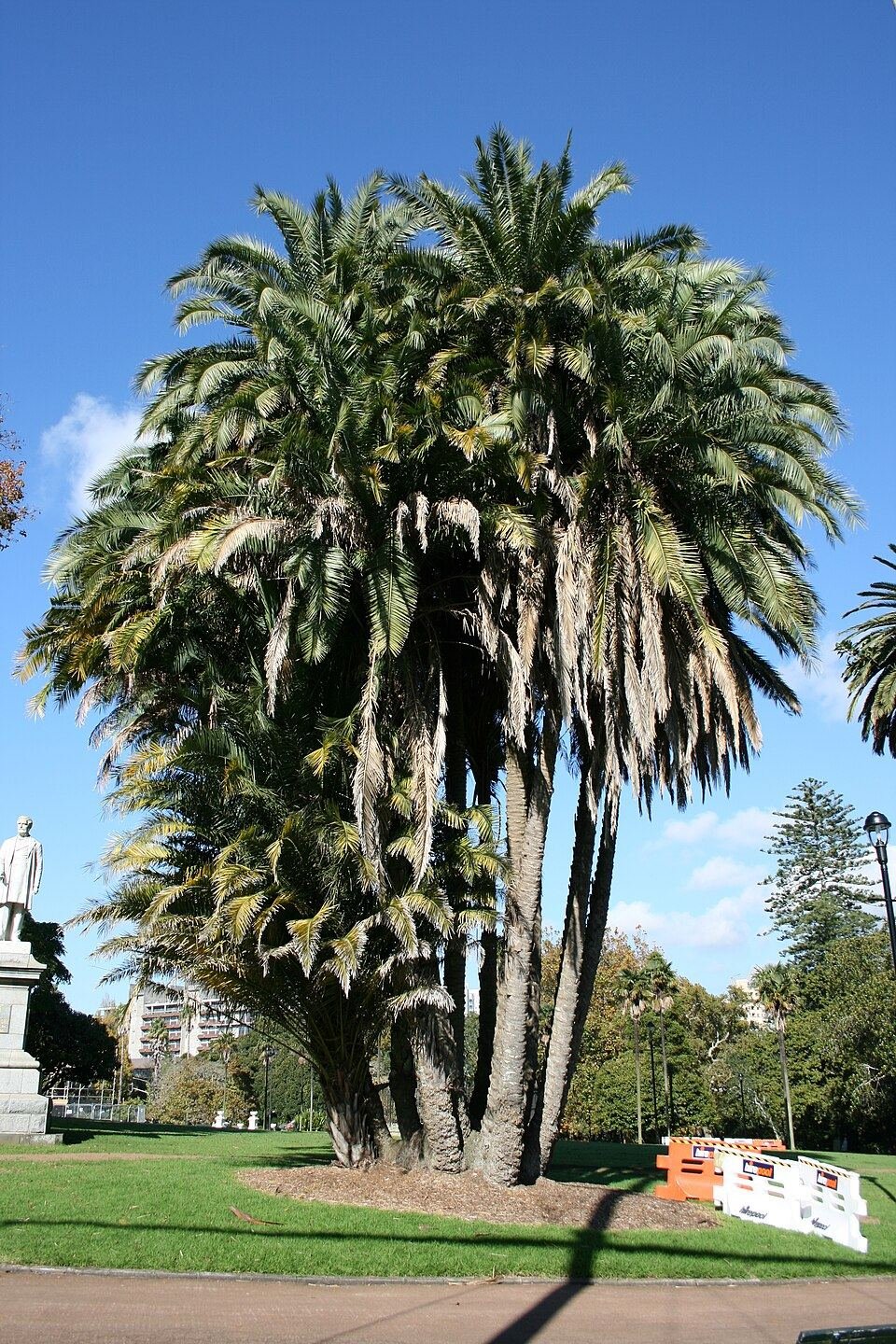
Senegal date palm overview
The clustering African wild date. USDA 9b to 12, leaning trunks, and a Phoenix that makes a grove instead of one orchard tree.
Region of origin
Tropical and southern Africa to Madagascar and the southwest Arabian Peninsula
Native countries
Historical discovery
Nikolaus Jacquin published Phoenix reclinata in 1801. It is the clustering African wild date, leaning trunks and all.
Names
Common names
Senegal date palm, African wild date, Reclinata palm
Synonyms
- None widely used
Cold hardiness
Survives about 25°F / -4°C. Outdoor range USDA 9b–12a. Hover or click a zone, state, or country. Switch the U.S. map between states and hardiness zones.
Highlighted USDA zones 9b–12a. Green countries can be grown outdoors.
United States
In range Too cold
World
Native Can be grown
Alaska and Hawaii are state outlines with their overall zone range. A country is painted if its mildest inhabited winter is at least one USDA step milder than this palm’s hardiness.
Scientific facts
- Usually clustering, with trunks that recline. That is the name.
- Not a Medjool orchard date. Fruit is smaller.
- Spines are real. A clump is a thicket if you let it.
Get this palm
Other helpful resources
Full care guide
The Senegal date palm is the clustering African Phoenix, with trunks that lean. USDA 9b to 12. It makes a grove, not a single Medjool. Spines are real. Give it room.
Common Names:
Senegal date palm, African wild date, reclinata palm.
Scientific Name:
Phoenix reclinata Jacq.
Origin:
Tropical and southern Africa, Madagascar, and the southwest Arabian Peninsula, often along water.
Appearance:
Several leaning, diamond-cut trunks and pinnate Phoenix leaves with armed lower leaflets. A thicket if unmanaged.
Growth Rate:
Moderate to fast in heat with water.
Max Growth Height:
Often 20 to 40 feet.
Foliage Spread:
Plan 15 to 25 feet for a clump. Width is the planning number.
Cold Hardiness and Hardiness Zone:
USDA 9b to 12. Damage in the mid-20s F. Canary Island date and silver date are usually solitary. This one clumps.
Soil Type:
Any well-drained soil. Native sites are often moist. Garden plants still want drainage in clay.
Fruit and Flowering:
Small orange to brown dates. Wildlife may eat them. Not a grocery Medjool.
Can it Grow Indoors:
No.
Light Requirements:
Full sun.
Water Requirements:
Regular water to establish. Extra water in heat keeps it lush. It is not a Baja Brahea.
Maintenance Level:
Medium to high if you thin trunks. Spines. Feed in the growing season with palm-specific fertilizer. A neglected clump becomes a fortress.
Common Diseases/Pests:
Scale, weevils on stressed Phoenix, and nutrient yellowing in sand.
Plant Care:
Sun, water, room to clump, mild winters. Thin suckers if you want a few trunks. If you wanted one clean date tree, plant dactylifera or sylvestris.
Senegal date palm Frequently Asked Questions:
1. Senegal date or Medjool?
Medjool is Phoenix dactylifera, usually solitary. Reclinata clusters and leans.
2. Can I keep it to one trunk?
You can thin suckers. It will try to clump again.
3. How hardy is it?
Zone 9b with established plants. Not a zone 8 landscape palm.
4. Is it invasive?
It can seed and sucker in frost-free, moist sites. Watch volunteers.
Plant Senegal date when you want a Phoenix grove of leaning trunks. If you wanted one orchard date, that is dactylifera. If you wanted no spines and no thicket, pick something else.