
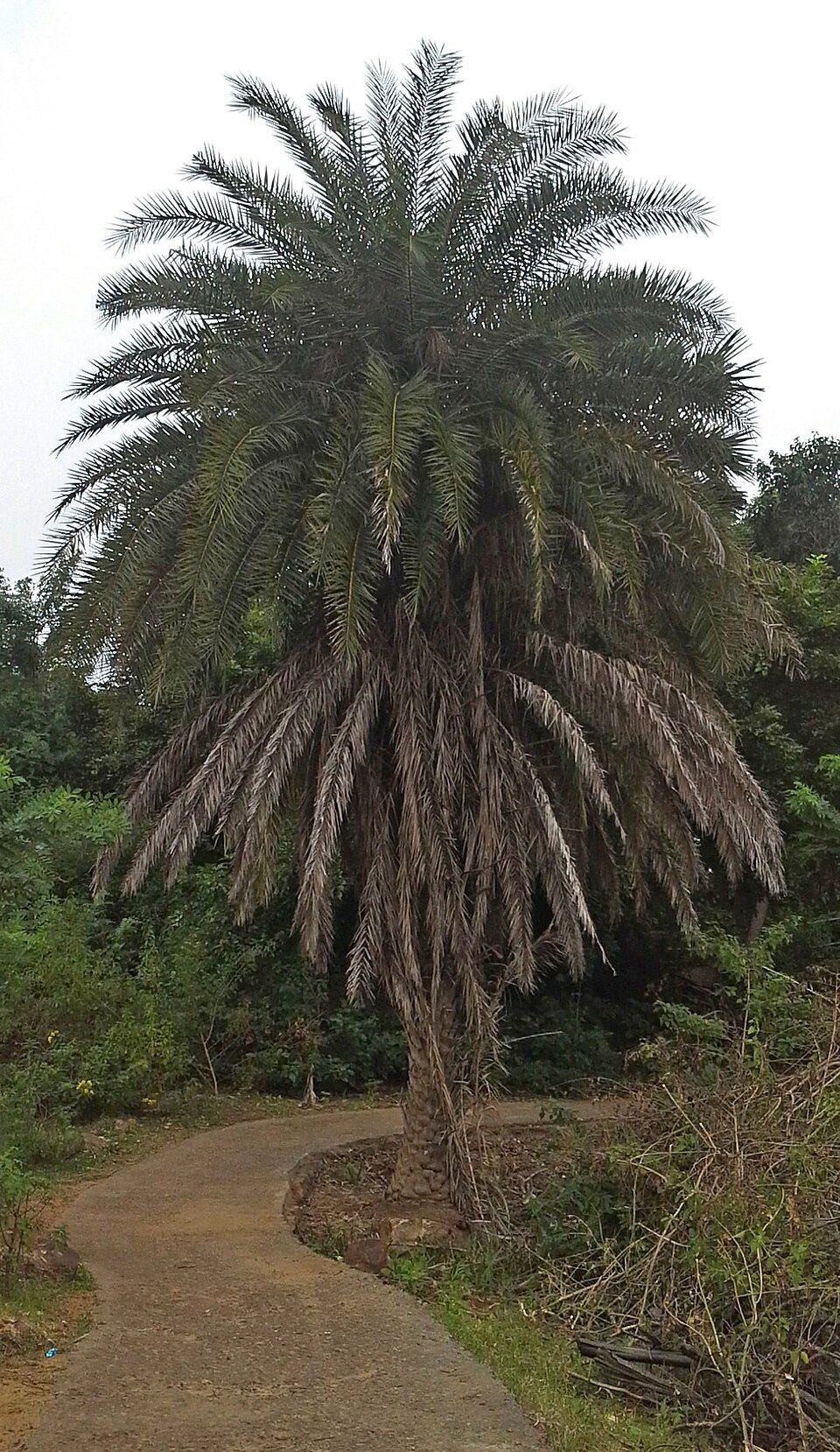
Silver date palm overview
The wild Indian date. USDA 9a to 11, a silver-green Phoenix for streets that are not quite Canary Island date country.
Region of origin
India and Sri Lanka
Native countries
Historical discovery
Linnaeus published Elate sylvestris. William Roxburgh made the Phoenix combination in 1832. It is the wild date of the Indian subcontinent, not the orchard Medjool.
Names
Common names
Silver date palm, Wild date palm, Indian date
Synonyms
- Elate sylvestris L.
Cold hardiness
Survives about 22°F / -6°C. Outdoor range USDA 9a–11b. Hover or click a zone, state, or country. Switch the U.S. map between states and hardiness zones.
Highlighted USDA zones 9a–11b. Green countries can be grown outdoors.
United States
In range Too cold
World
Native Can be grown
Alaska and Hawaii are state outlines with their overall zone range. A country is painted if its mildest inhabited winter is at least one USDA step milder than this palm’s hardiness.
Scientific facts
- Orchard dates are Phoenix dactylifera. This is the wild sylvestris.
- A bit more cold-tolerant than Medjool in some Florida plantings, still not a zone 8 tree.
- Sugar sap is tapped in India. That is not a backyard hobby in a US HOA.
Get this palm
Other helpful resources
Full care guide
The silver date palm is the wild Indian Phoenix, not the Medjool orchard date. USDA 9a to 11. Florida and similar heat plant it as a street Phoenix with a silver cast. It is not a parlor palm and not a Canary Island date.
Common Names:
Silver date palm, wild date, Indian date.
Scientific Name:
Phoenix sylvestris (L.) Roxb.
Origin:
India and Sri Lanka.
Appearance:
A stout Phoenix with gray to silver-green pinnate leaves and a diamond-cut trunk on older trees. Spines on the lower leaflets are real. Fruit is smaller than grocery dates.
Growth Rate:
Moderate to fast in heat.
Max Growth Height:
Often 30 to 50 feet.
Foliage Spread:
15 to 25 feet. Give it room.
Cold Hardiness and Hardiness Zone:
USDA 9a to 11. Damage around 22°F (-6°C) on established trees, with variation. Canary Island date is in the same cold conversation. Medjool wants more heat.
Soil Type:
Any well-drained soil. Sand needs water and fertilizer.
Fruit and Flowering:
Small orange-red to dark fruit. Edible in the broad sense, not a Medjool substitute.
Can it Grow Indoors:
No.
Light Requirements:
Full sun.
Water Requirements:
Regular water to establish. Mature trees take short dry spells in heat.
Maintenance Level:
Medium. Spines. Feed in the growing season with palm-specific fertilizer. Old fronds and fruit are a cleanup job.
Common Diseases/Pests:
Scale, weevils on stressed trees, and nutrient issues in sand. Palm weevil is a regional risk on Phoenix.
Plant Care:
Sun, drainage, zone 9 or warmer. If you wanted grocery dates, plant dactylifera in a genuine hot-summer desert. If you wanted a hardy fan, this is the wrong silhouette.
Silver date palm Frequently Asked Questions:
1. Silver date or Medjool?
Medjool is Phoenix dactylifera, the orchard date. Sylvestris is the wild Indian date, a landscape Phoenix.
2. Silver date or Canary Island date?
Canary Island date (P. canariensis) is thicker and more massive. Sylvestris is a bit slimmer, often with a silver cast.
3. Can I grow it in zone 8?
Not as a reliable tree. Use pindo, windmill, or dwarf palmetto there.
4. Will I get dates?
Small fruit, not a grocery crop. You need heat, a pollinator situation, and patience.
Plant silver date where a Phoenix street tree still makes sense and Medjool is too orchard-specific. If your winter is colder than zone 9, pick a different genus.