
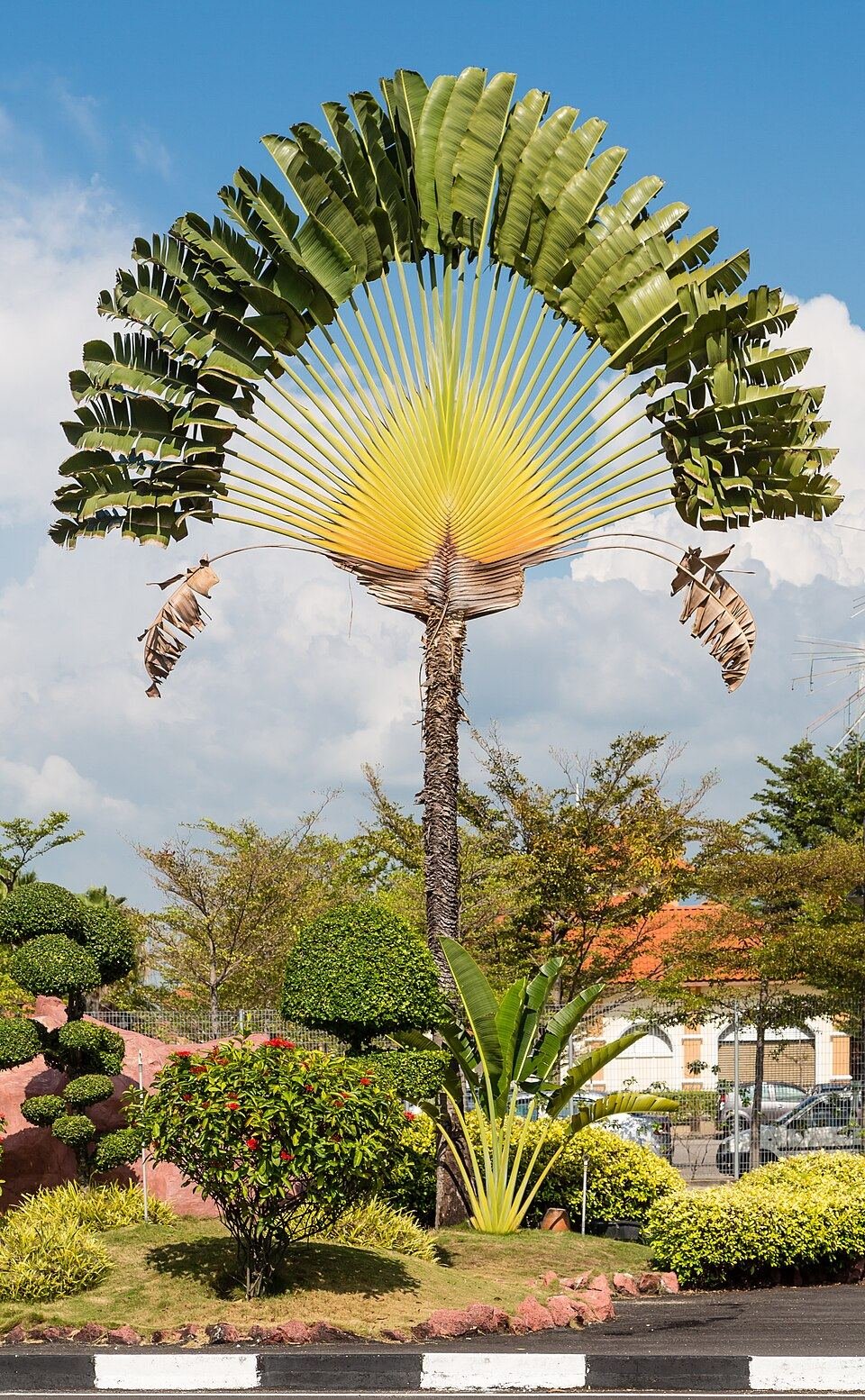
Traveler's palm overview
A giant fan of banana-like leaves sold as a palm. It is not in the palm family. USDA 10b to 12, and a freeze will melt it.
Region of origin
Madagascar
Native countries
Historical discovery
Pierre Sonnerat published Ravenala madagascariensis in 1782. It is in the bird-of-paradise family, not the palm family.
Names
Common names
Traveler's palm, Traveller's tree, East-west palm
Synonyms
- None widely used
Cold hardiness
Survives about 32°F / 0°C. Outdoor range USDA 10b–12a. Hover or click a zone, state, or country. Switch the U.S. map between states and hardiness zones.
Highlighted USDA zones 10b–12a. Green countries can be grown outdoors.
United States
In range Too cold
World
Native Can be grown
Alaska and Hawaii are state outlines with their overall zone range. A country is painted if its mildest inhabited winter is at least one USDA step milder than this palm’s hardiness.
Scientific facts
- True palms are Arecaceae. This is Strelitziaceae, with bird of paradise.
- Leaves stand in one plane, like a fan or a compass. Petiole bases hold rainwater.
- It is not a landscape palm for zone 9. A freeze drops the foliage overnight.
Get this palm
Other helpful resources
Full care guide
The traveler's palm is a Madagascar plant with banana-like leaves in a flat fan, sold as a palm because of the name. It is Ravenala madagascariensis, in the bird-of-paradise family. USDA 10b to 12. A freeze will melt it overnight.
Common Names:
Traveler's palm, traveller's tree, east-west palm.
Scientific Name:
Ravenala madagascariensis Sonn.
Origin:
Madagascar.
Appearance:
Huge paddle leaves in one plane on a stout, ringed false trunk. It looks like a giant bird of paradise, not a coconut. Petiole bases cup water.
Growth Rate:
Fast in heat with water.
Max Growth Height:
20 to 40 feet in the true tropics. Smaller in a frost-free California or Florida garden.
Foliage Spread:
The fan gets wide. Plan 15 to 25 feet.
Cold Hardiness and Hardiness Zone:
USDA 10b to 12. Damage at freezing. It is not a windmill, pindo, or European fan substitute.
Soil Type:
Rich, moist, well-drained. It is a banana-family feeder, not a desert succulent.
Fruit and Flowering:
Woody capsules with blue arils. Birds and lemurs handle that in Madagascar. Garden plants may flower in heat.
Can it Grow Indoors:
Only a young plant in a very bright atrium. It outgrows rooms.
Light Requirements:
Full sun in humid heat. Light shade inland if leaves scorch.
Water Requirements:
Even moisture. Dry neglect makes tattered leaves.
Maintenance Level:
Medium to high. Remove shredded leaves. Feed in the growing season with palm-specific fertilizer in the growing season. It is hungry, like a banana, not like a ponytail succulent.
Common Diseases/Pests:
Leaf tear from wind, scale, and nutrient yellowing. Cold is the real killer.
Plant Care:
Heat, water, fertilizer, no freeze. Plant it as a tropical screen, not as a hardy palm. If your winter still freezes, this is the wrong plant.
Traveler's palm Frequently Asked Questions:
1. Is traveler's palm a real palm?
No. It is Ravenala madagascariensis, related to bird of paradise. The name stuck because of the fan and the water in the leaf bases.
2. Can I grow it in Southern California?
In frost-free coastal and low-desert-edge heat, yes. An inland freeze will defoliate or kill it.
3. Does it really hold drinking water?
The petiole bases catch rain. Do not plan a survival kit around a garden specimen.
4. Traveler's palm or giant bird of paradise?
Giant bird of paradise is Strelitzia nicolai, with clumping stems and a messier habit. Ravenala is the single-plane fan.
Plant a traveler's palm where nights stay tropical and the hose still reaches. If you wanted a hardy palm, you wanted windmill, pindo, or dwarf palmetto.