Outdoor verdict
King palm lives outside only in a mild winter, about 28F (USDA 10a+). A real freeze marks it. Young plants can wait in a pot. A mature one wants the ground only if the winter clears that number.
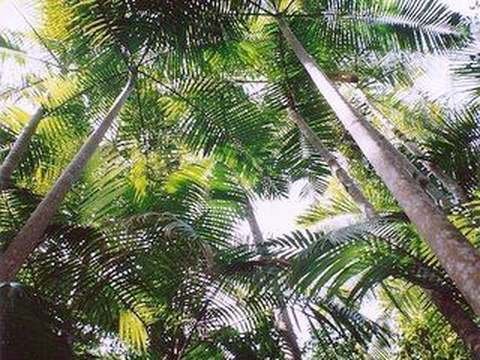
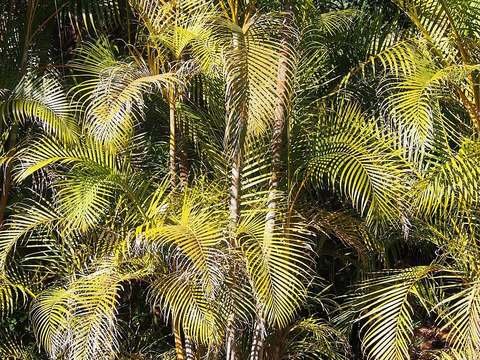
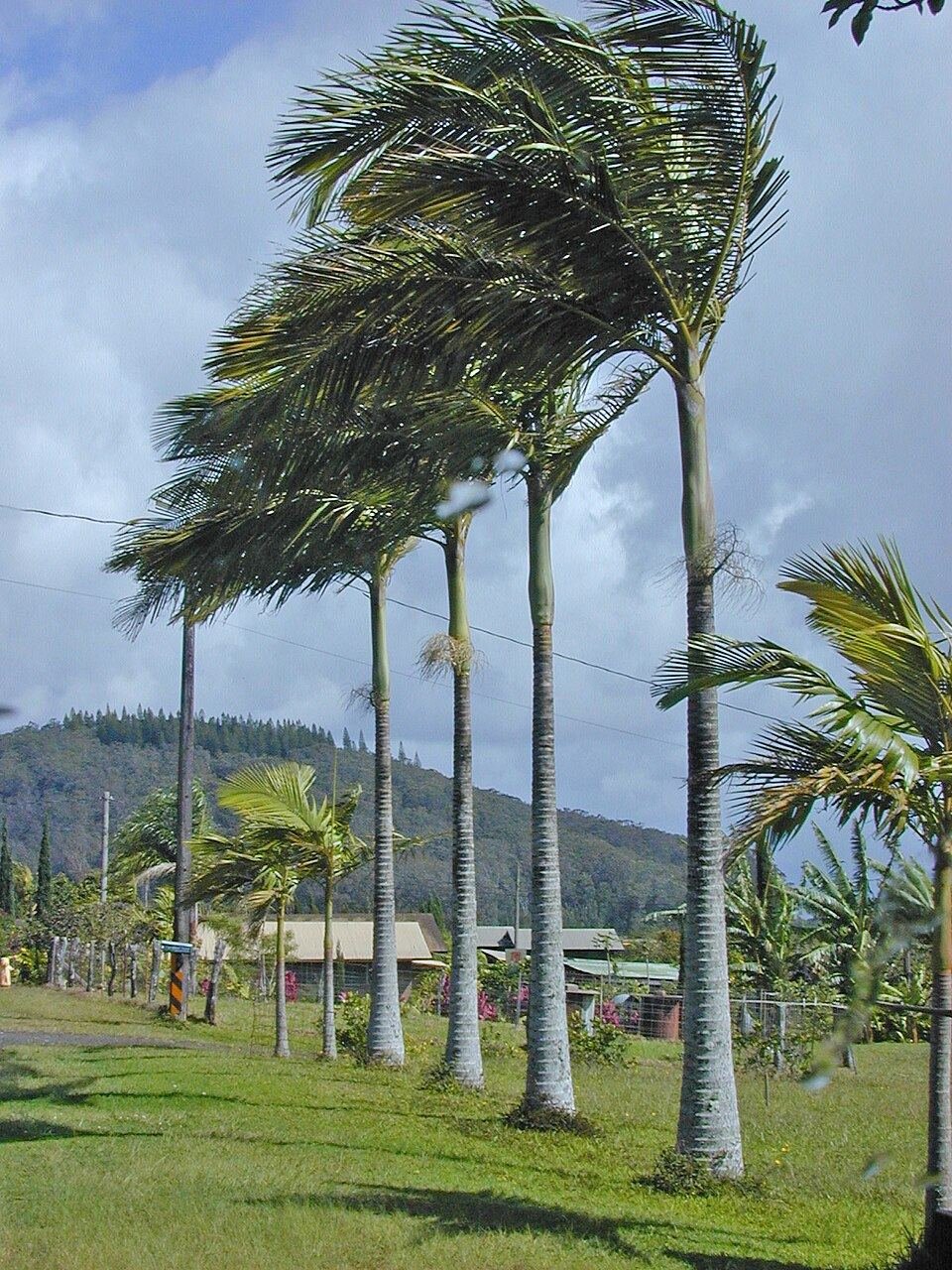
The smooth, fast Australian king palm. USDA 10a to 11, a green crownshaft, and less cold tolerant than a queen.
Cold hardiness
Survives about 28°F / -2°C. Outdoor range USDA 10a–11b. Hover or click a zone, state, or country. Click a state to open palms that grow there.
Highlighted USDA zones 10a–11b. Green countries can be grown outdoors.
United States
In range Too cold
World
Native Can be grown
Alaska and Hawaii are state outlines with their overall zone range. A country is painted if its mildest inhabited winter is at least one USDA step milder than this palm’s hardiness.
What it is confused with
Nurseries often mix this up with Bangalow palm (Archontophoenix cunninghamiana). Check the Latin on the tag.
Winter care
Drainage matters more than a blanket. Soil: Rich, moist, well-drained. Water: Moist but never waterlogged (mesic). Wrapping does not buy an extra zone. If the winter is colder than the kill number, keep it in a pot.
Scientific facts
- Archontophoenix cunninghamiana is the bangalow or piccabeen, often a bit hardier and common in California.
- The swollen lower trunk and silver leaflet undersides help separate alexandrae.
- Fast and hungry for water in heat. Dry sand without irrigation looks poor.
Region of origin
Northeastern Queensland, Australia
Native countries
Historical discovery
Ferdinand von Mueller named it for Princess Alexandra. Wendland and Drude placed it in Archontophoenix in 1875.
Names
Common names
King palm, Alexandra palm, Northern bangalow palm
Synonyms
- Ptychosperma alexandrae F.Muell.
Full care guide
The king palm is the fast, smooth Australian feather palm with a green crownshaft, sold for tropical streets that still are not quite royal-palm country. USDA 10a to 11. Damage around 28°F (-2°C). It wants water and fertilizer. Dry neglect makes a thin tree.
Growth Rate:
Fast in heat with water.
Fruit and Flowering:
Red fruit in hanging clusters. Messy on walks. Birds like them.
Light Requirements:
Full sun to light shade. Young plants like a little protection from blasting inland sun.
Water Requirements:
Even moisture. This is not a desert fan palm.
Maintenance Level:
Medium. Feed in the growing season with palm-specific fertilizer. Keep it watered in heat. Dropped fruit and old fronds are the mess.
Common Diseases/Pests:
Scale, mites in dry wind, and nutrient yellowing in sand. Fungal leaf spotting in still, wet shade.
Plant Care:
Sun, water, fertilizer, frost-free. If your winter still dips below the high 20s, look at queen, cabbage palmetto, or bangalow instead of forcing Alexandra king palm.
King palm Frequently Asked Questions:
Plant a king palm where nights stay soft and the hose still reaches the tree. It is a fast tropical street palm, not a desert or zone 9a workhorse.
King palm questions
Will King palm live outside?
Yes, if winter stays above about 28F (USDA 10a+). Below that number it belongs in a pot.
What do nurseries mislabel King palm as?
People tag it as Bangalow palm. That plant is Archontophoenix cunninghamiana. Check the Latin.
Pot or ground for King palm in a cold state?
Start it in a pot if you want. The ground is fine only where winter stays above about 28F.
King palm or bangalow?
Alexandrae is the tropical king. Cunninghamiana (bangalow) is common in milder California and often a safer outdoor choice there.
Faster than queen palm?
In heat and water it is competitive. It wants more tropical nights than a queen in zone 9a.
Can I grow it indoors?
A young plant in a bright atrium, not a long-term houseplant.
Why is it yellow?
In sand, potassium and magnesium first. Then check water. Do not answer every yellow palm with lawn nitrogen.
Related palms
The mix-up, the substitute, then nearby hardiness.