Outdoor verdict
Queen palm lives outside only in a mild winter, about 25F (USDA 9a+). A real freeze marks it. Young plants can wait in a pot. A mature one wants the ground only if the winter clears that number.
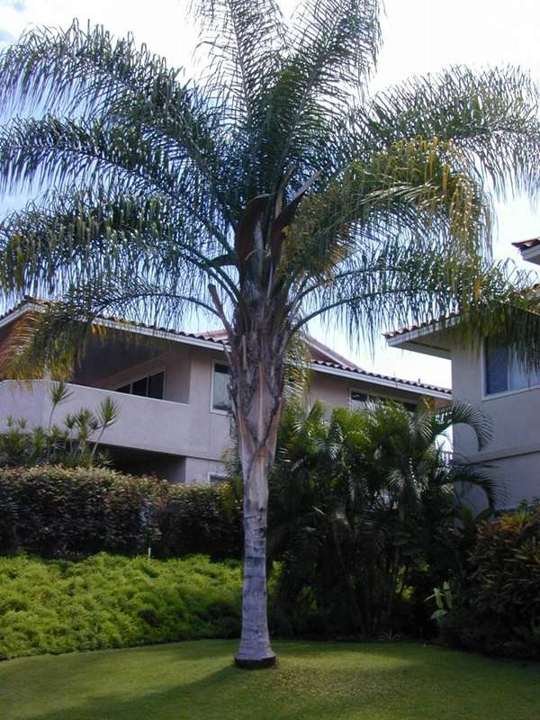
The fast, feathery street palm of warm southern landscapes. Plumose fronds and a smooth gray trunk; messy orange fruit and a hard floor of about 25°F.
Cold hardiness
Survives about 25°F / -4°C. Outdoor range USDA 9a–11b. Hover or click a zone, state, or country. Click a state to open palms that grow there.
Highlighted USDA zones 9a–11b. Green countries can be grown outdoors.
United States
In range Too cold
World
Native Can be grown
Alaska and Hawaii are state outlines with their overall zone range. A country is painted if its mildest inhabited winter is at least one USDA step milder than this palm’s hardiness.
What it is confused with
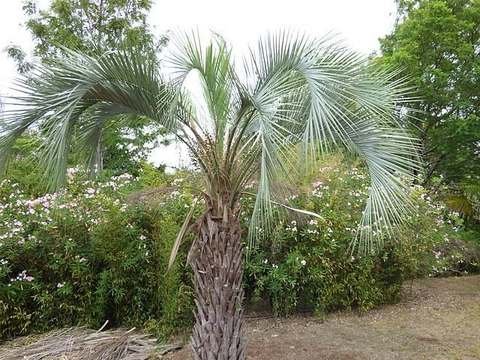
Nurseries often mix this up with Pindo palm (Butia odorata). Check the Latin on the tag.
Winter care
Drainage matters more than a blanket. Soil: Any well-drained soil. Water: Moist but never waterlogged (mesic). Wrapping does not buy an extra zone. If the winter is colder than the kill number, keep it in a pot.
Scientific facts
- Nurseries still tag it Cocos plumosa. That is a garden name, not the accepted Latin.
- In Florida sand it often shows potassium hunger first: translucent yellow spots, then dead leaflet tips.
- Fruit is orange, messy, and sprouts freely. It is not a kitchen crop.
Region of origin
Brazil to northeastern Argentina
Native countries
Historical discovery
Adelbert von Chamisso published Cocos romanzoffiana in 1822, honoring Count Nikolay Rumyantsev (Romanzoff). Sidney Glassman moved it to Syagrus in 1968.
Names
Common names
Queen palm, Cocos palm, Jerivá
Synonyms
- Cocos romanzoffiana Cham.
- Arecastrum romanzoffianum (Cham.) Becc.
- Cocos plumosa (hort., misapplied)
Full care guide
The queen palm is the fast, feathery street tree of warm southern neighborhoods. Native to Brazil, Paraguay, Uruguay, and northeastern Argentina, it puts on a full plumose crown and a smooth gray trunk, then drops a lot of orange fruit. It is a zone 9a to 11 landscape palm. Brief dips to about 25°F (-4°C) burn foliage; colder than that and you are gambling with the bud.
Growth Rate:
Fast. In heat with water and fertilizer it can add 2 to 3 feet of trunk a year.
Fruit and Flowering:
Creamy flowers are followed by large hanging bunches of round orange fruit. Birds and rats eat them. People generally do not. Seedlings come up in beds, gutters, and lawns.
Light Requirements:
Full sun. Thin, stretched fronds mean it wants more light.
Water Requirements:
Keep the soil evenly moist while it establishes. Mature trees take short dry spells but look better with regular water in heat. Do not leave the root ball soggy.
Maintenance Level:
Medium. Dropped fruit and old fronds make a mess. Fertilize 2 to 3 times a year with palm-specific fertilizer that includes potassium and magnesium. In sandy Florida soil, potassium hunger is the usual complaint: translucent yellow spots, then brown leaflet tips.
Common Diseases/Pests:
Watch for potassium deficiency, ganoderma butt rot on older trunks, and (in some California plantings) Fusarium wilt, which has no good cure. Scale and palm weevils show up on stressed trees.
Plant Care:
Plant in full sun with drainage. Water regularly the first year. Feed with a quality palm fertilizer. Clean up fruit if you do not want a carpet of seedlings.
Queen Palm Frequently Asked Questions:
If you have the heat for it, the queen palm is one of the quickest ways to get a full tropical street-tree look. Give it sun, drainage, potassium, and room for the fruit to fall.
Queen palm questions
Will Queen palm live outside?
Yes, if winter stays above about 25F (USDA 9a+). Below that number it belongs in a pot.
What do nurseries mislabel Queen palm as?
People tag it as Pindo palm. That plant is Butia odorata. Check the Latin.
Pot or ground for Queen palm in a cold state?
Start it in a pot if you want. The ground is fine only where winter stays above about 25F.
Are queen palm fruits edible?
They are not a food crop. Leave them to wildlife, or pick bunches early if the mess bothers you.
Why are the leaflets yellow with brown tips?
That pattern on a queen palm is usually potassium deficiency, especially in sand. Use a palm fertilizer with potassium, not a general lawn food high in nitrogen.
How fast does a queen palm grow?
Fast for a palm. Two to three feet of trunk a year is normal in a warm, watered, fertilized yard.
Related palms
The mix-up, the substitute, then nearby hardiness.