Madagascar palm cold hardiness
Pachypodium lamerei Drake
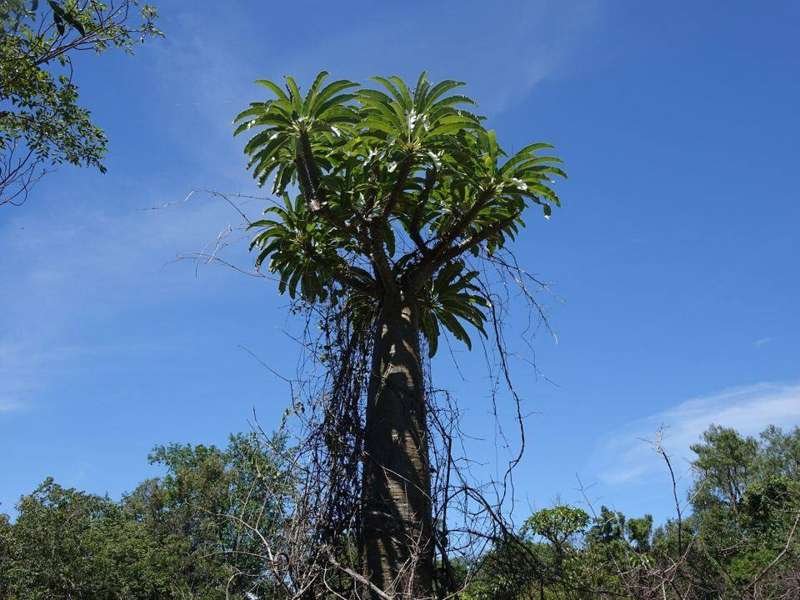
Not a true palm. Included because nurseries still sell it as one, and because it is a common indoor “palm look” plant.
Outdoor verdict
Madagascar palm is not an outdoor plant where frost happens. USDA 10b+ means nights that stay near 40F. It can sit in a bright room if your winter is colder than that.
A spiny succulent sold as a palm. It is not in the palm family. USDA 10b to 11, damage near 40°F, and a decent houseplant in a bright window.
Cold hardiness
Survives about 40°F / 4°C. Outdoor range USDA 10b–11b. Hover or click a zone, state, or country. Click a state to open palms that grow there.
Highlighted USDA zones 10b–11b. Green countries can be grown outdoors.
United States
In range Too cold
World
Native Can be grown
Alaska and Hawaii are state outlines with their overall zone range. A country is painted if its mildest inhabited winter is at least one USDA step milder than this palm’s hardiness.
What it is confused with
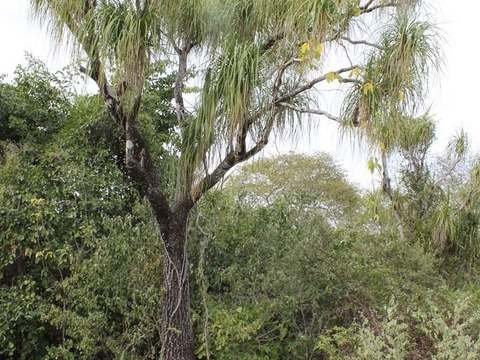
Nurseries often mix this up with Ponytail palm (Beaucarnea recurvata). Check the Latin on the tag.
Winter care
Drainage matters more than a blanket. Soil: Gritty / cactus mix. Water: Let the root ball dry between waterings. Wrapping does not buy an extra zone. If the winter is colder than the kill number, keep it in a pot.
Scientific facts
- True palms are Arecaceae. This is Apocynaceae, closer to plumeria and oleander than to a coconut.
- The swollen trunk stores water. The spines are real. The milky sap is irritating and toxic if chewed.
- Indoors it stays a few feet. In frost-free ground it can pass 15 feet.
Region of origin
South-central and southern Madagascar
Native countries
Historical discovery
Emmanuel Drake del Castillo described Pachypodium lamerei in 1899 from southern Madagascar.
Names
Common names
Madagascar palm, Club foot, Pachypodium
Synonyms
- None widely used
Full care guide
Madagascar palm is the spiny, bottle-trunk plant on the houseplant bench with a palm-like tuft on top. It is not a palm. It is a succulent in the dogbane family. Think USDA 10b to 11 outdoors, or a bright window indoors. Leaves drop in a chill, and frost usually finishes it.
Growth Rate:
Slow to moderate in heat and sun. Slow and leafless if the pot stays cold or wet.
Fruit and Flowering:
White flowers, then paired seed pods on mature plants with enough sun. Indoor plants often never bloom.
Light Requirements:
Full sun outdoors. Indoors, the brightest south or west window you have. Thin, stretched growth means it wants more light.
Water Requirements:
Soak, then let the mix dry before you water again. In winter, water even less. Soggy soil is the usual way people kill it.
Maintenance Level:
Low. No palm fertilizer. A light cactus or succulent feed in spring and summer is enough. Gloves help when you repot. Do not snap the spines off to make it friendlier.
Common Diseases/Pests:
Mealybugs, scale, and spider mites on indoor plants. Root rot from wet mix. The sap can irritate skin and is toxic if chewed, so keep it away from kids and pets. Wild plants are CITES listed. Buy nursery-grown stock.
Plant Care:
Pot in cactus mix, full sun, water when dry. Outdoors only above the frost line in dry, drained ground. Bring patio plants in before nights hit the 40s. Do not treat it like an areca or majesty palm.
Madagascar palm Frequently Asked Questions:
If you want a spiny succulent that looks a little like a palm, this is the one. If you want an actual palm, pick an Arecaceae species that matches your winter.
Madagascar palm questions
Will Madagascar palm live outside?
Not where frost happens. Madagascar palm wants nights near 40F (USDA 10b+). Grow it in a pot and bring it in.
What do nurseries mislabel Madagascar palm as?
People tag it as Ponytail palm. That plant is Beaucarnea recurvata. Check the Latin.
Pot or ground for Madagascar palm in a cold state?
Pot if your winter drops below about 40F. Ground only where that number holds.
Is Madagascar palm a real palm?
No. It is Pachypodium lamerei, a succulent in Apocynaceae. Nurseries sell it as a palm because of the tuft of leaves on a trunk.
Can I grow Madagascar palm indoors?
Yes, in a very bright window. Let the mix dry between waterings. It will not thrive in a dark living room the way a parlor palm might.
Is Madagascar palm toxic?
The milky sap is irritating and toxic if chewed. The spines puncture. Keep it out of reach of pets and small kids.
Related palms
The mix-up, the substitute, then nearby hardiness.