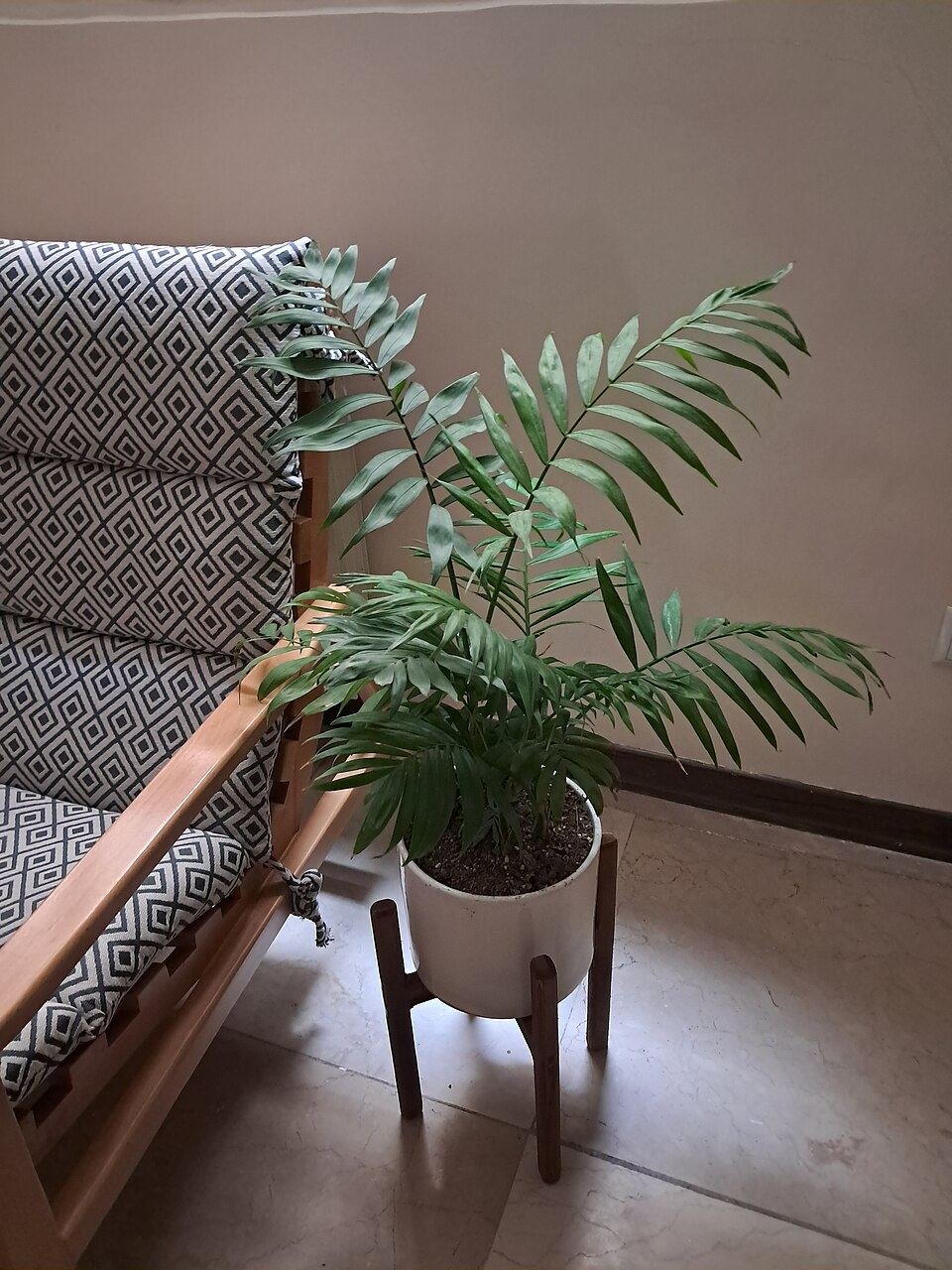
Outdoor verdict
Parlor palm is not an outdoor plant where frost happens. USDA 10b+ means nights that stay near 35F. It can sit in a bright room if your winter is colder than that.
The small, shade-tolerant indoor palm. Native from Mexico to Honduras, a houseplant almost everywhere, USDA 10b to 11 if you try it outdoors.
Cold hardiness
Survives about 35°F / 2°C. Outdoor range USDA 10b–11b. Hover or click a zone, state, or country. Click a state to open palms that grow there.
Highlighted USDA zones 10b–11b. Green countries can be grown outdoors.
United States
In range Too cold
World
Native Can be grown
Alaska and Hawaii are state outlines with their overall zone range. A country is painted if its mildest inhabited winter is at least one USDA step milder than this palm’s hardiness.
What it is confused with
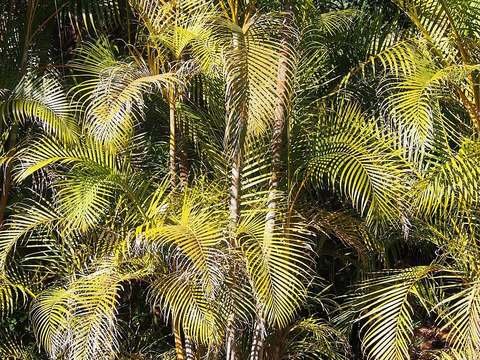
Nurseries often mix this up with Areca palm (Chrysalidocarpus lutescens). Check the Latin on the tag.
Winter care
Drainage matters more than a blanket. Soil: Rich, moist, well-drained. Water: Moist but never waterlogged (mesic). Wrapping does not buy an extra zone. If the winter is colder than the kill number, keep it in a pot.
Scientific facts
- It is still sold as Neanthe bella, a garden name.
- Low light tolerance is real compared with areca, not compared with a plastic plant. It still wants a window.
- Potted clumps are usually many seedlings in one pot, not one branching palm.
Region of origin
Mexico to Honduras
Native countries
Historical discovery
Carl Martius published Chamaedorea elegans in 1830. Victorian rooms made it famous.
Names
Common names
Parlor palm, Neanthe bella, Dwarf parlor palm
Synonyms
- Neanthe bella hort.
Full care guide
The parlor palm is the small, Victorian indoor palm that still works in apartments. Native from Mexico to Honduras. Outdoors it wants USDA 10b to 11. Everywhere else it is a pot by a window.
Growth Rate:
Slow to moderate indoors. Faster in a humid greenhouse.
Fruit and Flowering:
Small orange-black fruit on mature plants. Indoor clumps may flower in bright rooms.
Light Requirements:
Bright indirect, or an east window. It takes lower light than areca. A windowless bathroom is still too dark.
Water Requirements:
Even moisture. Let the top of the mix dry slightly. Soggy saucers rot the fine roots.
Maintenance Level:
Low. Trim brown tips with scissors if you must. Feed in the growing season with palm-specific fertilizer lightly in spring and summer. Dust the leaves.
Common Diseases/Pests:
Spider mites in dry heat, scale, and mealybugs. A sudden bronze look is often mites, not thirst.
Plant Care:
Bright room, even water, no freeze. Keep it away from heater vents. Repot only when the pot is truly packed. It does not want a barrel.
Parlor palm Frequently Asked Questions:
If you want a real palm in a normal room, start with parlor palm. Save areca and kentia for brighter spaces and bigger pots.
Parlor palm questions
Will Parlor palm live outside?
Not where frost happens. Parlor palm wants nights near 35F (USDA 10b+). Grow it in a pot and bring it in.
What do nurseries mislabel Parlor palm as?
People tag it as Areca palm. That plant is Chrysalidocarpus lutescens. Check the Latin.
Pot or ground for Parlor palm in a cold state?
Pot if your winter drops below about 35F. Ground only where that number holds.
Is parlor palm safe for cats?
It is generally treated as non-toxic, unlike sago. Still discourage chewing.
Why is my parlor palm yellow?
Overwatering is the usual indoor cause. Then check light and mites. Do not drown it to be kind.
Is it the same as a bamboo palm?
No. Bamboo palm is usually Chamaedorea seifrizii, a clustering cane palm that gets taller.
Related palms
The mix-up, the substitute, then nearby hardiness.