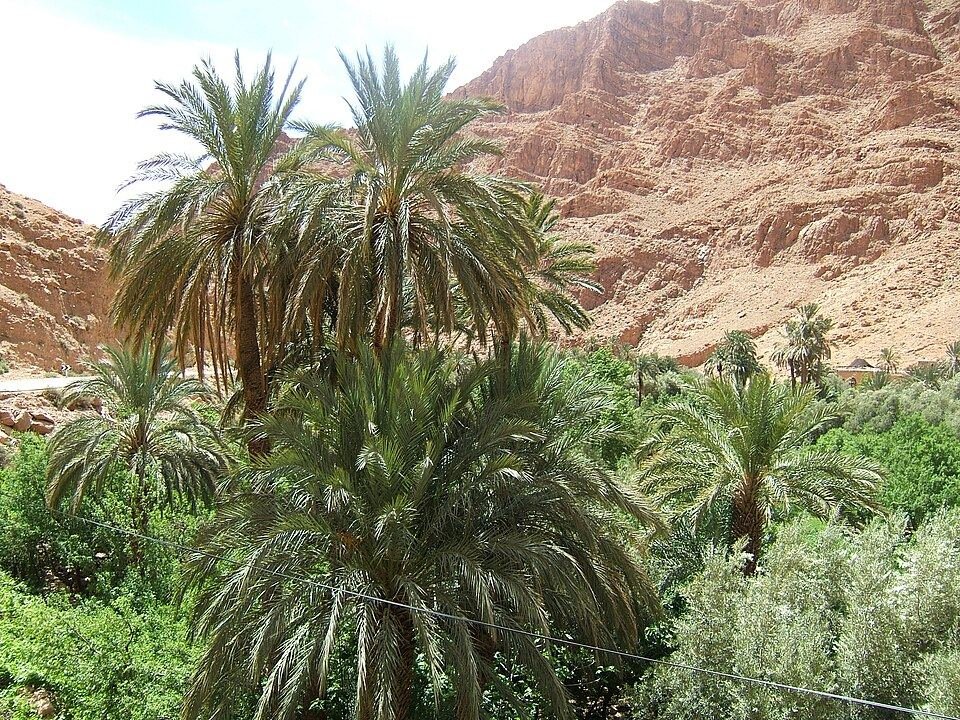
Outdoor verdict
Medjool date palm lives outside only in a mild winter, about 20F (USDA 9a+). A real freeze marks it. Young plants can wait in a pot. A mature one wants the ground only if the winter clears that number.
The desert fruit palm. USDA 9a to 11, damage around 20°F, full sun, and a deep need for heat if you want actual dates.
Cold hardiness
Survives about 20°F / -7°C. Outdoor range USDA 9a–11b. Hover or click a zone, state, or country. Click a state to open palms that grow there.
Highlighted USDA zones 9a–11b. Green countries can be grown outdoors.
United States
In range Too cold
World
Native Can be grown
Alaska and Hawaii are state outlines with their overall zone range. A country is painted if its mildest inhabited winter is at least one USDA step milder than this palm’s hardiness.
What it is confused with
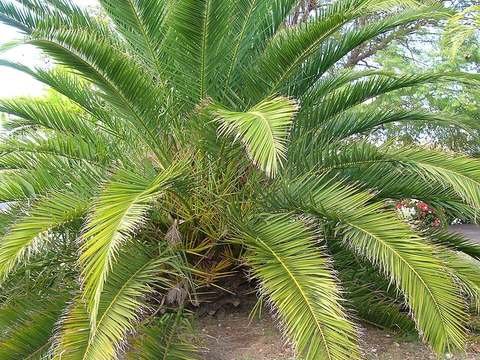
Nurseries often mix this up with Canary Island date palm (Phoenix canariensis). Check the Latin on the tag.
Winter care
Drainage matters more than a blanket. Soil: Any well-drained soil. Water: Water when the top inch is dry (mesic to xeric). Wrapping does not buy an extra zone. If the winter is colder than the kill number, keep it in a pot.
Scientific facts
- Commercial dates need long, hot, dry summers. A humid Gulf Coast tree may live and still fruit poorly.
- Plants are male or female. You need both, or a named female plus hand pollen, for a crop.
- Offshoots at the base are how orchards clone a variety. Seedlings are a lottery.
Region of origin
Arabian Peninsula to southern Pakistan
Native countries
Historical discovery
Linnaeus published Phoenix dactylifera in 1753. People had already farmed it for millennia in desert oases.
Names
Common names
Medjool date palm, Date palm, Date
Synonyms
- None widely used
Full care guide
The date palm is the oasis tree of hot, dry summers and the source of the fruit in the bag. It is tougher in cold than a coconut, and much hungrier for heat if you want a crop. USDA 9a to 11. Foliage burns around 20°F (-7°C).
Growth Rate:
Moderate. Heat and water speed it up. Cool coastal summers slow both growth and fruit.
Fruit and Flowering:
Trees are male or female. Females make the date bunches. Commercial groves hand-pollinate. Fruit wants a long, hot, dry ripening season.
Light Requirements:
Full sun. Shade makes a thin, unhappy tree.
Water Requirements:
Deep, infrequent water once established. Keep it moist the first year. Do not confuse drought-tough with never-water.
Maintenance Level:
Medium to high if you want fruit (pollination, bunch support, pruning). As a landscape tree, medium: old fronds, spines, and mess. Feed in the growing season with palm-specific fertilizer with potassium and magnesium.
Common Diseases/Pests:
Bayoud disease in some North African groves, scale, and in some regions red palm weevil. In U.S. deserts, watch irrigation salt and boron. Overwatering in clay is a root problem, not a leaf bug.
Plant Care:
Plant in full sun with drainage. Water deeply while it establishes. If you want dates, start with a named offshoot, not a random seedling, and be honest about your summer heat.
Date palm Frequently Asked Questions:
Grow a date palm for the silhouette and the heat. Grow named offshoots in a desert summer if you actually want dates.
Medjool date palm questions
Will Medjool date palm live outside?
Yes, if winter stays above about 20F (USDA 9a+). Below that number it belongs in a pot.
What do nurseries mislabel Medjool date palm as?
People tag it as Canary Island date palm. That plant is Phoenix canariensis. Check the Latin.
Pot or ground for Medjool date palm in a cold state?
Start it in a pot if you want. The ground is fine only where winter stays above about 20F.
Will a date palm fruit in Florida?
It may live. It rarely makes a commercial crop. Florida humidity and summer rain fight dry ripening. California and Arizona deserts are the U.S. date climates.
Do I need two trees?
For fruit, yes, a female and a pollen source. One landscape male or female is still a fine tree if you do not care about dates.
Is it the same as a Canary Island date?
No. Phoenix canariensis is a bulkier landscape palm with poorer fruit. Phoenix dactylifera is the crop species.
Related palms
The mix-up, the substitute, then nearby hardiness.