Outdoor verdict
Chinese windmill palm lives outside where winter stays above about 5F (USDA 7a+). It can sit in a bright room if your winter is colder than that.
A fan palm famous for cold hardiness. Native to mountain forests of south-central China and northern Myanmar, it is the palm most often planted in USDA zone 7 landscapes.
Cold hardiness
Survives about 5°F / -15°C. Outdoor range USDA 7a–11b. Hover or click a zone, state, or country. Click a state to open palms that grow there.
Highlighted USDA zones 7a–11b. Green countries can be grown outdoors.
United States
In range Too cold
World
Native Can be grown
Alaska and Hawaii are state outlines with their overall zone range. A country is painted if its mildest inhabited winter is at least one USDA step milder than this palm’s hardiness.
What it is confused with
Nurseries often mix this up with Chinese fan palm (Livistona chinensis). Check the Latin on the tag.
Winter care
Drainage matters more than a blanket. Soil: Any well-drained soil. Water: Moist but never waterlogged (mesic). A young plant sees more damage than an old one. Wrap only when a night near the kill number is coming.
Scientific facts
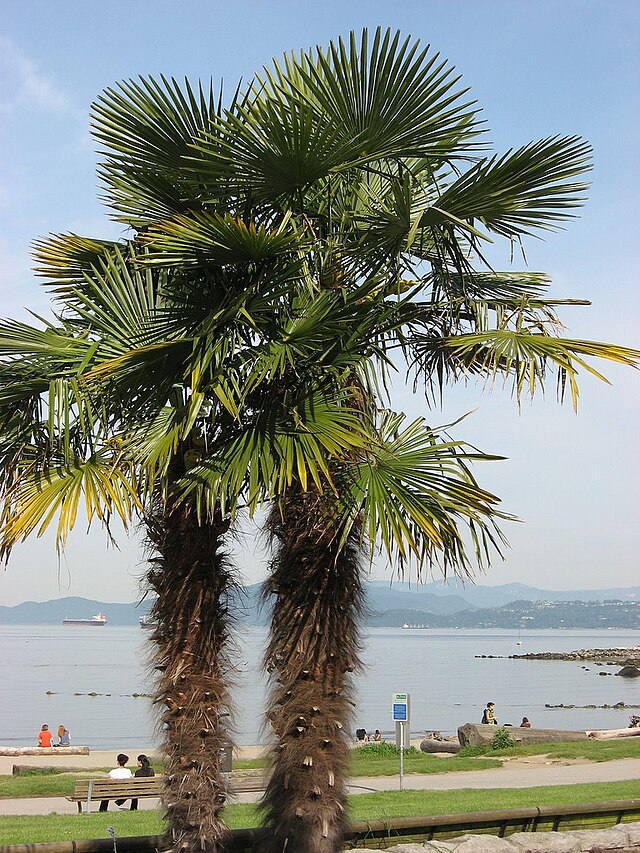
- Fibrous leaf bases wrap the trunk like a coarse coat, one reason it shrugs off wind and frost.
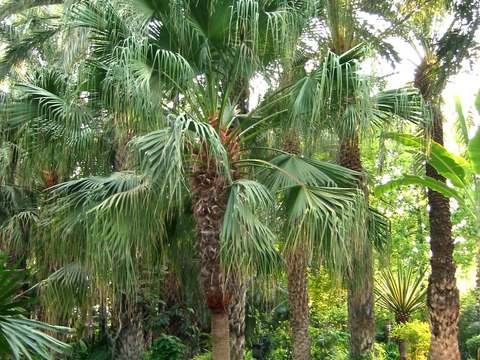
- In the wild it can reach about 40 ft; in gardens it is usually 20–30 ft with a 10 ft crown.
- It is often sold as “Chinese fan palm,” a name also used for Livistona chinensis. Check the Latin name.
Region of origin
South-central China to northern Myanmar
Native countries
Historical discovery
Robert Fortune collected plants in China in the 1840s. Hermann Wendland published the name Trachycarpus fortunei in 1861, honoring Fortune.
Names
Common names
Windmill palm, Chusan palm, Chinese fan palm, Chinese windmill palm
Synonyms
- Chamaerops fortunei Hook.
- Chamaerops excelsa (misapplied)
Full care guide
The Chinese Windmill palm is known for its resilience, cold hardiness and fan-like spreading leaves. Originating from China and Japan, this palm species boasts iconic fan-shaped leaves. Its ability to withstand chilling temperatures as low as 5°F (-15°C) makes it a gem thriving in USDA hardiness zones 7 to 11. The windmill palm can reach up to 40 feet in the wild. The Windmill palm offers an elegant addition to both indoor and outdoor landscapes as far north as Southern Virginia.
Growth Rate:
Compared to some other palms, the Windmill palm grows at a moderate pace, adding about 6-10 inches to its trunk annually.
Fruit and Flowering:
As it matures, small black fruits appear, attracting birds. Its petite, yellowish flowers emerge in late spring to early summer. The fruit is not edible for humans.
Light Requirements:
When outdoors, partial shade to full sun suits this palm. While indoors, it thrives in bright indirect light.
Water Requirements:
Aim for moderate watering to keep the soil consistently moist without becoming waterlogged, preventing root rot.
Maintenance Level:
The Chinese fan palm is low-maintenance plant, requiring minimal pruning. Regular watering and seasonal fertilization with high quality palm-specific fertilizer foster its optimal growth.
Common Diseases/Pests:
Resilient against diseases and pests, occasional encounters with spider mites or scale insects may occur.
Plant Care:
Consistent watering, avoiding waterlogging, and occasional fertilization contribute to its growth.
The Windmill palm’s ability to withstand diverse climates, coupled with its elegant appearance, makes it a versatile choice for indoor or outdoor settings. With care, it can become a focal point in any landscape or interior design.
Chinese windmill palm questions
Will Chinese windmill palm live outside?
Yes, if winter stays above about 5F (USDA 7a+). Below that number it belongs in a pot.
What do nurseries mislabel Chinese windmill palm as?
People tag it as Chinese fan palm. That plant is Livistona chinensis. Check the Latin.
Pot or ground for Chinese windmill palm in a cold state?
Pot if your winter drops below about 5F. Ground only where that number holds.
Does the Windmill palm require frequent pruning?
No, this palm is relatively low-maintenance and requires minimal pruning. Though removing dead leaves may look nice, it isn’t necessary.
How often should I fertilize my Windmill palm?
Apply palm-specific fertilizer once in the Spring, Summer, and Fall.
Are Windmill palm fruits edible?
No, they are not edible.
Can Windmill palms survive windy conditions?
True to their name, Windmill palms are known for their resilience in windy conditions.
Related palms
The mix-up, the substitute, then nearby hardiness.