Pindo palm cold hardiness
Butia odorata (Barb.Rodr.) Noblick
Sold for decades as Butia capitata. The accepted name for the common pindo is Butia odorata.
Outdoor verdict
Pindo palm lives outside where winter stays above about 15F (USDA 8a+). If your winter drops below that, skip it. Do not wrap a tropical and hope.
The arching, blue-green jelly palm of southern landscapes. Fruit makes jam; winter hardiness beats most feather palms, down into the teens °F.
Cold hardiness
Survives about 15°F / -9°C. Outdoor range USDA 8a–11a. Hover or click a zone, state, or country. Click a state to open palms that grow there.
Highlighted USDA zones 8a–11a. Green countries can be grown outdoors.
United States
In range Too cold
World
Native Can be grown
Alaska and Hawaii are state outlines with their overall zone range. A country is painted if its mildest inhabited winter is at least one USDA step milder than this palm’s hardiness.
What it is confused with
Nurseries often mix this up with Queen palm (Syagrus romanzoffiana). Check the Latin on the tag.
Winter care
Drainage matters more than a blanket. Soil: Sandy, fast-draining. Water: Low water once established (xeric). A young plant sees more damage than an old one. Wrap only when a night near the kill number is coming.
Scientific facts
- True Butia capitata is native to Bahia, Goiás, and Minas Gerais, not the pindo in most US catalogs.
- Edible orange fruit is tart and pineapple-like.
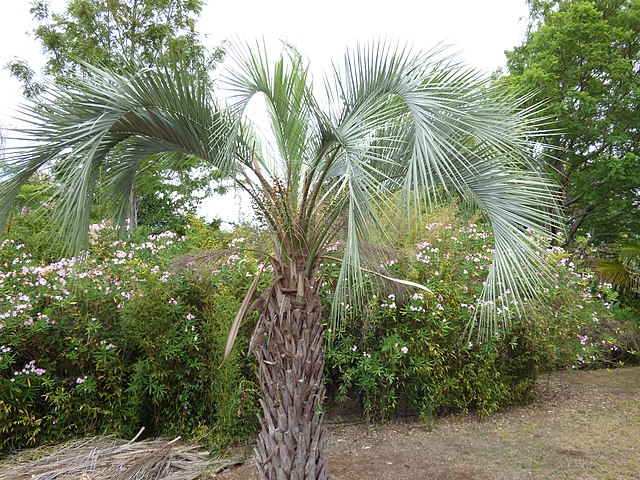
- Recurved gray-green leaves are the field mark versus Phoenix.
Region of origin
Southern Brazil to Uruguay
Native countries
Historical discovery
Barbosa Rodrigues described the fragrant southern plant in the 19th century. Larry Noblick restored Butia odorata in 2011; most US “B. capitata” landscape plants are this species.
Names
Common names
Pindo palm, Jelly palm, Wine palm
Synonyms
- Cocos odorata Barb.Rodr.
- Butia capitata (hort., misapplied)
Full care guide
The Pindo palm is known for its tropical look, cold hardiness and tasty fruit. Originally coming from South America, This palm grows yellow fruits in late summer that become ripe by fall. It can handle some cold, but prefers warmer areas, like in zones 8b to 11.
Growth Rate:
Moderate growth. It grows at a steady pace, adding about 1 to 2 feet to its height every year.
Fruit and Flowering:
In late summer, the Pindo palm grows groups of small, golden-yellow fruits that become sweet and ready to eat by fall. The fruit has historically been made into jelly or wine hence the name jelly palm and wine palm.
Light Requirements:
Partial shade or full sun to grow optimally.
Water Requirements:
Moderate watering to keep the soil moist but not soaked. Too much water can harm its roots over time.
Maintenance Level:
It doesn’t need much trimming. You can occasionally prune dead leaves, but this isn’t necessary. Water it regularly and fertilize your Pindo palm 2-3 times a year with high quality palm fertilizer to help it grow well.
Common Diseases/Pests:
It’s pretty tough against sickness and doesn’t have many threats. It can be susceptible to root rot if overwatered.
Plant Care:
Water your Pindo palm regularly and apply fertilizer 2-3 times per year to help it grow.
Pindo Palm Frequently Asked Questions:
The Pindo palm is not only a beautiful addition to your tropical landscape but also leaves you with delicious fruit! With a little care, the Pindo palm can become a true gem on your property.
Pindo palm questions
Will Pindo palm live outside?
Yes, if winter stays above about 15F (USDA 8a+). Below that number it belongs in a pot.
What do nurseries mislabel Pindo palm as?
People tag it as Queen palm. That plant is Syagrus romanzoffiana. Check the Latin.
Pot or ground for Pindo palm in a cold state?
Ground where winter stays above about 15F. A pot does not make a cold-tender palm hardy. Skip it if the number fails.
Are the fruits of the Pindo palm edible?
Yes, they are! The golden-yellow fruits of the Pindo palm are not only attractive but also tasty and safe for people to eat. You can even try to make jelly from them if you like.
What’s the best way to help a Pindo palm produce fruit?
To encourage fruit production, make sure your Pindo palm gets enough sunlight and is fed with the right fertilizer a few times a year. Proper care can help it grow those delicious golden-yellow fruits.
When is the best time to plant a Pindo palm?
Spring or early Summer is the best time to plant a Pindo palm. Planting during warmer weather allows the tree to establish roots before colder weather sets in.
Related palms
The mix-up, the substitute, then nearby hardiness.