Outdoor verdict
Spindle palm is not an outdoor plant where frost happens. USDA 10b+ means nights that stay near 32F. If your winter drops below that, skip it. Do not wrap a tropical and hope.
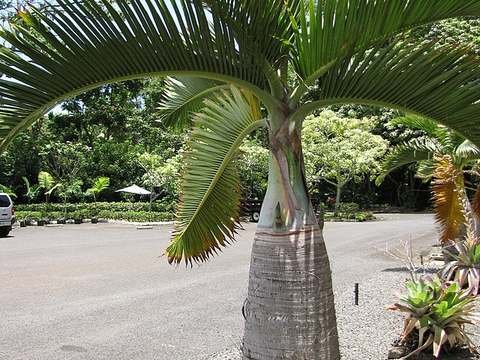
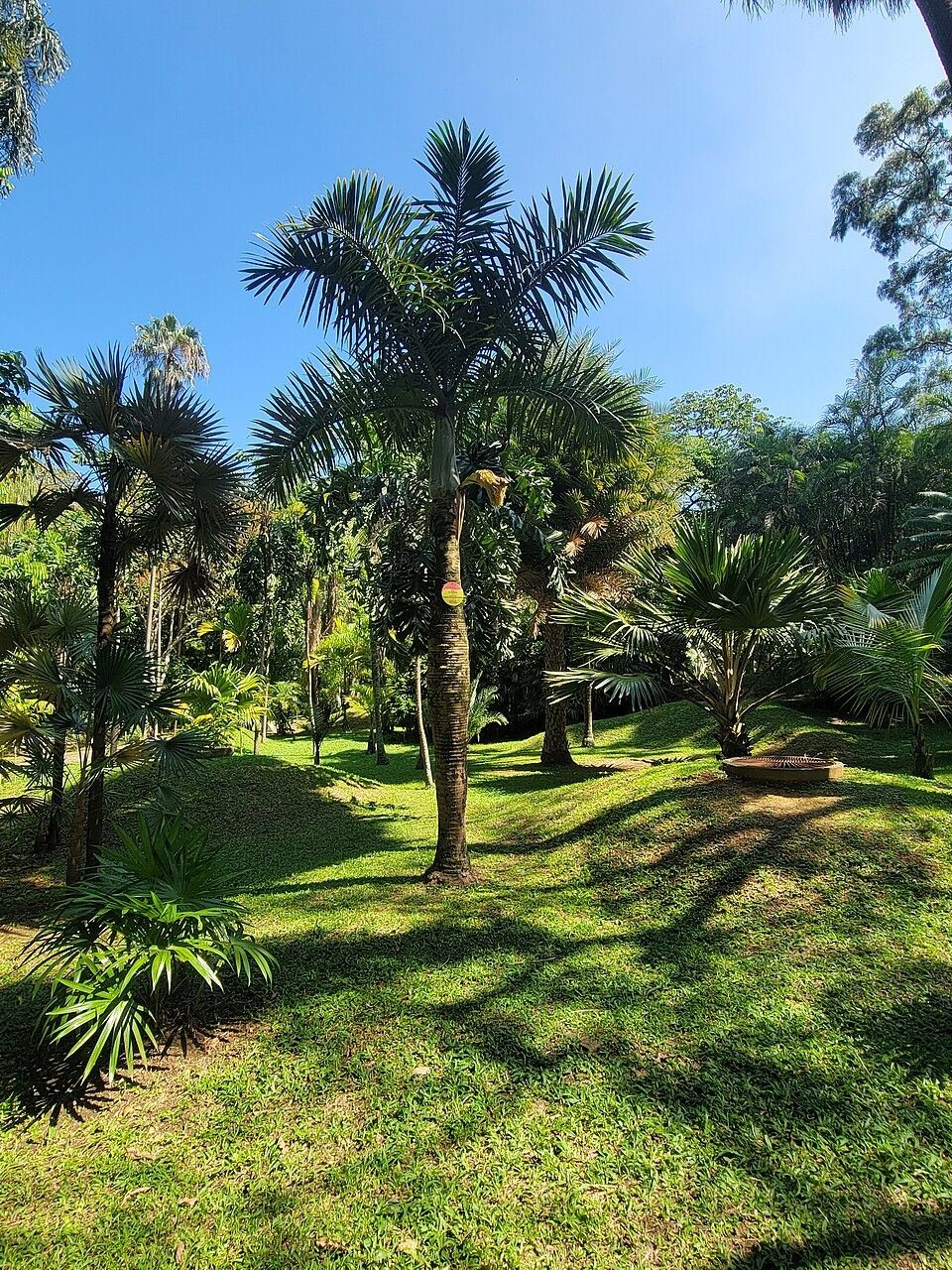
The spindle-shaped Mascarene palm. USDA 10b to 12, a swollen trunk that is widest in the middle, and a rarer garden cousin of bottle palm.
Cold hardiness
Survives about 32°F / 0°C. Outdoor range USDA 10b–12a. Hover or click a zone, state, or country. Click a state to open palms that grow there.
Highlighted USDA zones 10b–12a. Green countries can be grown outdoors.
United States
In range Too cold
World
Native Can be grown
Alaska and Hawaii are state outlines with their overall zone range. A country is painted if its mildest inhabited winter is at least one USDA step milder than this palm’s hardiness.
Winter care
Drainage matters more than a blanket. Soil: Any well-drained soil. Water: Moist but never waterlogged (mesic). Wrapping does not buy an extra zone. If the winter is colder than the kill number, keep it in a pot.
Scientific facts
- Bottle palm (H. lagenicaulis) is swollen at the base. Spindle is swollen mid-trunk.
- Wild plants are from Rodrigues and are endangered. Garden plants are the conservation story people actually buy.
- Frost-free only. A freeze ruins the crown.
Region of origin
Rodrigues
Native countries
Historical discovery
Named for Ambroise Verschaffelt. Hermann Wendland published the combination in 1866. It is the spindle-shaped cousin of the bottle palm, endemic to Rodrigues and endangered in the wild.
Names
Common names
Spindle palm, Palmiste marron
Synonyms
- None widely used
Full care guide
The spindle palm is Hyophorbe verschaffeltii from Rodrigues, a swollen-middle cousin of the bottle palm. USDA 10b to 12. It wants heat, sun, and no freeze. If you already grow bottle palm, this is the other Mascarene silhouette.
Growth Rate:
Slow to moderate.
Fruit and Flowering:
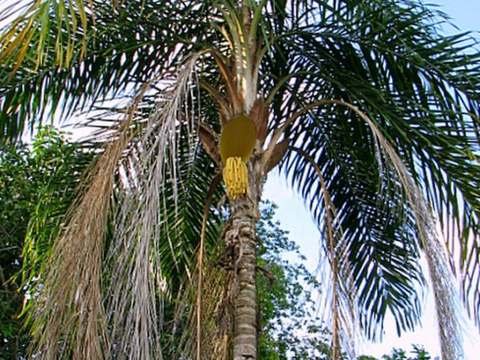
Orange fruit on mature plants.
Light Requirements:
Full sun.
Water Requirements:
Regular water in heat. Let the soil drain. It is not a swamp palm.
Maintenance Level:
Low to medium. Feed in the growing season with palm-specific fertilizer. Keep it frost-free. Do not overplant it next to a wall that cooks and then freeze it in a snap.
Common Diseases/Pests:
Scale and nutrient yellowing in sand. Cold is the real problem.
Plant Care:
Sun, drainage, tropics. If you cannot do bottle palm, you cannot do spindle. If you can, this is the other swollen Hyophorbe.
Spindle palm Frequently Asked Questions:
Plant spindle palm in the same climates that keep bottle palm alive. If your winter still freezes, you wanted a different silhouette entirely.
Spindle palm questions
Will Spindle palm live outside?
Not where frost happens. Spindle palm wants nights near 32F (USDA 10b+). Grow it in a pot and bring it in.
What do nurseries mislabel Spindle palm as?
Common names wander. The accepted name is Hyophorbe verschaffeltii. Read the Latin on the tag before you buy.
Pot or ground for Spindle palm in a cold state?
Ground where winter stays above about 32F. A pot does not make a cold-tender palm hardy. Skip it if the number fails.
Spindle or bottle palm?
Bottle (H. lagenicaulis) is swollen at the base. Spindle is swollen in the middle. Same genus, same climate.
Is it rare?
In the wild, yes. In south Florida nurseries, uncommon but findable.
How fast does it grow?
Not fast. You are buying the trunk shape.
Related palms
The mix-up, the substitute, then nearby hardiness.