Triangle palm cold hardiness
Chrysalidocarpus decaryi (Jum.) Eiserhardt & W.J.Baker
Nurseries still use Dypsis decaryi. The accepted name is Chrysalidocarpus decaryi.
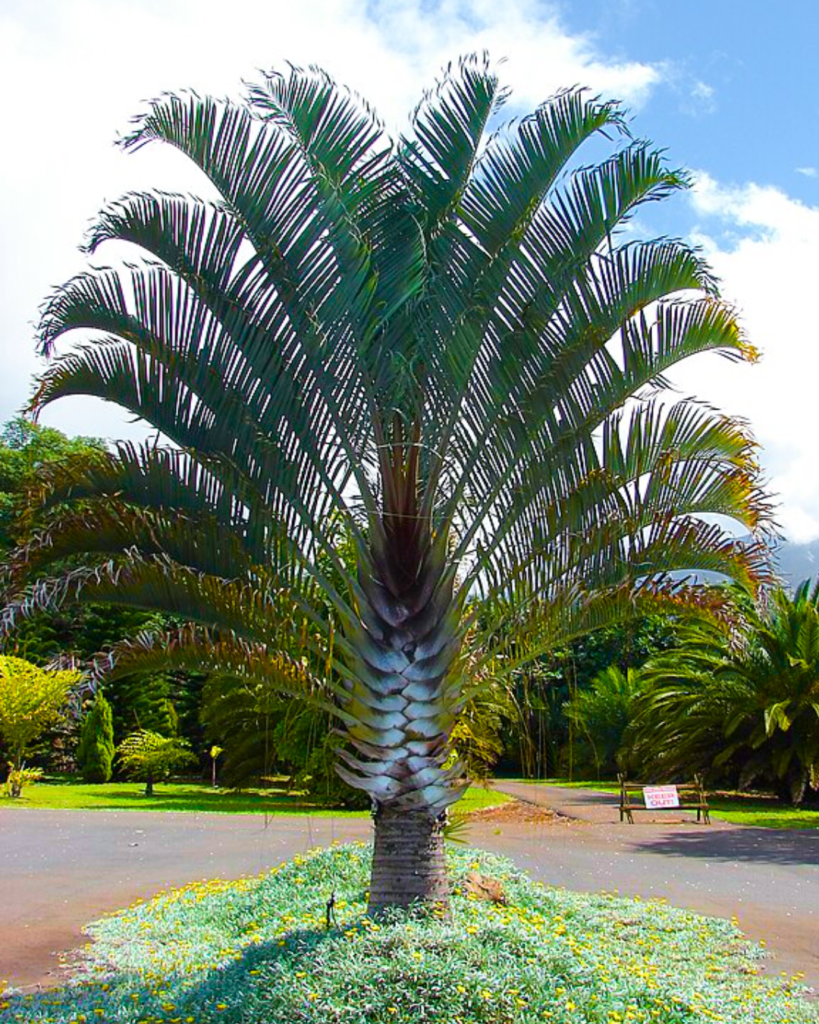
Outdoor verdict
Triangle palm lives outside only in a mild winter, about 25F (USDA 10a+). A real freeze marks it. Young plants can wait in a pot. A mature one wants the ground only if the winter clears that number.
A Madagascar palm whose three-ranked leaves make a triangular trunk outline in plan view. Tender, architectural, and still labeled Dypsis in most shops.
Cold hardiness
Survives about 25°F / -4°C. Outdoor range USDA 10a–11b. Hover or click a zone, state, or country. Click a state to open palms that grow there.
Highlighted USDA zones 10a–11b. Green countries can be grown outdoors.
United States
In range Too cold
World
Native Can be grown
Alaska and Hawaii are state outlines with their overall zone range. A country is painted if its mildest inhabited winter is at least one USDA step milder than this palm’s hardiness.
Winter care
Drainage matters more than a blanket. Soil: Sandy, fast-draining. Water: Water when the top inch is dry (mesic to xeric). Wrapping does not buy an extra zone. If the winter is colder than the kill number, keep it in a pot.
Scientific facts
- Leaves in three vertical ranks are the identification.
- Gray-green leaflets and a whitish trunk are typical in sun.
- Moved out of Dypsis in the 2022 Chrysalidocarpus recircumscription.
Region of origin
Southeastern Madagascar
Native countries
Historical discovery
Jumelle described it from Madagascar. Kew now accepts Chrysalidocarpus decaryi (Eiserhardt & W.J.Baker, 2022); older books and nurseries still say Dypsis decaryi.
Names
Common names
Triangle palm, Three-sided palm
Synonyms
- Dypsis decaryi (Jum.) Beentje & J.Dransf.
- Neodypsis decaryi Jum.
Full care guide
The triangle palm (Dypsis decaryi) truly lives up to its name and stands out in any tropical landscape. Native to Madagascar, this eye-catching palm thrives in USDA zones 10-11 and is perfect for adding a touch of the exotic to gardens and patios.
- Common Names: Triangle Palm, Triangle Leaf Palm, The Three Sided Palm
- Scientific Name: Dypsis decaryi
- Native Habitat: Native to Madagascar where it grows in rainforests.
- Unique Traits: Identified by its incredibly symmetrical, triangle-shaped fronds on slender gray trunks.
- Fruit: This palm does not bear edible fruits.
Growth and Physical Characteristics
- Growth Rate: Fast growing, up to 3 feet per year.
- Maximum Height: Grows up to 30 feet tall at maturity.
- Foliage Spread: Has a maximum spread up to 15 feet.
Climate Preferences and Hardiness Zone
- Temperature Range: Thrives in warm temperatures, gets damaged below 30°F.
- USDA Hardiness Zones: The Triangle Palm is best suited for growing outdoors in zones 10-11.
Soil Type
- Soil Requirements: Grows best in organically rich, mildly acidic soil.
- Potting Mix Recommendation: Fast-draining palm/citrus potting mix.
- Fertilizer: Use a complete palm fertilizer every 2-3 months during growing seasons.
Comprehensive Care Guide for Triangle Palms
Ideal Lighting Conditions
- Light Requirements: Does well in bright, filtered light or partial shade.
- Placement Tips: Nice focal point for sheltered garden beds or patios.
Watering Schedule and Techniques
- Water Needs: Keep soil consistently moist but not waterlogged.
- Drainage Importance: Requires very good drainage to prevent root rot.
Nutrient Management
- Fertilization Regimen: Apply a quality palm fertilizer every 8-10 weeks during the growing period.
- Soil Composition: Grow in organically rich, slightly acidic soil.
Temperature and Humidity
- Ideal Day Temperature: 65-75°F, gets damaged below 30°F
- Humidity Requirements: Prefers 40-60% humidity, mist leaves if air is dry.
Pest and Disease Prevention
- Common Pests: Spider mites, scales, mealybugs.
- Treatment: If your palm is suffering from pests consider applying a spray on pesticidal horticulture oil.
- Prevention: Avoid overhead watering and promote air flow.
Propagating Triangle Palms
Triangle palms can be propagated through seeds or by removing and replanting pup plants.
Propagating With Seeds
To grow triangle palms from seeds, plant fresh seeds from ripe fruits in a loose, fast-draining soil mix. Keep warm and moist until germination occurs. Growth is slow at first.
Propagating With Offshoots
The easiest way to propagate new triangle palms is by removing young palm “pups” growing at the base of older plants. Carefully separate pups with roots attached using a clean, sharp knife. Replant palm pups in small containers with drainage holes, using a quality potting mix.
Keep newly transplanted pups protected from sun and wind until re-established. Maintain even moisture and warmth. Begin feeding with diluted palm fertilizer once new leaves emerge. Check soil regularly and watch for pests. Remove pups annually to control size of mature plants.
Triangle Palm FAQs
Triangle palms grow at a moderately fast pace of up to 3 feet per year when cared for properly.
Triangle palms can reach heights of 30 feet at maturity. Proper pruning is required to control size.
Yes, triangle palms can grow in pots. However, due to it’s large maximum growth height it is not recommended for small indoor spaces. Move pots to a protected area in winter.
Conclusion
With its strikingly symmetrical fronds, the triangle palm is a guaranteed centerpiece in any garden. Its elegant form lights up areas beneath high tree canopies and brings a touch of the tropics wherever it’s planted.
Triangle palm questions
Will Triangle palm live outside?
Yes, if winter stays above about 25F (USDA 10a+). Below that number it belongs in a pot.
What do nurseries mislabel Triangle palm as?
Common names wander. The accepted name is Chrysalidocarpus decaryi. Read the Latin on the tag before you buy.
Pot or ground for Triangle palm in a cold state?
Start it in a pot if you want. The ground is fine only where winter stays above about 25F.
Related palms
The mix-up, the substitute, then nearby hardiness.