Flame thrower palm cold hardiness
Chambeyronia macrocarpa (Brongn.) Vieill. ex Becc.
Outdoor verdict
Flame thrower palm lives outside only in a mild winter, about 28F (USDA 10a+). A real freeze marks it. It can sit in a bright room if your winter is colder than that.
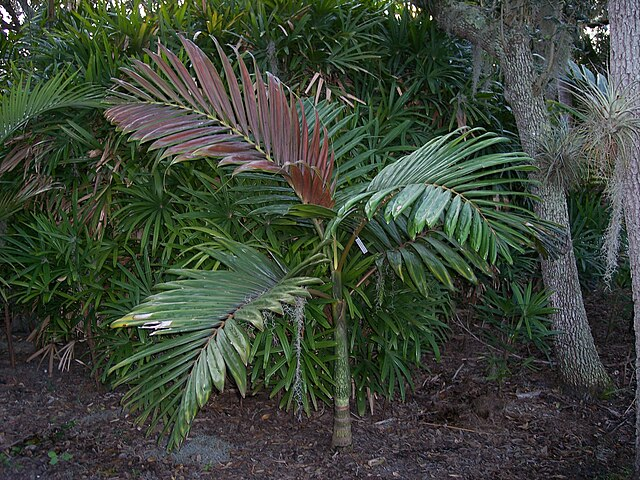
A New Caledonian palm whose newest frond emerges scarlet to crimson before greening, a brief “flame” at the crown.
Cold hardiness
Survives about 28°F / -2°C. Outdoor range USDA 10a–11b. Hover or click a zone, state, or country. Click a state to open palms that grow there.
Highlighted USDA zones 10a–11b. Green countries can be grown outdoors.
United States
In range Too cold
World
Native Can be grown
Alaska and Hawaii are state outlines with their overall zone range. A country is painted if its mildest inhabited winter is at least one USDA step milder than this palm’s hardiness.
Winter care
Drainage matters more than a blanket. Soil: Acid, organic, well-drained. Water: Moist but never waterlogged (mesic). Wrapping does not buy an extra zone. If the winter is colder than the kill number, keep it in a pot.
Scientific facts
- Several named varieties (including yellow-leaf flavopicta) were published in 2021.
- The red leaf lasts days to a couple of weeks, then fades to green.
- Needs humidity and protection from dry wind and frost.
Region of origin
New Caledonia
Native countries
Historical discovery
Based on Brongniart’s Kentiopsis; Beccari published Chambeyronia macrocarpa in 1920. New red spear leaves are the trait that made it famous in horticulture.
Names
Common names
Flame thrower palm, Red leaf palm, Blushing palm
Synonyms
- Kentiopsis macrocarpa Brongn.
Full care guide
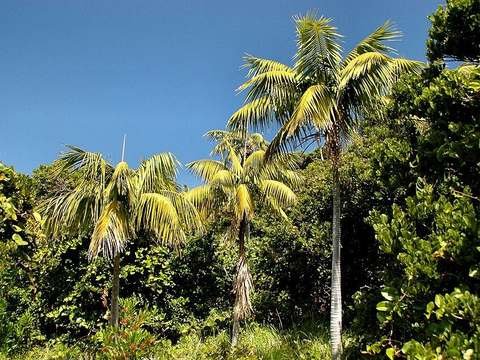
The Flame Thrower palm is known for its bright red palm frond sticking up above its other green leaves. This palm is prized for its vibrant red leaves and tropical vibe. Thriving in USDA hardiness zones 10 to 11, they’re known for rapid growth and a distinctly red appearance.
Growth Rate:
Remarkably fast-growing. This palm can add 2-3 feet to its height every year under ideal conditions.
Fruit and Flowering:
Mature Flame Thrower palms produce vivid red/orange fruits. The palm’s cream-colored flowers eventually produce small fruits that are edible but not recommended to eat.
Light Requirements:
Partial shade to full sun for optimal growth.
Water Requirements:
Moderate watering. Keeping the soil consistently moist but not waterlogged prevents root rot.
Maintenance Level:
Low-medium maintenance. These palms benefit from regular watering and occasional fertilization. This palm is considered self pruning, meaning it sheds dead leaves on it’s own.
Common Issues with Flame Thrower Palms
Common Diseases/Pests:
Flame Thrower palms aren’t prone to many diseases or pests. They can contract spider mites or mealybugs like any other palm tree out there.
Leaves Browning and Dying:
If the leaves appear brown and brittle, check the soil moisture. Dry soil could indicate under-watering.
Solution: Water your Flame Thrower palm thoroughly to saturate the soil.
Leaves Bleaching:
The palm may be experiencing sunburn if put in harsh direct sun as a young plant. Consider planting with partial shade to avoid sunburn.
Plant Care:
Maintain a consistent watering schedule and use high quality palm-specific fertilizer 2-3 times per year during the growing season for optimal growth.
Flame Thrower Palm Frequently Asked Questions
Whether indoors or in your garden, the Flame Thrower palm adds a fiery flare to your tropical landscape! With proper care, it can become the centerpiece of your garden.
Flame thrower palm questions
Will Flame thrower palm live outside?
Yes, if winter stays above about 28F (USDA 10a+). Below that number it belongs in a pot.
What do nurseries mislabel Flame thrower palm as?
Common names wander. The accepted name is Chambeyronia macrocarpa. Read the Latin on the tag before you buy.
Pot or ground for Flame thrower palm in a cold state?
Pot if your winter drops below about 28F. Ground only where that number holds.
Can I plant multiple Flame Thrower palms close together?
Yes, multiple palms can be planted relatively close together.
Does the Flamethrower palm produce edible fruit?
Yes, the fruit produced by the Flamethrower palm is edible though some may find the taste unpleasant compared to fruit from other palms like the date palm or Pindo palm. It’s not recommended to eat this palm’s fruit.
Related palms
The mix-up, the substitute, then nearby hardiness.