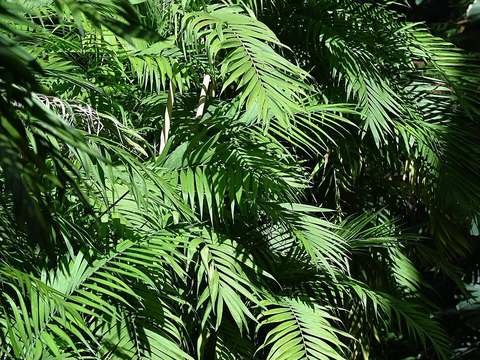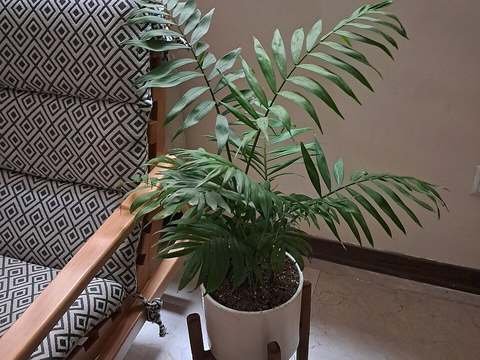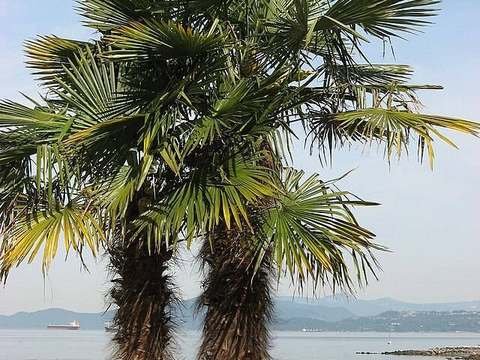
Outdoor verdict
Lady palm lives outside only in a mild winter, about 22F (USDA 9a+). A real freeze marks it. It can sit in a bright room if your winter is colder than that.
The clumping fan palm of courtyards and bright rooms. USDA 9a to 11 outdoors, shade-tolerant, and sold as a durable indoor screen.
Cold hardiness
Survives about 22°F / -6°C. Outdoor range USDA 9a–11b. Hover or click a zone, state, or country. Click a state to open palms that grow there.
Highlighted USDA zones 9a–11b. Green countries can be grown outdoors.
United States
In range Too cold
World
Native Can be grown
Alaska and Hawaii are state outlines with their overall zone range. A country is painted if its mildest inhabited winter is at least one USDA step milder than this palm’s hardiness.
Winter care
Drainage matters more than a blanket. Soil: Rich, moist, well-drained. Water: Moist but never waterlogged (mesic). Wrapping does not buy an extra zone. If the winter is colder than the kill number, keep it in a pot.
Scientific facts
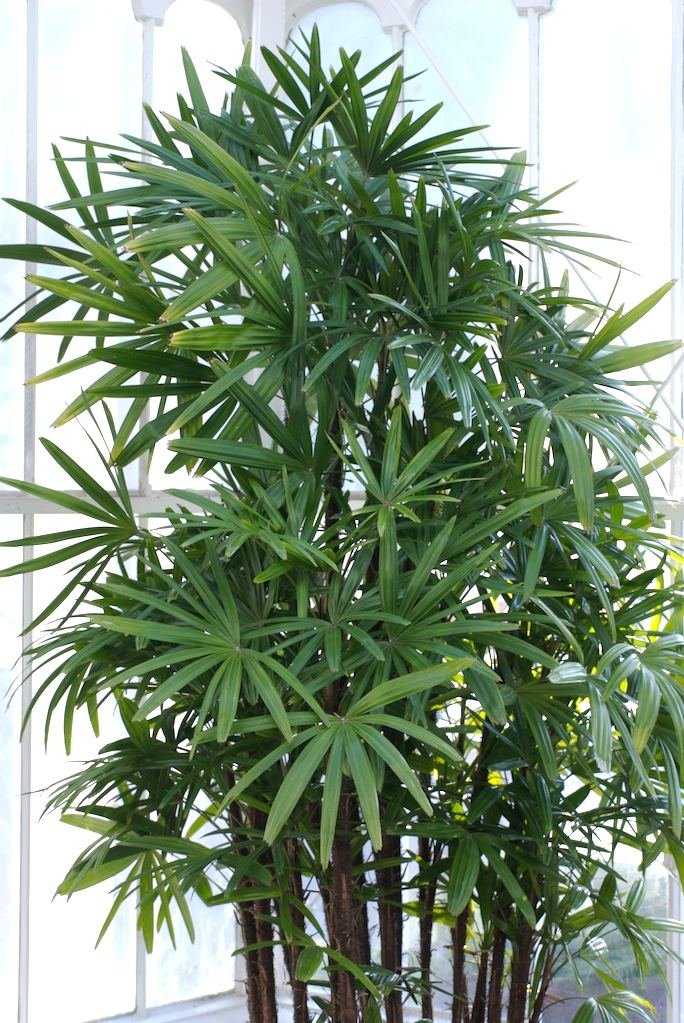
- Fan leaflets with blunt, sawed tips, on thin fibrous canes.
- Takes more shade than most landscape palms.
- Rhapis humilis is the slender lady palm, with narrower segments.
Region of origin
Southern China to northern Vietnam
Native countries
Historical discovery
Thunberg published Chamaerops excelsa. Augustine Henry made the Rhapis combination in 1930. It has been a courtyard and indoor palm in East Asia for centuries.
Names
Common names
Lady palm, Bamboo palm (misapplied), Broadleaf lady palm
Synonyms
- Chamaerops excelsa Thunb.
Full care guide
The lady palm is a clustering fan palm on thin, fibrous canes, used as a courtyard hedge and a durable indoor screen. Native from southern China to northern Vietnam. USDA 9a to 11 outdoors. It takes shade that would thin an areca to nothing.
Growth Rate:
Slow to moderate.
Fruit and Flowering:
Small fruit on mature clumps. Indoor plants may not fruit.
Light Requirements:
Part shade outdoors. Bright indirect indoors. It takes lower light than most fans. Deep shade still thins it.
Water Requirements:
Even moisture. Do not let a pot dry to dust, especially in heat.
Maintenance Level:
Low to medium. Thin old canes. Feed in the growing season with palm-specific fertilizer lightly. Indoor plants want dusted leaves and mite checks.
Common Diseases/Pests:
Scale, mites, and mealybugs, especially indoors. Outdoors, mostly scale and occasional fungal spotting in still air.
Plant Care:
Shade, even water, no hard freeze. Use it as a screen, not a coconut. Divide clumps when the pot is packed.
Lady palm Frequently Asked Questions:
Plant lady palm where you want a shaded screen of fans, indoors or in a frost-mild courtyard. It will not give you a tropical boulevard, and that is the point.
Lady palm questions
Will Lady palm live outside?
Yes, if winter stays above about 22F (USDA 9a+). Below that number it belongs in a pot.
What do nurseries mislabel Lady palm as?
Common names wander. The accepted name is Rhapis excelsa. Read the Latin on the tag before you buy.
Pot or ground for Lady palm in a cold state?
Pot if your winter drops below about 22F. Ground only where that number holds.
Lady palm or bamboo palm?
Lady palm is Rhapis, a fan on fibrous canes. Bamboo palm in shops is usually Chamaedorea seifrizii, a feather palm.
Can it take sun?
Morning sun is fine. Hot afternoon sun in a dry inland yard will bleach it. Think understory.
Good for a north window?
A bright north room can work. A dim interior wall will not. Kentia and parlor palm are the other low-light names.
How hardy is it?
Zone 9a with some burn risk in a hard freeze. Not a zone 8 landscape palm.
Related palms
The mix-up, the substitute, then nearby hardiness.