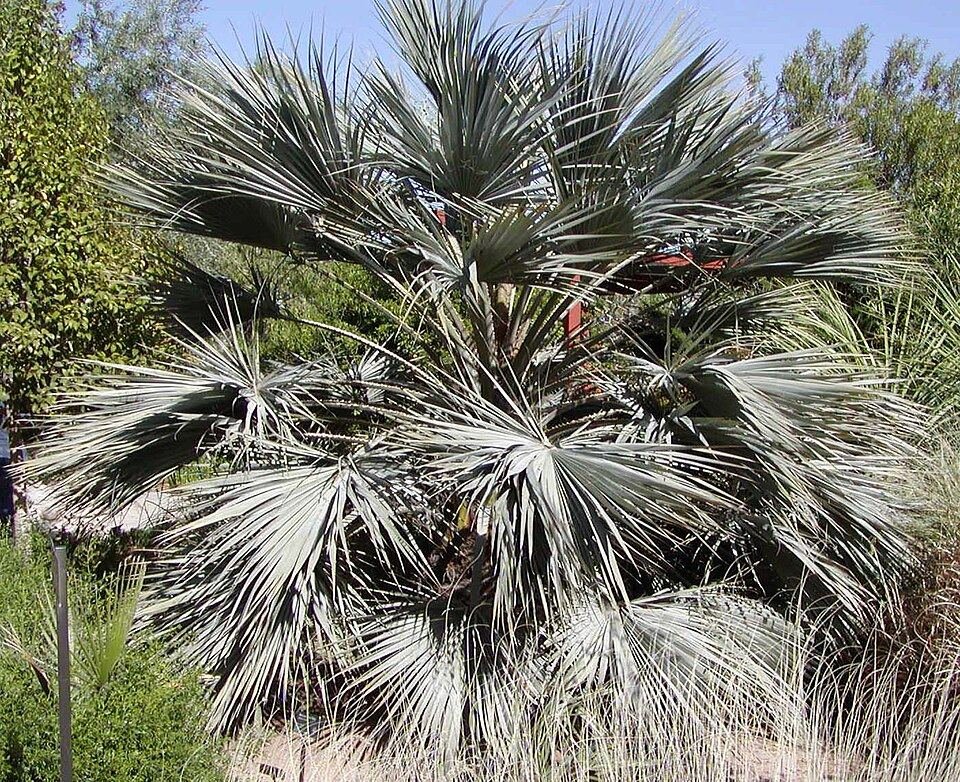
Outdoor verdict
Mexican blue palm lives outside where winter stays above about 18F (USDA 8b+). If your winter drops below that, skip it. Do not wrap a tropical and hope.
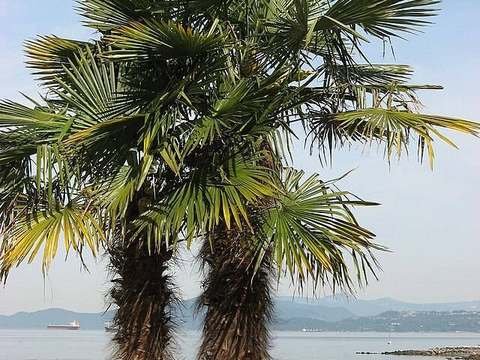
The silver-blue fan of Baja. USDA 8b to 11, drought-tough, slower than a Mexican fan palm, and a desert plant rather than a rainforest one.
Cold hardiness
Survives about 18°F / -8°C. Outdoor range USDA 8b–11a. Hover or click a zone, state, or country. Click a state to open palms that grow there.
Highlighted USDA zones 8b–11a. Green countries can be grown outdoors.
United States
In range Too cold
World
Native Can be grown
Alaska and Hawaii are state outlines with their overall zone range. A country is painted if its mildest inhabited winter is at least one USDA step milder than this palm’s hardiness.
Winter care
Drainage matters more than a blanket. Soil: Any well-drained soil. Water: Low water once established (xeric). Wrapping does not buy an extra zone. If the winter is colder than the kill number, keep it in a pot.
Scientific facts
- The blue is wax. It is brightest in full sun and dry air.
- Much slower than Washingtonia. You are buying color, not instant height.
- Guadalupe palm (Brahea edulis) is greener and from Guadalupe Island.
Region of origin
Baja California and Sonora, Mexico
Native countries
Historical discovery
Sereno Watson published Brahea armata in 1876 from Baja. It is the silver-blue fan of dry southwestern gardens.
Names
Common names
Mexican blue palm, Blue hesper palm, Gray goddess
Synonyms
- None widely used
Full care guide
The Mexican blue palm is the silver-blue Baja fan for dry southwestern gardens. USDA 8b to 11. It is slow, drought-tough, and not a rainforest palm. If you wanted a fast skyduster, that is Washingtonia, and it is green.
Growth Rate:
Slow. Faster with heat and occasional deep water, still not a queen palm.
Fruit and Flowering:
Small fruit. Not a food crop.
Light Requirements:
Full sun. Shade turns it greener and thinner.
Water Requirements:
Drought-tough once established. Water to establish. Extra water in extreme heat keeps it prettier. Do not keep it swampy.
Maintenance Level:
Low to medium. Skirts are habitat and fire fuel. Feed in the growing season with palm-specific fertilizer if you irrigate in sand. Wear gloves. The petioles are armed.
Common Diseases/Pests:
Scale and occasional fungal spotting if you overwater in still air. Dry sun prevents most of it.
Plant Care:
Full sun, drainage, patience. Use it in a desert or dry-summer garden. Do not plant it in a wet lawn strip and expect Baja blue.
Mexican blue palm Frequently Asked Questions:
Plant Mexican blue palm in a dry, sunny western garden if you can wait. If you wanted instant height, you wanted Washingtonia, and you gave up the silver.
Mexican blue palm questions
Will Mexican blue palm live outside?
Yes, if winter stays above about 18F (USDA 8b+). Below that number it belongs in a pot.
What do nurseries mislabel Mexican blue palm as?
Common names wander. The accepted name is Brahea armata. Read the Latin on the tag before you buy.
Pot or ground for Mexican blue palm in a cold state?
Ground where winter stays above about 18F. A pot does not make a cold-tender palm hardy. Skip it if the number fails.
Mexican blue or Mexican fan?
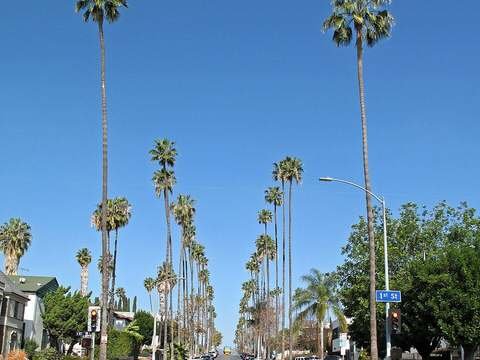
Mexican fan is Washingtonia robusta, tall and green. Mexican blue is Brahea armata, slower and silver.
Will it stay blue indoors?
It is not an indoor palm. Blue also fades in shade and wet climates.
How hardy is it?
Zone 8b with established plants and drainage. Zone 7 is still needle palm and windmill country.
Why is mine green?
Shade, overwatering, or a young plant. Sun and dry air bring the wax.
Related palms
The mix-up, the substitute, then nearby hardiness.