Outdoor verdict
Old man palm lives outside only in a mild winter, about 28F (USDA 10a+). A real freeze marks it. If your winter drops below that, skip it. Do not wrap a tropical and hope.
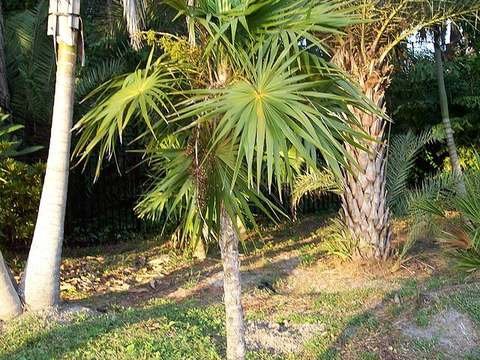
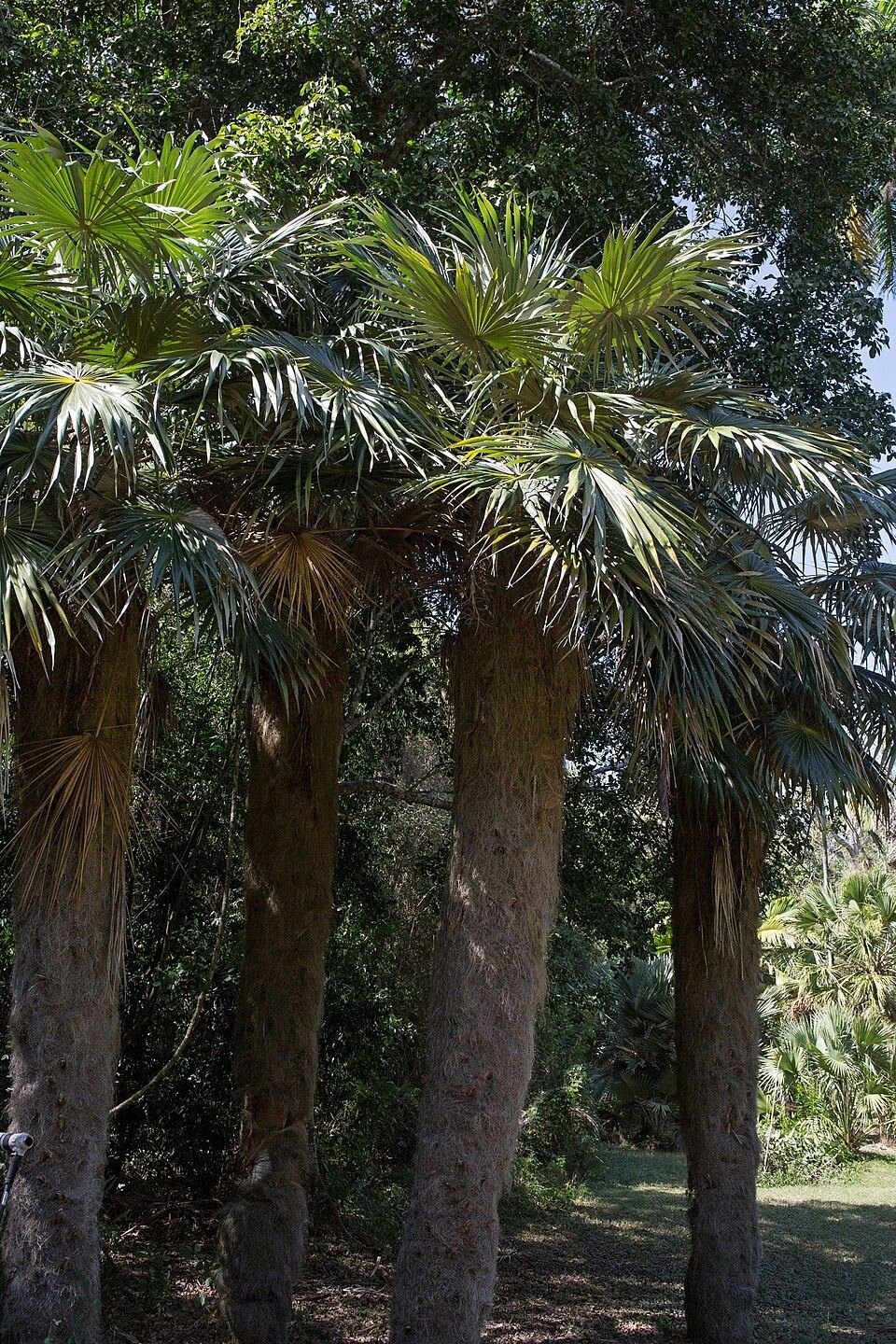
The bearded Cuban thatch palm. USDA 10a to 11, a fiber-covered trunk that looks like an old man, and a slow collector tree rather than a street pole.
Cold hardiness
Survives about 28°F / -2°C. Outdoor range USDA 10a–11b. Hover or click a zone, state, or country. Click a state to open palms that grow there.
Highlighted USDA zones 10a–11b. Green countries can be grown outdoors.
United States
In range Too cold
World
Native Can be grown
Alaska and Hawaii are state outlines with their overall zone range. A country is painted if its mildest inhabited winter is at least one USDA step milder than this palm’s hardiness.
Winter care
Drainage matters more than a blanket. Soil: Any well-drained soil. Water: Water when the top inch is dry (mesic to xeric). Wrapping does not buy an extra zone. If the winter is colder than the kill number, keep it in a pot.
Scientific facts
- The trunk is wrapped in long, pale fiber. That is the old man.
- Slow. You are buying the beard, not height.
- Native to Cuba. Garden plants are the legal cultivated stock.
Region of origin
Cuba
Native countries
Historical discovery
The long fiber beard made it famous in cultivation. Odoardo Beccari placed it in Coccothrinax in 1907. Wild plants are Cuban and conservation-listed.
Names
Common names
Old man palm, Old man thatch palm, Palma petate
Synonyms
- None widely used
Full care guide
The old man palm is Coccothrinax crinita, a Cuban thatch palm whose trunk wears a long pale beard of fiber. USDA 10a to 11. It is slow. You are buying the look, not a queen-palm skyline.
Growth Rate:
Slow.
Fruit and Flowering:
Small purple-black fruit.
Light Requirements:
Full sun. Shade makes a weaker beard.
Water Requirements:
Regular water to establish, then some drought tolerance. It is not a swamp palm.
Maintenance Level:
Low. Do not shave the fiber unless you want to ruin the point. Feed in the growing season with palm-specific fertilizer lightly in sand.
Common Diseases/Pests:
Scale and nutrient issues in sand. Patience is the main requirement.
Plant Care:
Sun, drainage, frost-free, decades. Buy a large plant if you want the beard in your lifetime. A seedling is a long bet.
Old man palm Frequently Asked Questions:
Plant old man palm in frost-free south Florida or a similar climate if you want the beard. If you wanted a fast street fan, you wanted Washingtonia, and that is a different story.
Old man palm questions
Will Old man palm live outside?
Yes, if winter stays above about 28F (USDA 10a+). Below that number it belongs in a pot.
What do nurseries mislabel Old man palm as?
Common names wander. The accepted name is Coccothrinax crinita. Read the Latin on the tag before you buy.
Pot or ground for Old man palm in a cold state?
Ground where winter stays above about 28F. A pot does not make a cold-tender palm hardy. Skip it if the number fails.
Should I trim the fiber?
No. The beard is the plant.
How fast does it grow?
Slow. People pay for specimens because waiting is worse.
Old man or Florida silver palm?
Florida silver palm is Coccothrinax argentata, native to south Florida, without the long beard.
Related palms
The mix-up, the substitute, then nearby hardiness.