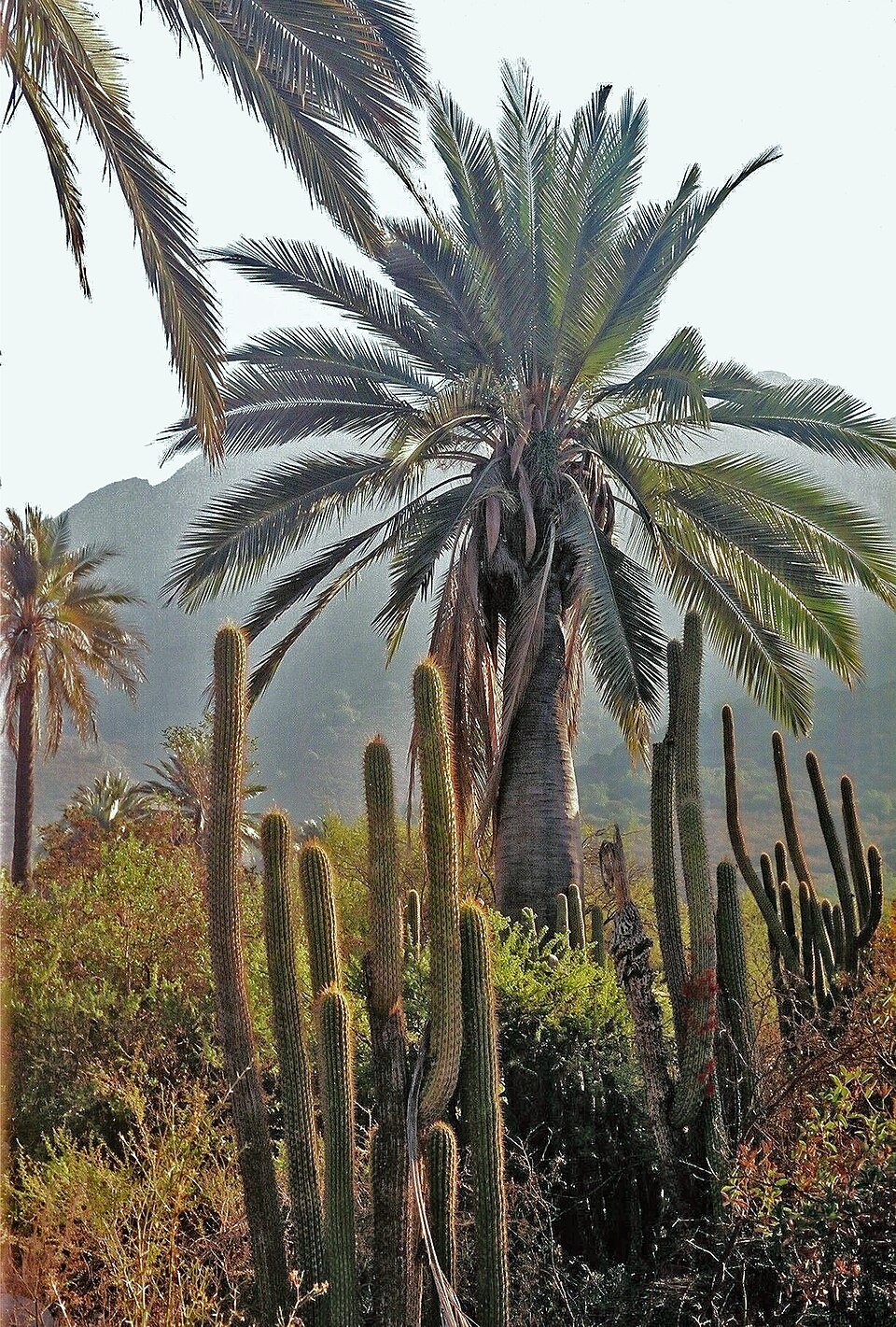
Outdoor verdict
Chilean wine palm lives outside where winter stays above about 12F (USDA 8a+). If your winter drops below that, skip it. Do not wrap a tropical and hope.
The massive Chilean column. USDA 8a to 11, the hardiest feather palm in common planting, and not a coconut.
Cold hardiness
Survives about 12°F / -11°C. Outdoor range USDA 8a–11a. Hover or click a zone, state, or country. Click a state to open palms that grow there.
Highlighted USDA zones 8a–11a. Green countries can be grown outdoors.
United States
In range Too cold
World
Native Can be grown
Alaska and Hawaii are state outlines with their overall zone range. A country is painted if its mildest inhabited winter is at least one USDA step milder than this palm’s hardiness.
Winter care
Drainage matters more than a blanket. Soil: Any well-drained soil. Water: Water when the top inch is dry (mesic to xeric). A young plant sees more damage than an old one. Wrap only when a night near the kill number is coming.
Scientific facts
- It has the thickest trunk of any palm. The look is an elephant column with a coconut-style crown, not a beach stick.
- Wild groves in central Chile are endangered. People cut palms for miel de palma, and the hills lost the forest.
- Slow is the point. A real trunk takes decades. Fruit can wait 40 to 60 years.
Region of origin
Central Chile
Native countries
Historical discovery
Juan Ignacio Molina described the Chilean palm in 1782. Henri Baillon published Jubaea chilensis in 1895.
Names
Common names
Chilean wine palm, Chile cocopalm, Coquito palm, Palma chilena
Synonyms
- Cocos chilensis Molina
- Palma chilensis Molina
- Jubaea spectabilis Kunth
Full care guide
The Chilean wine palm is the massive feather palm people plant when they want a coconut silhouette in a real winter. It is Jubaea chilensis. USDA 8a to 11. It is not Cocos nucifera, and a seedling is not as hardy as the column.
Growth Rate:
Slow. Faster in heat with water, still measured in decades, not seasons.
Fruit and Flowering:
Monoecious. Small yellow to orange coquito nuts. Edible. You will not harvest drinking coconuts. Tapping the trunk for palm honey is why wild stands crashed.
Light Requirements:
Full sun. Shade makes a thin, unhappy plant.
Water Requirements:
Water to establish. Drought-tough once the trunk is there. Extra water in extreme heat keeps the crown greener.
Maintenance Level:
Medium patience, low drama. Feed in the growing season with palm-specific fertilizer. Do not plant it where a queen palm is already a stretch unless you like waiting.
Common Diseases/Pests:
Scale, nutrient yellowing in sand, and palmetto weevil on wounded or stressed plants in the Southeast. Lethal yellowing is a coconut problem; this is still a different genus. Buy clean stock.
Plant Care:
Full sun, drainage, time. Use it in California, Chile, and other dry-summer climates. Hot, wet Gulf summers are a poorer match than a cool Mediterranean winter.
Chilean wine palm Frequently Asked Questions:
Plant Chilean wine palm where you wanted a coconut and your winter actually freezes. Bring patience. If you need a palm this year, buy a windmill or a pindo.
Chilean wine palm questions
Will Chilean wine palm live outside?
Yes, if winter stays above about 12F (USDA 8a+). Below that number it belongs in a pot.
What do nurseries mislabel Chilean wine palm as?
Common names wander. The accepted name is Jubaea chilensis. Read the Latin on the tag before you buy.
Pot or ground for Chilean wine palm in a cold state?
Ground where winter stays above about 12F. A pot does not make a cold-tender palm hardy. Skip it if the number fails.
Is Chilean wine palm a real coconut?
No. It is Jubaea chilensis. Same tribe as coconut, different genus. The nuts are coquitos. The trunk is the size of a barrel, not a pole.
How hardy is it compared with windmill and pindo?
It is the hardiest feather palm in common planting. Windmill is still the colder fan. Pindo is shorter and close in the teens F. A mature Jubaea column beats a queen and a coconut by a wide margin.
Will it like Florida?
Usually no. It wants a dry summer and a cool winter, not months of wet heat. California and Mediterranean climates are the fit. If a pindo looks miserable in your humidity, this will too.
Related palms
The mix-up, the substitute, then nearby hardiness.